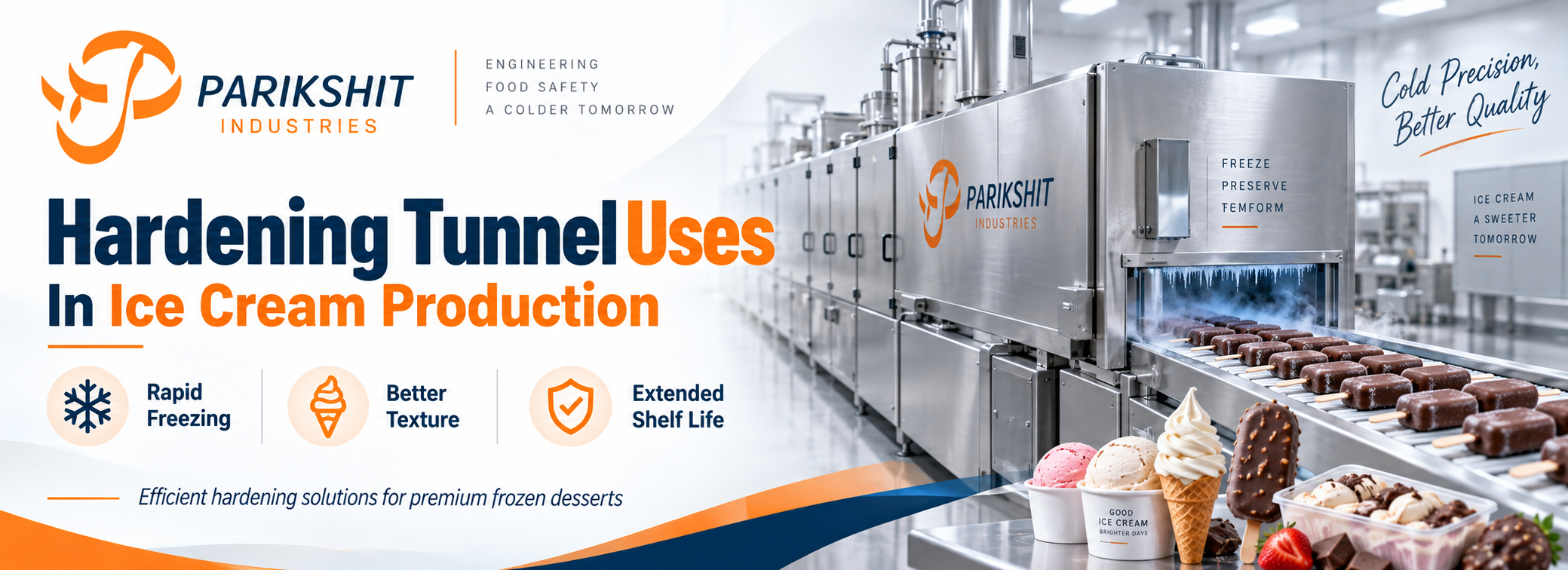
Hardening Tunnel Uses in Ice Cream Production
In the sophisticated world of commercial ice cream manufacturing, achieving the perfect texture and ensuring product longevity are paramount. Central to this process is the hardening tunnel, a specialized piece of equipment designed for rapid freezing. This article delves into the multifaceted hardening tunnel uses, exploring how they are indispensable for producers aiming for superior quality and efficient operations. From understanding the science behind rapid freezing to selecting the right equipment, we cover what you need to know to leverage this technology effectively.
Understanding the Ice Cream Hardening Process
Ice cream, at its core, is an emulsion of fat, water, sugar, and air, with water being the most critical component for its structure and texture. After the ice cream mix is churned and frozen to around -5°C to -7°C in a continuous freezer, only about half of its water content has solidified, forming small ice crystals. This semi-frozen state is crucial for incorporating air (overrun) and achieving a smooth initial consistency. However, to ensure stability, extend shelf life, and develop the characteristic firm yet palatable texture, the remaining water must be frozen rapidly. This is where the hardening tunnel comes into play.
The primary goal of hardening is to freeze the remaining water as quickly as possible, forming numerous small ice crystals rather than fewer large ones. Large ice crystals lead to an undesirable gritty or icy texture, compromising the sensory experience of the ice cream. Rapid freezing minimizes ice crystal growth, preserving the smoothness and creaminess that consumers expect. The hardening tunnel facilitates this by exposing the ice cream to intensely cold air, typically ranging from -34°C to -45°C, causing its core temperature to drop to -18°C or lower.
The Critical Role and Uses of a Hardening Tunnel
Hardening tunnels are not merely freezers; they are precision instruments designed for a specific, critical phase of ice cream production. Their uses are extensive and directly impact the final product's quality, safety, and market readiness.
Ensuring Optimal Texture and Quality
The most significant use of a hardening tunnel is its ability to freeze ice cream rapidly. This speed is key to inhibiting the growth of ice crystals. As ice cream warms and cools, ice crystals can grow, leading to textural degradation. The extreme cold and efficient air circulation within the tunnel create a fast, consistent freezing environment that locks in the desirable smooth texture achieved during the churning phase. This results in a superior mouthfeel that is essential for premium ice cream products.
Extending Product Shelf Life
By rapidly lowering the core temperature of the ice cream to below -18°C, the hardening tunnel significantly inhibits microbial activity and enzymatic processes. This deep freezing is a critical step in preserving the product's quality over time and ensuring its safety for consumption. A well-hardened product maintains its organoleptic properties for longer periods, reducing spoilage and waste, and allowing for more flexible distribution and inventory management.
Increasing Production Efficiency and Throughput
Compared to traditional hardening methods like static hardening rooms or cabinets, hardening tunnels offer a continuous and significantly faster process. The conveyor system moves products through the cold zones at a controlled pace, allowing for high-volume throughput. This continuous operation means that as ice cream exits the continuous freezer, it can be immediately conveyed into the hardening tunnel, minimizing downtime and bottlenecks in the production line. This efficiency is vital for large-scale commercial operations that need to meet high demand.
Versatility in Handling Various Products
Hardening tunnels are designed to accommodate a wide range of ice cream formats. Whether it’s individually packaged pints, family-sized tubs, ice cream bars, cones, cups, cakes, or extruded novelty items, hardening tunnels can be configured to handle them. The conveyor belts or spiral systems can be adapted to suit different product shapes and sizes, making them a versatile solution for manufacturers producing diverse ice cream lines.
Minimizing Energy Consumption (When Optimized)
While operating at extremely low temperatures, modern hardening tunnels, when properly designed and maintained, can be more energy-efficient per unit of product frozen compared to static hardening rooms. Their enclosed design and efficient air circulation minimize heat ingress, and the continuous nature of the process can be optimized for energy use. Factors like insulation quality, refrigeration system efficiency, and operational parameters all contribute to overall energy performance.
How a Hardening Tunnel Works
The operational principle of a hardening tunnel is based on maximizing heat transfer from the ice cream to the cold air. This is achieved through several key components and mechanisms:
- Conveyor System: Ice cream products are placed on a durable conveyor belt (often stainless steel) or guided through a spiral freezing path. This system moves the product through different temperature zones within the tunnel.
- High-Velocity Cold Air Circulation: Powerful fans generate high-velocity airflow, often counter-current to the product's movement. This ensures that cold air continuously interacts with the product surface, removing heat efficiently. The velocity of the air is crucial for breaking up boundary layers of warmer air that can form around the product, thereby enhancing heat transfer rates.
- Temperature Zones: Tunnels are typically divided into multiple zones, with progressively lower temperatures. This allows for a controlled freezing process, starting with moderate cooling and progressing to the extreme cold required for final hardening.
- Insulation: The tunnel is heavily insulated to maintain the extremely low internal temperatures and prevent significant heat gain from the surrounding environment, which is essential for energy efficiency and achieving the target temperatures.
- Refrigeration System: A robust refrigeration system (like ammonia, Freon, or CO2 systems) provides the cold, dry air that circulates within the tunnel.
The speed of the conveyor is precisely calibrated to ensure that each product spends the optimal amount of time within the tunnel to reach the desired core temperature of -18°C or lower. This balance between air temperature, air velocity, and dwell time is critical for effective hardening.
Applications Across the Ice Cream Industry
The versatility of hardening tunnels means they are employed across nearly all segments of the ice cream manufacturing industry. Their primary use is to rapidly freeze products immediately after they have been filled and perhaps partially frozen.
Packaged Ice Cream
This includes tubs, cartons, and pints of various sizes destined for retail or foodservice.
Ice Cream Bars & Novelties
Products like ice cream bars, sandwiches, and other individually frozen items are efficiently hardened.
Ice Cream Cakes & Rolls
Complex products like ice cream cakes and Swiss rolls require uniform and rapid freezing to maintain their structure.
Extruded Products
Soft-serve dispensed into cones or cups, or larger extruded shapes, benefit from rapid setting and hardening.
Choosing the Right Hardening Tunnel: Buyer's Guide
Selecting an appropriate hardening tunnel is a significant investment that requires careful consideration of several factors to ensure it meets your production needs and provides long-term value. Parikshit Industries, a designer and manufacturer of ice cream processing machinery, understands these requirements and offers solutions tailored to the industry.
Assess Your Production Volume and Throughput Needs
The capacity of the hardening tunnel must align with your production output. Consider your current and projected ice cream production rates (e.g., units per hour or kilograms per hour). The tunnel's dimensions, conveyor speed, and cooling capacity will determine how many products can be hardened simultaneously and how quickly.
Consider Product Variety and Packaging
The type and size of the ice cream products you intend to harden are crucial. Different products require different handling. Ensure the conveyor system can accommodate your product shapes, sizes, and packaging materials. Some tunnels offer modular designs or adjustable belt widths for greater flexibility.
Evaluate Space and Installation Requirements
Hardening tunnels can be substantial pieces of equipment. Assess the available floor space in your facility and consider ceiling height. Installation will also require connections to a suitable refrigeration system, power supply, and potentially drainage. Work with manufacturers like Parikshit Industries to understand the specific footprint and utility requirements.
Focus on Energy Efficiency and Maintenance
Operating costs, particularly energy consumption, are a major consideration. Look for tunnels with excellent insulation, efficient refrigeration system integration, and optimized airflow design. Ease of maintenance is also vital; accessible components for cleaning and servicing will minimize downtime and operational disruptions. Stainless steel construction is standard for hygiene and durability.
Seek Expert Guidance
Consulting with experienced manufacturers is highly recommended. They can assess your specific needs, provide tailored recommendations, and help you understand the technical specifications relevant to your operation. Parikshit Industries, based in Ahmedabad, Gujarat, India, has expertise in designing and manufacturing ice cream processing equipment, including hardening tunnels, and can guide you through the selection process.
Buyer Insight: The Importance of Consistent Freezing
The most critical aspect of a hardening tunnel's performance is its ability to provide consistent and rapid freezing across all products. Fluctuations in temperature or airflow can lead to uneven hardening, resulting in variations in ice crystal size and texture. This inconsistency can compromise product quality and brand reputation. When evaluating a tunnel, inquire about the control systems that ensure uniform conditions throughout the freezing chamber and ask about methods for verifying core temperature consistency.
Parikshit Industries: Your Partner in Ice Cream Processing
Parikshit Industries is a dedicated designer, manufacturer, and supplier of Ice Cream Plants and Processing Machinery, including specialized equipment like hardening tunnels. Located in Ahmedabad, Gujarat, India, the company provides solutions designed to meet the rigorous demands of the food processing industry. By focusing on robust engineering and practical design, Parikshit Industries aims to deliver reliable and efficient machinery that helps ice cream producers achieve optimal product quality and operational efficiency.
When considering your ice cream production line, especially the crucial hardening stage, Parikshit Industries offers the expertise and equipment to support your manufacturing goals. Their commitment is to provide machinery that contributes to the success of your ice cream business through dependable performance and quality.
Frequently Asked Questions
What is the primary difference between a hardening tunnel and a blast freezer?
While both rapidly freeze products, a hardening tunnel is specifically designed for the continuous processing of ice cream, often incorporating conveyor systems calibrated for specific dwell times. Blast freezers are typically used for batch freezing of various food products and may not offer the same level of continuous throughput or product handling specialization as a hardening tunnel for ice cream.
Why is rapid freezing so important for ice cream texture?
Rapid freezing minimizes the size of ice crystals that form in the ice cream. Smaller ice crystals result in a smoother, creamier texture, while slow freezing allows larger crystals to grow, leading to an icy or gritty mouthfeel. The hardening tunnel's primary use is to achieve this rapid freezing.
Can a hardening tunnel be used for other frozen products?
Yes, hardening tunnels can be adapted for other frozen food products that require rapid freezing, such as certain baked goods, pre-cooked meals, or other delicate frozen items, provided the conveyor system and temperature controls are suitable.
How is the temperature maintained so low in a hardening tunnel?
Hardening tunnels are equipped with powerful, specialized refrigeration systems (often using refrigerants like ammonia or specialized compounds) and are heavily insulated. High-velocity fans ensure consistent circulation of the extremely cold air throughout the freezing chamber.
Ready to Optimize Your Ice Cream Production?
Ensure your ice cream achieves the perfect texture and maximum shelf life. Discover how a high-performance hardening tunnel can revolutionize your manufacturing process. Contact Parikshit Industries today to discuss your specific requirements and explore their range of Ice Cream Plants and Processing Machinery.
Learn More About Parikshit Industries