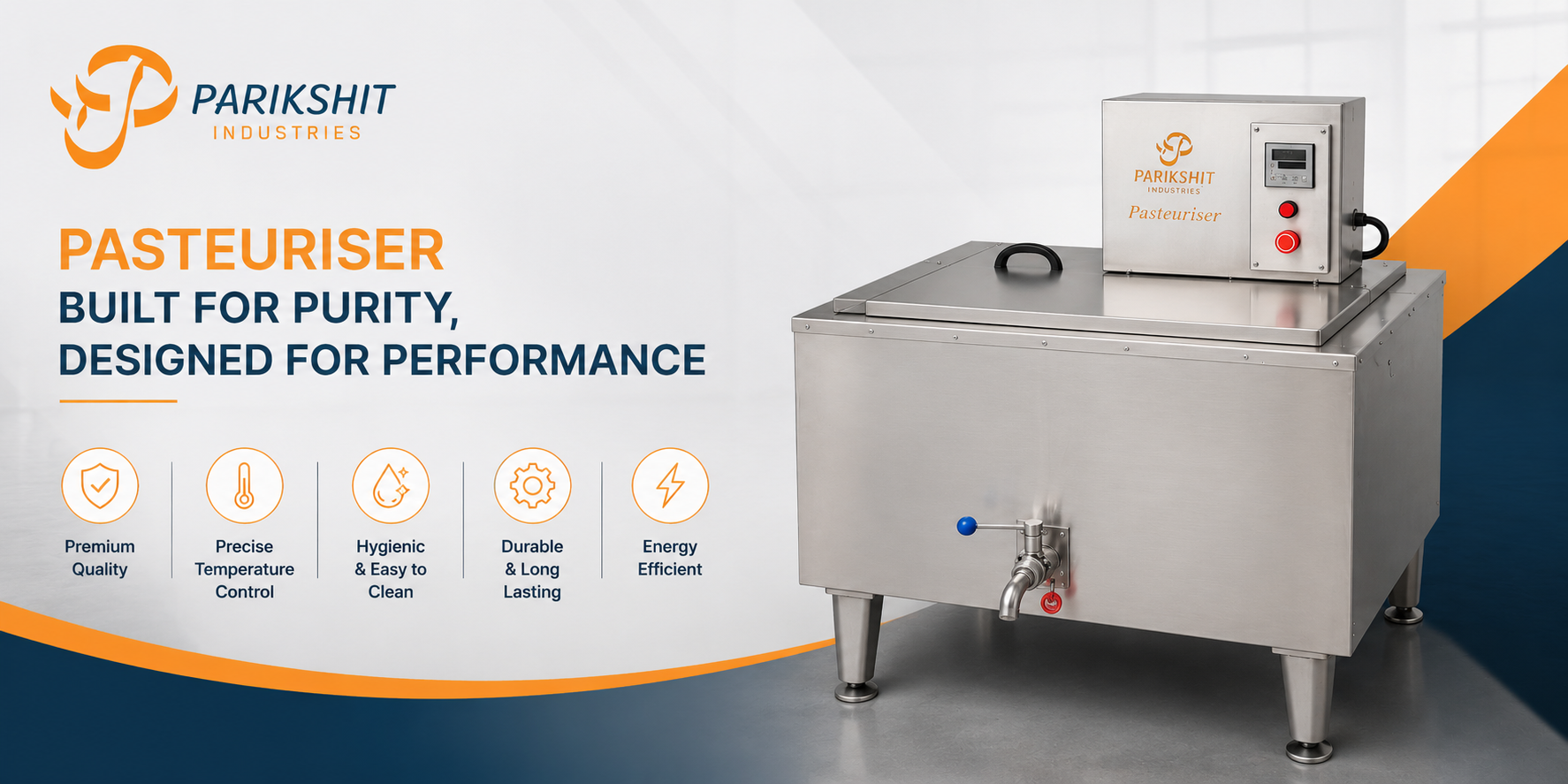
Pasteuriser for Dairy Industry
Understand the critical role of pasteurisers in dairy processing in Ahmedabad. Learn about technical features, applications, and choosing reliable equipment for
Why This Matters in Ahmedabad, Gujarat
Gujarat, particularly Ahmedabad, stands as a significant hub for dairy production and consumption in India. The region's robust agricultural base supports a thriving dairy industry, ranging from large-scale cooperatives to numerous smaller private enterprises. With a growing urban population and increasing demand for packaged dairy products, the need for efficient and compliant pasteurisation technology is paramount. Local businesses require processing solutions that can handle varying capacities, adhere to strict food safety regulations, and operate reliably within the regional climate and infrastructure.
What Is a Pasteuriser for the Dairy Industry — Overview
A pasteuriser is a heat exchanger designed to rapidly heat a liquid, typically milk, to a specific temperature for a set period, followed by immediate cooling. This process, known as pasteurisation, significantly reduces the number of viable pathogenic microorganisms, extending shelf life and making the product safe for consumption. Dairy pasteurisers come in various configurations, including batch pasteurisers for smaller volumes and continuous flow systems like High-Temperature Short-Time (HTST) pasteurisers for larger industrial operations. The core principle involves precise temperature control and holding times to achieve the desired microbial inactivation without compromising the product's sensory or nutritional qualities.
Key Features and Technical Specifications
- Plate Heat Exchanger Design: Utilizes multiple stainless steel plates for efficient heat transfer, minimizing energy consumption.
- Automated Temperature Control: Integrated sensors and control systems maintain precise heating and holding temperatures.
- Regenerative Heating Section: Recovers heat from outgoing pasteurised milk to pre-heat incoming raw milk, enhancing energy efficiency.
- Holding Tube: Designed for specific retention times to ensure adequate microbial inactivation.
- Flow Diversion Valve (FDV): Automatically diverts milk back for reprocessing if pasteurisation temperature is not met.
- CIP (Clean-in-Place) Compatibility: Designed for easy and effective automated cleaning without disassembly.
- Food-Grade Stainless Steel Construction: All product contact parts are made from SS 304 or SS 316 for hygiene and corrosion resistance.
- Variable Capacity Options: Available in various flow rates to suit different production volumes.
Industrial Applications and Use Cases
- Milk Processing Plants: Essential for pasteurising raw milk before packaging as fluid milk.
- Ice Cream Mix Production: Used to pasteurise the base mix, ensuring safety and improving texture.
- Yogurt and Fermented Dairy Products: Pre-treatment of milk before fermentation cultures are added.
- Cheese Production: Pasteurisation of milk prior to rennet addition for certain cheese varieties.
- Cream and Butter Production: Processing of cream to enhance shelf life and safety.
- Flavoured Milk Beverages: Ensures the safety of milk used in various flavoured dairy drinks.
- Specialty Dairy Products: Application in processing milk for paneer, khoa, and other traditional Indian dairy items.
How to Choose the Right Pasteuriser for the Dairy Industry
Selecting appropriate pasteurisation equipment requires careful consideration of several operational factors. The right choice ensures both product safety and operational efficiency.
- Capacity Requirements: Assess daily processing volume to determine if a batch or continuous (HTST) system is more suitable.
- Product Type: Consider the viscosity and composition of the dairy products to be processed, as this influences heat exchanger design.
- Energy Efficiency: Evaluate systems with regenerative sections and optimized heat recovery to minimize utility costs.
- Compliance and Certifications: Verify that the equipment meets relevant food safety standards and regulatory requirements.
- Material Quality: Ensure all product contact surfaces are made from high-grade, food-safe stainless steel (SS 304 or SS 316).
- Automation and Control: Look for systems with reliable PLC-based controls, data logging capabilities, and alarm functions.
- Ease of Cleaning and Maintenance: Prioritize designs that facilitate effective CIP processes and accessible components for routine servicing.
- Supplier Experience and Support: Choose a manufacturer with a proven track record in dairy processing equipment and robust after-sales service.
- Customization Options: Determine if the supplier can tailor the system to specific plant layouts or unique processing needs.
Quality Standards and Compliance
Adherence to stringent quality standards is non-negotiable for any pasteuriser in the dairy industry. Buyers must ensure that the equipment complies with national and international food safety regulations. In India, this includes standards set by the Food Safety and Standards Authority of India (FSSAI), which often align with global benchmarks like ISO (International Organization for Standardization) and HACCP (Hazard Analysis and Critical Control Points) principles. Verification should cover material certifications, welding quality, surface finish, and the accuracy of temperature control systems. Reputable manufacturers will provide documentation for their equipment's compliance with these critical standards, ensuring that the processed dairy products meet safety and quality benchmarks.
Why Company Experience and Capability Matters
The complexity of dairy processing equipment, such as pasteurisers, demands a manufacturer with deep technical understanding and practical experience. Parikshit Industries, with its specialization in ice cream plants and processing machinery, brings a relevant background in thermal processing and hygienic design. Our team's expertise in engineering quality solutions ensures that each pasteuriser is designed for optimal performance, energy efficiency, and long-term reliability. We focus on robust manufacturing processes, utilizing high-grade stainless steel and precise fabrication techniques within our Ahmedabad facility. This commitment extends to thorough quality control at every stage, from material sourcing to final assembly. Our capability to offer customized solutions means we can adapt equipment to specific client needs, ensuring seamless integration into existing dairy operations and providing dependable after-sales support.
Installation, Maintenance and Care Tips
Proper installation and routine maintenance are crucial for the longevity and efficient operation of a pasteuriser.
- Professional Installation: Always engage experienced technicians for installation to ensure correct alignment, piping, and electrical connections. Verify that the system is level and securely anchored.
- Pre-Operational Checks: Before each use, confirm all valves are in the correct position, utility connections (steam, water, electricity) are secure, and control panels are functioning.
- CIP Procedures: Implement a rigorous Clean-in-Place (CIP) schedule using appropriate detergents and sanitizers. Follow the manufacturer's recommended temperatures and circulation times for effective cleaning.
- Gasket Inspection: Regularly inspect gaskets on plate heat exchangers and valves for wear, cracks, or leaks. Replace them promptly to maintain hygienic seals and prevent product contamination.
- Plate Inspection: Periodically open the plate pack to inspect plates for scaling, corrosion, or damage. Clean or replace as necessary to maintain heat transfer efficiency.
- Instrumentation Calibration: Ensure that temperature sensors, flow meters, and pressure gauges are calibrated regularly to guarantee accurate process control.
- Utility Monitoring: Monitor steam pressure, water quality, and power supply to ensure they meet the equipment's specifications. Inconsistent utilities can affect performance and lifespan.
- Preventive Maintenance Schedule: Establish a comprehensive preventive maintenance plan, including lubrication of moving parts, checking electrical connections, and inspecting pumps and motors.
Frequently Asked Questions
The primary purpose of a pasteuriser is to eliminate pathogenic microorganisms from milk and other dairy products through controlled heating and cooling. This process significantly enhances food safety by reducing the risk of foodborne illnesses, while also extending the product's shelf life by inactivating spoilage-causing enzymes and microbes. It ensures that dairy products are safe for consumption without compromising their nutritional value or sensory qualities.
An HTST (High-Temperature Short-Time) pasteuriser processes milk continuously at higher temperatures for shorter durations, making it suitable for large-scale operations. In contrast, a batch pasteuriser heats a fixed volume of milk in a tank for a longer period at a lower temperature. Batch systems are typically used for smaller production volumes or specialty products, offering greater flexibility for varied recipes.
During pasteurisation, the most critical parameters to monitor are temperature and holding time. The milk must reach and maintain the specified pasteurisation temperature for the exact required duration to ensure effective microbial inactivation. Other important parameters include flow rate, pressure differentials across the plates, and the proper functioning of the flow diversion valve, which ensures only fully pasteurised product proceeds.
Pasteurisers for the dairy industry are predominantly constructed from food-grade stainless steel, typically SS 304 or SS 316. These materials are chosen for their excellent corrosion resistance, hygienic properties, and ease of cleaning. All product contact surfaces must be smooth and non-porous to prevent bacterial growth and facilitate effective sanitation, adhering to strict food safety standards.
Many modern pasteurisers incorporate a regenerative heating section, which significantly contributes to energy efficiency. In this section, hot pasteurised milk pre-heats incoming cold raw milk, transferring a substantial amount of thermal energy that would otherwise be wasted. This reduces the energy required for heating the raw milk and cooling the pasteurised product, leading to considerable operational cost savings.
Regular maintenance for a pasteuriser includes daily Clean-in-Place (CIP) procedures, routine inspection and replacement of gaskets, and periodic checks of plates for scaling or damage. Calibration of temperature sensors and flow meters is also essential to maintain accuracy. Additionally, monitoring utility connections, inspecting pumps and motors, and following a preventive maintenance schedule ensures optimal performance and extends the equipment's lifespan.
Conclusion
The pasteuriser remains an indispensable asset for the dairy industry, particularly in a vibrant market like Ahmedabad, Gujarat. It is fundamental to delivering safe, high-quality dairy products to consumers. Choosing the right equipment involves a thorough evaluation of capacity needs, technical specifications, and adherence to stringent quality standards. Partnering with an experienced manufacturer like Parikshit Industries, which understands the nuances of dairy processing and offers robust, reliable solutions, is key to ensuring operational efficiency and long-term success in this vital sector.