Ice Cream Machine Supplier in India
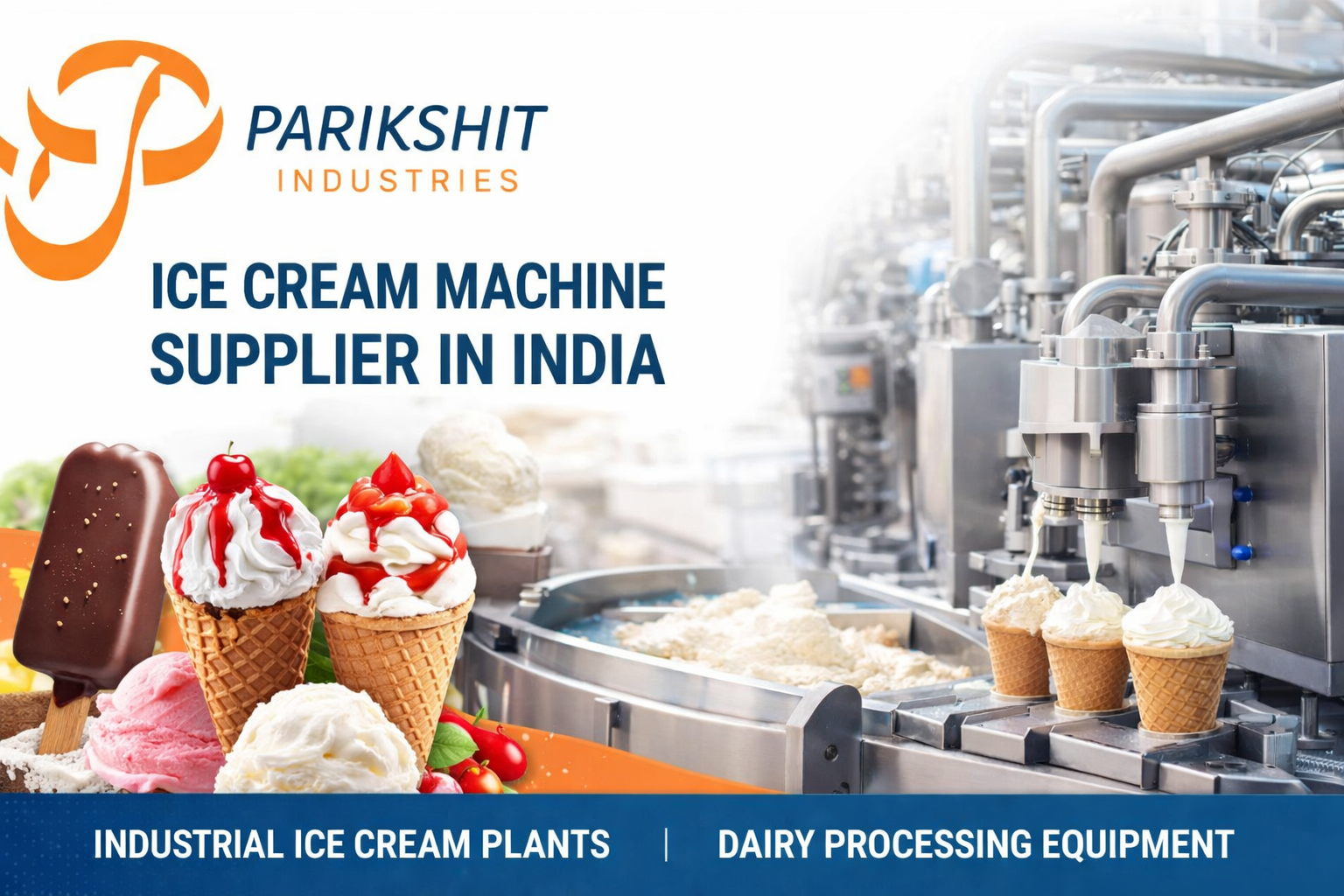
Ice Cream Machine Supplier in India
Ice cream manufacturing has evolved significantly with the adoption of advanced processing technology and automated production systems. An ice cream machine supplier in India supports dairy and dessert industries by providing specialized machinery designed for efficient and hygienic ice cream production.
Industrial ice cream plants integrate several processes such as mixing, pasteurization, homogenization, freezing, flavor addition, and packaging to ensure consistent product quality.
Modern Ice Cream Plants
Modern ice cream plants are engineered to manage high production volumes while maintaining strict food safety and hygiene standards. These systems help manufacturers achieve uniform texture, controlled air incorporation, and stable product structure.
As demand for frozen desserts continues to grow across India, automated ice cream machinery plays an important role in improving productivity and operational efficiency in commercial dairy processing facilities.
Understanding Industrial Ice Cream Plants
An industrial ice cream plant is a complete production setup that converts raw ingredients into finished frozen dessert products through controlled mechanical and thermal processes. The system typically includes mixing units, pasteurizers, homogenizers, aging tanks, continuous freezers, flavor dosing systems, filling machines, and hardening tunnels.
Each stage of the process is carefully designed to maintain precise temperature control, ingredient consistency, and hygienic handling of the product. The integration of automated equipment reduces manual intervention and ensures that production operations remain efficient, consistent, and reliable.
Ice cream plants are widely used by dairy processing companies, dessert manufacturers, and commercial food processing units that require large-scale production capabilities while maintaining strict quality standards.
Key Components of Ice Cream Manufacturing Machinery
Industrial ice cream plants consist of multiple machines working together to form an integrated production line. These machines support controlled processing of ingredients from preparation to final packaging.
Mix Preparation and Pasteurization Equipment
The production process begins with mix preparation, where ingredients such as milk, cream, sugar, stabilizers, emulsifiers, and flavoring agents are blended in precise proportions. The prepared mixture is then heated in pasteurization systems to eliminate harmful microorganisms and ensure food safety.
Homogenization units operate under high pressure to break down fat particles in the mixture. This process creates a smoother and more stable texture, which is essential for producing high-quality ice cream with consistent structure.
Cooling and Aging Systems
After pasteurization and homogenization, the mixture is rapidly cooled using cooling systems or plate heat exchangers. The cooled mix is then transferred to aging tanks where it is stored at controlled refrigeration temperatures. During the aging phase, the ingredients stabilize and integrate fully. This stage enhances the body, texture, and overall consistency of the final product. Typically, the mix remains in aging tanks for several hours to develop the desired structural properties.
Continuous Freezing Technology & Packaging
Continuous Freezing Technology
Freezing is one of the most critical stages in ice cream production. Continuous freezers are used to freeze the aged mix while simultaneously incorporating controlled air into the product. This air incorporation process, often referred to as overrun, gives ice cream its light and creamy texture.
Flavoring systems are integrated into the freezing stage to add fruits, nuts, chocolate chips, syrups, or other inclusions. Automated dosing systems help maintain uniform distribution of flavors throughout the product, ensuring consistent taste and texture.
Packaging and Hardening Process
Once freezing and flavor addition are completed, the ice cream is transferred to packaging machines where it is filled into cups, tubs, cones, or bulk containers. Automated filling systems maintain consistent portion control and hygienic packaging.
After packaging, the product enters hardening tunnels where temperatures typically range between:
This stage fully solidifies the ice cream and stabilizes its texture before storage or distribution.
Industrial Applications of Ice Cream Production Plants
Ice cream manufacturing plants are used across a wide range of commercial food processing operations where consistent product quality and high production capacity are essential.
- Large dairy processing facilities producing packaged ice cream products
- Frozen dessert manufacturing companies supplying retail markets
- Commercial food processing units producing flavored desserts
- Ice cream brands producing cups, cones, and family packs
- Industrial dessert manufacturing for hospitality and catering sectors
Why Automated Ice Cream Machinery Is Important
Automation in ice cream manufacturing helps maintain consistent production standards while reducing manual labor and operational errors. Modern plants are equipped with monitoring systems that regulate temperature, mixing ratios, and processing conditions.
Automated systems improve operational efficiency and ensure repeatable product quality across large production batches. They also support traceability and quality documentation, which is important for maintaining compliance with food safety regulations in dairy processing environments.
Planning an Ice Cream Manufacturing Facility
Setting up an industrial ice cream plant requires careful technical planning and evaluation. Production capacity, equipment selection, and plant layout must be designed to ensure smooth workflow and efficient processing.
Important factors considered during plant planning include production output, refrigeration systems, ingredient storage facilities, and hygienic processing zones. Proper plant layout also supports easier cleaning procedures, convenient maintenance access, and efficient movement of materials throughout the production process.
Quality and Food Safety Standards in Ice Cream Production
Ice cream manufacturing requires strict adherence to food safety and hygiene regulations. Industrial equipment used in ice cream plants is typically constructed using food-grade stainless steel to prevent contamination and support easy cleaning.
Temperature control systems play a critical role in maintaining product stability during both processing and storage. Continuous monitoring helps maintain proper refrigeration conditions throughout the production cycle. Microbial testing and quality assurance procedures are also implemented to verify that the product meets regulatory food safety standards. Traceability systems allow manufacturers to track ingredient batches and production data, supporting effective quality management and regulatory compliance.
Growing Demand for Ice Cream Manufacturing Equipment in India
India's frozen dessert industry has experienced strong growth due to increasing consumer demand, urbanization, and expanding retail distribution networks. The rising popularity of packaged ice cream products has created greater demand for efficient and reliable manufacturing machinery.
Ice cream machine suppliers in India support this growing sector by providing specialized equipment designed for large-scale production. These suppliers offer processing machinery, freezing systems, and packaging solutions that enable manufacturers to meet expanding production requirements while maintaining consistent product quality.
Industrial hubs such as Ahmedabad have become important centers for manufacturing food processing machinery. Equipment suppliers from these regions supply machinery to dairy processors and dessert manufacturers across various parts of the country.
Frequently Asked Questions
An industrial ice cream plant includes several machines such as mix preparation tanks, pasteurizers, homogenizers, aging tanks, continuous freezers, flavor dosing systems, packaging machines, and hardening tunnels that work together to produce ice cream efficiently.
Pasteurization eliminates harmful microorganisms from the ice cream mix, ensuring food safety and helping improve product shelf life while maintaining consistent quality in dairy processing operations.
Aging allows the ingredients in the ice cream mix to fully hydrate and stabilize. This stage improves texture, body, and overall product consistency before the freezing process begins.
Continuous freezers freeze the mix while incorporating controlled air into the product. This process creates the smooth and creamy texture commonly associated with commercial ice cream products.
Ice cream is typically hardened at temperatures between −23°C and −29°C in hardening tunnels. This stage ensures complete solidification and stabilizes the structure of the finished product.
Ice cream plants maintain hygiene by using food-grade stainless steel equipment, automated cleaning systems, controlled temperature environments, and microbial testing to ensure safe and hygienic production conditions.
Ice Cream Manufacturing Plants
Ice cream manufacturing plants play a vital role in modern dairy and frozen dessert production. These automated systems integrate multiple processes such as ingredient mixing, pasteurization, homogenization, freezing, flavor incorporation, and packaging into a streamlined production workflow.
Industrial ice cream plants help manufacturers maintain consistent product quality while meeting strict hygiene and food safety requirements. With the continued expansion of the frozen dessert industry, advanced ice cream processing machinery supports efficient large-scale production and reliable supply for commercial markets across India.
Our Blogs
- Vertical Batch Freezer Uses in Dairy Processing
- Gelato Production Machine
- Homogenizer Exporter
- Pasteuriser Uses in Milk Processing
- Pasteuriser Uses in Milk Processing
- Ageing Vat Uses in Dairy Processing
- Pasto Matic Exporter
- Candy Plant Uses in Ice Candy Production
- Fruit Feeder Uses in Ice Cream Production
- Hardening Tunnel Uses in Ice Cream Production
- Hardening Tunnel Uses in Ice Cream Production
- How Fruit Feeder Works
- Ice Cream Machine Manufacturer in Ahmedabad
- Candy Plant Exporter
- Ageing Vat Exporter
- How Cup and Cone Filling Machine Works
- Benefits of Batch Freezer in Ice Cream Making
- Batch Freezer Supplier
- Automatic Cup and Cone Filling Machine Uses
- How Ageing Vat Works
- Ageing Vat Supplier
- Turnkey Ice Cream Plant Manufacturer
- Ice Cream Making Plant Supplier in India
- Ice Cream Machinery Manufacturer in India
- Ice Cream Machinery Manufacturer in Ahmedabad
- Ice Cream Manufacturing Plant Supplier
- Commercial Ice Cream Plant Manufacturer
- Commercial Ice Cream Plant Manufacturer
- Ice Cream Production Plant Manufacturer in Ahmedabad
- Ice Cream Production Plant Manufacturer in Ahmedabad
- Ice Cream Processing Plant Manufacturer in India
- Ice Cream Processing Plant Manufacturer in India
- Industrial Ice Cream Plant Manufacturer
- Ice Cream Machinery Manufacturer in Gujarat
- Ice Cream Factory Equipment Supplier in Gujarat
- Complete Ice Cream Plant Setup in India
- Automatic Cup and Cone Filling Machine for Ice Cream Industry
- Pasteuriser for Dairy Industry
- Ice Cream Processing Plant Manufacture
- Candy Plant Supplier
- Ice Cream Plant Supplier in Gujarat
- Ice Cream Plant Manufacturer in Ahmedabad
- Ice Cream Plant
- Automatic Cup and Cone Filling Machine Exporter
- Candy Plant Manufacturer
- Batch Freezer Manufacturer
- Automatic Cup and Cone Filling Machine Supplier
- Ageing Vat for Ice Cream Industry
- Benefits of Automatic Cup and Cone Filling Machine
- Automatic Cup and Cone Filling Machine
- Ageing Vat Manufacturer
- Ice Cream Plant
- Ice Cream Processing Equipment Manufacturing in India
- Ice Cream Homogenizer Supplier in Gujarat
- Ice Cream Homogenizer Machine Manufacturer in Ahmedabad
- Ice Cream Freezer Machine Near Me
- Ice Cream Freezing System Manufacturing in India
- Ice Cream Freezing Equipment Supplier in Gujarat
- Ice Cream Batch Freezer Manufacturer in Ahmedabad
- Ice Cream Mixer Machine Near Me
- Ice Cream Mixing System Manufacturing in India
- Ice Cream Blending Machine Supplier in Gujarat
- Ice Cream Mixing Machine Manufacturer in Ahmedabad
- Ice Cream Filling Equipment Near Me
- Ice Cream Filling System Manufacturing in India
- Ice Cream Filling Machine Manufacturer in Ahmedabad
- Ice Cream Production Unit Near Me
- Ice Cream Processing Plant Manufacturing in India
- Ice Cream Factory Equipment Supplier in Gujarat
- Ice Cream Production Plant Manufacturer in Ahmedabad
- Ice Cream Equipment Near Me
- Ice Cream Packaging Machine Supplier in India
- Ice Cream Packaging Machine Supplier in Gujarat
- Ice Cream Unit Manufacturing in India
- Ice Cream Production Plant Manufacturer in Ahmedabad
- Ice Cream Plant Manufacturers in India
- Ice Cream Making Machine Manufacturer in Ahmedabad
- Ice Cream Making Plant Supplier in India
- Candy Plant Machine Manufacturing in Gujarat
- Candy Plant Machine Supplier in Ahmedabad
- Candy Plant Manufacturer in India
- Ice Cream Cone Filling Machine Supplier in Gujarat
- Ice Cream Machine Supplier in India
- Continuous Ice Cream Freezer Manufacturing in Ahmedabad
- Candy Plant Machine Supplier in Ahmedabad
- Continuous Ice Cream Freezer Supplier in Ahmedabad
- Ice Cream Plant Manufacturers in Gujarat
- Ice Cream Plant Manufacturing in Gujarat
- Cup Cone Filling Machine Manufacturer in Ahmedabad
- Ice Cream Plant Manufacturer in India
- Ice Cream Plant Manufacturer in India
- Continuous Ice Cream Freezer Manufacturer in India
- Continuous Ice Cream Freezer in Gujarat
- Cup Cone Filling Machine Manufacturer in Ahmedabad
- Ice Cream Machine Manufacturer in Gujarat
- Ice Cream Plant in Ahmedabad, Gujarat
- Ice Cream Plant Supplier in Ahmedabad
- Ice Cream Machine Manufacturer Supplier in Ahmedabad
- Continuous Ice Cream Freezer Manufacturer in Gujarat
- Continuous Ice Cream Freezer in Ahmedabad
- Continuous Ice Cream Freezer in India
- Ice Cream Machinery Manufacturers in India
- Ice Cream Plant Manufacturer Gujarat
- Ice Cream Machine Manufacturer Ahmedabad
- Ice Cream Machine Manufacturers in India
- Ice Cream Machinery Manufacturers in Gujarat
- Ice Cream Machine Manufacturers in Ahmedabad
- Ice Cream Machine Manufacturers in Gujarat
- Ice Cream Machine Manufacturers