Ice Cream Blending Machine Supplier in Gujarat
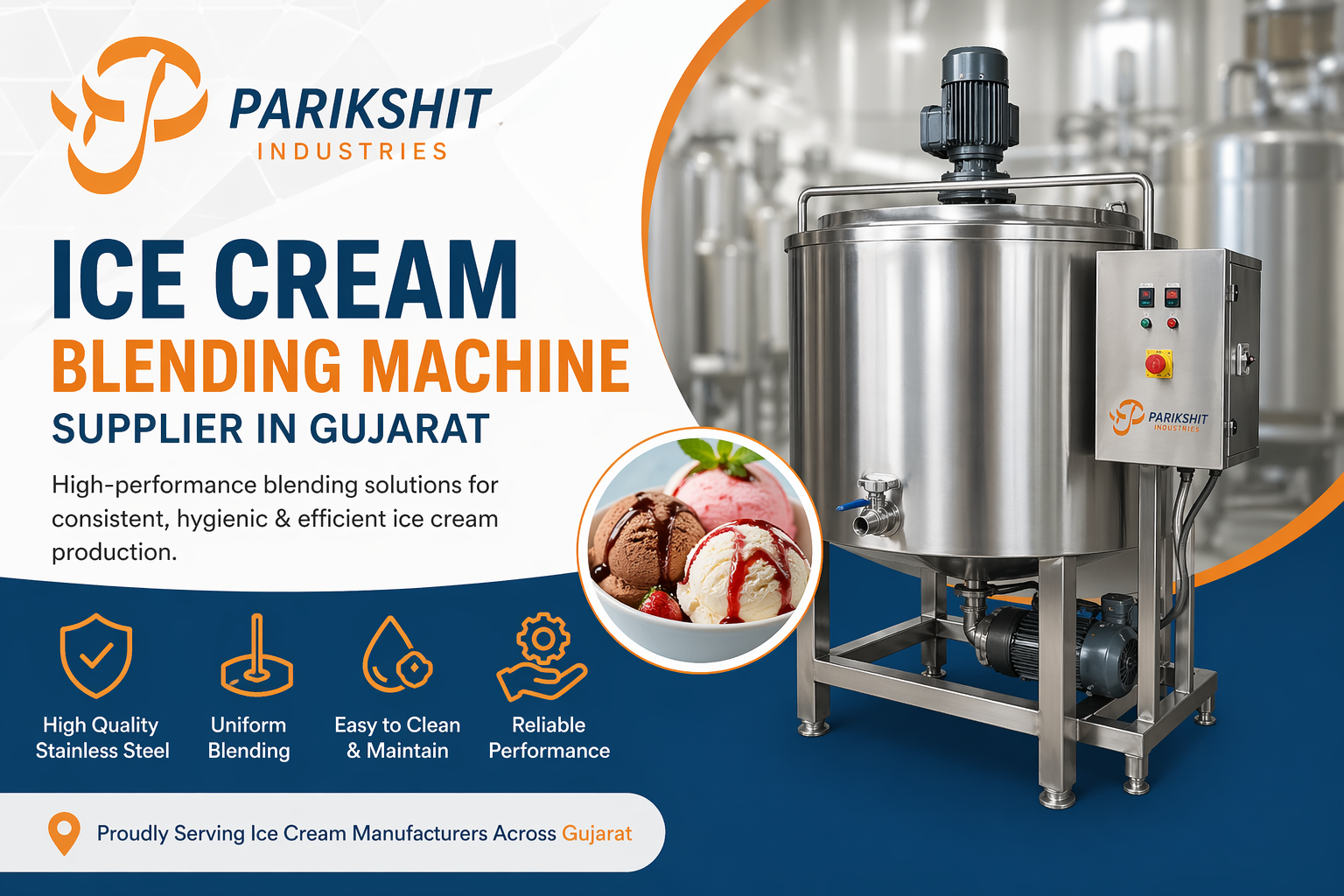
Ice Cream Blending Machine Supplier in Gujarat
The ice cream manufacturing industry in Gujarat has grown rapidly, driven by the increasing demand for consistent product quality, hygienic processing, and efficient production systems. An ice cream blending machine supplier in Gujarat plays a vital role in supporting this growth by providing reliable equipment that ensures uniform mixing of ingredients. Blending is one of the most critical stages in ice cream production, as it directly influences texture, taste, and overall product stability.
As modern food processing standards become more stringent, manufacturers are shifting toward precision-based blending systems that can handle different formulations while maintaining consistency. This has increased the demand for advanced blending machines that support large-scale production without compromising quality.
Understanding Ice Cream Blending Machines in Modern Production
An ice cream blending machine is designed to mix ingredients such as milk, cream, sugar, stabilizers, and flavoring agents into a uniform liquid mixture before further processing. This stage ensures that all components are evenly distributed, reducing the risk of inconsistencies in the final product.
The blending process must be carefully controlled, as improper mixing can lead to uneven texture, inconsistent flavor distribution, and instability during freezing. Modern blending machines are equipped with advanced mixing mechanisms that deliver smooth and homogeneous output, ensuring reliable product quality. In Gujarat, where dairy and food processing industries are well established, the adoption of efficient blending systems has become essential for maintaining production standards and meeting growing market demand.
Role of Ice Cream Blending in the Production Process
Blending serves as the foundation of the entire ice cream manufacturing cycle. It directly affects downstream processes such as pasteurization, homogenization, ageing, and freezing. A well-blended mixture ensures that these subsequent stages operate smoothly and efficiently. The process typically involves combining multiple ingredients in controlled proportions and mixing them until a consistent liquid base is achieved. This base is then processed further to create the final ice cream product.
Key Features of Ice Cream Blending Machines
- High-efficiency mixing systems for uniform blending
- Hygienic stainless steel construction suitable for food-grade applications
- Controlled mixing speed for consistent output
- Easy cleaning and maintenance design
- Compatibility with different production capacities
- Integration with other processing equipment
Applications of Ice Cream Blending Machines
- Ice cream base preparation
- Flavored milk and dairy beverages
- Frozen dessert production
- Soft serve mix preparation
- Specialty dessert formulations
Demand for Ice Cream Blending Machine Supplier in Gujarat
Gujarat has emerged as a key hub for dairy processing and food manufacturing industries. The presence of both large-scale and medium-scale production units has created strong demand for reliable blending machinery. Manufacturers in Gujarat require equipment that supports continuous operation, ensures hygienic processing, and adapts to varying product formulations. This demand has driven the adoption of advanced blending technologies that enhance production efficiency and reduce operational challenges.
Integration with Complete Ice Cream Plant Systems
Ice cream blending machines function as part of a larger processing system that includes multiple production stages. Proper integration ensures a seamless workflow and consistent output. The blending machine works in coordination with other equipment such as storage tanks, pasteurizers, homogenizers, and freezers. This integrated approach helps maintain product quality while reducing processing time.
Benefits of Using Advanced Blending Machines
- Consistent product formulation across batches
- Improved texture and taste quality
- Reduced manual intervention and human error
- Enhanced hygiene and food safety compliance
- Faster processing and increased productivity
Factors to Consider When Choosing a Supplier
- Experience in food processing machinery manufacturing
- Ability to provide customized solutions
- Compliance with hygiene and quality standards
- Availability of installation and technical support
- Reliable after-sales service
Future Trends in Ice Cream Blending Technology
The ice cream industry continues to evolve, with a growing focus on automation, energy efficiency, and product innovation. Blending technology is advancing to meet these changing requirements. Modern systems increasingly incorporate automation features that allow precise control over mixing parameters, reducing human error and ensuring consistent output. Energy-efficient designs are also being adopted to lower operational costs and minimize environmental impact.
Frequently Asked Questions
A blending machine ensures that ingredients such as milk, sugar, and stabilizers are mixed uniformly, creating a consistent base that supports texture, taste, and product stability.
Uniform blending prevents variations in flavor and texture, ensuring that each batch meets quality standards and performs well during freezing and storage.
Yes, modern blending machines are designed to handle a wide range of formulations, allowing manufacturers to produce different types of ice cream and frozen desserts efficiently.
Blending directly influences smoothness, taste distribution, and stability, making it one of the most critical stages in the production process.
These machines are primarily used in dairy processing, frozen dessert manufacturing, and food processing industries that require consistent mixing of liquid and semi-liquid ingredients.
Get In Touch
Address 125, Adarsh Gold Industrial Esate Nr. CISF Camp, New Odhav, Ahmedabad, Gujarat, India – 382415 Phone +91 87993-68675 / +91 94283-89820 Email parikshitindustries4124@gmail.comOur Blogs
- Vertical Batch Freezer Uses in Dairy Processing
- Gelato Production Machine
- Homogenizer Exporter
- Pasteuriser Uses in Milk Processing
- Pasteuriser Uses in Milk Processing
- Ageing Vat Uses in Dairy Processing
- Pasto Matic Exporter
- Candy Plant Uses in Ice Candy Production
- Fruit Feeder Uses in Ice Cream Production
- Hardening Tunnel Uses in Ice Cream Production
- Hardening Tunnel Uses in Ice Cream Production
- How Fruit Feeder Works
- Ice Cream Machine Manufacturer in Ahmedabad
- Candy Plant Exporter
- Ageing Vat Exporter
- How Cup and Cone Filling Machine Works
- Benefits of Batch Freezer in Ice Cream Making
- Batch Freezer Supplier
- Automatic Cup and Cone Filling Machine Uses
- How Ageing Vat Works
- Ageing Vat Supplier
- Turnkey Ice Cream Plant Manufacturer
- Ice Cream Making Plant Supplier in India
- Ice Cream Machinery Manufacturer in India
- Ice Cream Machinery Manufacturer in Ahmedabad
- Ice Cream Manufacturing Plant Supplier
- Commercial Ice Cream Plant Manufacturer
- Commercial Ice Cream Plant Manufacturer
- Ice Cream Production Plant Manufacturer in Ahmedabad
- Ice Cream Production Plant Manufacturer in Ahmedabad
- Ice Cream Processing Plant Manufacturer in India
- Ice Cream Processing Plant Manufacturer in India
- Industrial Ice Cream Plant Manufacturer
- Ice Cream Machinery Manufacturer in Gujarat
- Ice Cream Factory Equipment Supplier in Gujarat
- Complete Ice Cream Plant Setup in India
- Automatic Cup and Cone Filling Machine for Ice Cream Industry
- Pasteuriser for Dairy Industry
- Ice Cream Processing Plant Manufacture
- Candy Plant Supplier
- Ice Cream Plant Supplier in Gujarat
- Ice Cream Plant Manufacturer in Ahmedabad
- Ice Cream Plant
- Automatic Cup and Cone Filling Machine Exporter
- Candy Plant Manufacturer
- Batch Freezer Manufacturer
- Automatic Cup and Cone Filling Machine Supplier
- Ageing Vat for Ice Cream Industry
- Benefits of Automatic Cup and Cone Filling Machine
- Automatic Cup and Cone Filling Machine
- Ageing Vat Manufacturer
- Ice Cream Plant
- Ice Cream Processing Equipment Manufacturing in India
- Ice Cream Homogenizer Supplier in Gujarat
- Ice Cream Homogenizer Machine Manufacturer in Ahmedabad
- Ice Cream Freezer Machine Near Me
- Ice Cream Freezing System Manufacturing in India
- Ice Cream Freezing Equipment Supplier in Gujarat
- Ice Cream Batch Freezer Manufacturer in Ahmedabad
- Ice Cream Mixer Machine Near Me
- Ice Cream Mixing System Manufacturing in India
- Ice Cream Blending Machine Supplier in Gujarat
- Ice Cream Mixing Machine Manufacturer in Ahmedabad
- Ice Cream Filling Equipment Near Me
- Ice Cream Filling System Manufacturing in India
- Ice Cream Filling Machine Manufacturer in Ahmedabad
- Ice Cream Production Unit Near Me
- Ice Cream Processing Plant Manufacturing in India
- Ice Cream Factory Equipment Supplier in Gujarat
- Ice Cream Production Plant Manufacturer in Ahmedabad
- Ice Cream Equipment Near Me
- Ice Cream Packaging Machine Supplier in India
- Ice Cream Packaging Machine Supplier in Gujarat
- Ice Cream Unit Manufacturing in India
- Ice Cream Production Plant Manufacturer in Ahmedabad
- Ice Cream Plant Manufacturers in India
- Ice Cream Making Machine Manufacturer in Ahmedabad
- Ice Cream Making Plant Supplier in India
- Candy Plant Machine Manufacturing in Gujarat
- Candy Plant Machine Supplier in Ahmedabad
- Candy Plant Manufacturer in India
- Ice Cream Cone Filling Machine Supplier in Gujarat
- Ice Cream Machine Supplier in India
- Continuous Ice Cream Freezer Manufacturing in Ahmedabad
- Candy Plant Machine Supplier in Ahmedabad
- Continuous Ice Cream Freezer Supplier in Ahmedabad
- Ice Cream Plant Manufacturers in Gujarat
- Ice Cream Plant Manufacturing in Gujarat
- Cup Cone Filling Machine Manufacturer in Ahmedabad
- Ice Cream Plant Manufacturer in India
- Ice Cream Plant Manufacturer in India
- Continuous Ice Cream Freezer Manufacturer in India
- Continuous Ice Cream Freezer in Gujarat
- Cup Cone Filling Machine Manufacturer in Ahmedabad
- Ice Cream Machine Manufacturer in Gujarat
- Ice Cream Plant in Ahmedabad, Gujarat
- Ice Cream Plant Supplier in Ahmedabad
- Ice Cream Machine Manufacturer Supplier in Ahmedabad
- Continuous Ice Cream Freezer Manufacturer in Gujarat
- Continuous Ice Cream Freezer in Ahmedabad
- Continuous Ice Cream Freezer in India
- Ice Cream Machinery Manufacturers in India
- Ice Cream Plant Manufacturer Gujarat
- Ice Cream Machine Manufacturer Ahmedabad
- Ice Cream Machine Manufacturers in India
- Ice Cream Machinery Manufacturers in Gujarat
- Ice Cream Machine Manufacturers in Ahmedabad
- Ice Cream Machine Manufacturers in Gujarat
- Ice Cream Machine Manufacturers