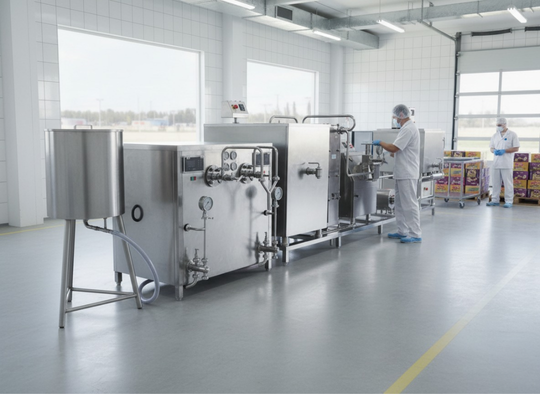
Ice Cream Plant for Dairy Industry
The production of delightful frozen desserts relies heavily on sophisticated machinery and a well-integrated process. For the dairy industry, an Ice Cream Plant for Dairy Industry represents the core of its frozen dessert manufacturing operations. These specialized facilities are meticulously designed to handle every stage, from raw milk processing to the final packaged product. Parikshit Industries, based in Ahmedabad, Gujarat, India, excels in the design, manufacture, and supply of these vital Ice Cream Plants and other essential processing machinery, catering to the evolving needs of the dairy sector.
What is an Ice Cream Plant?
An Ice Cream Milk Plant is a comprehensive system engineered to produce ice cream and related milk-based frozen desserts. It integrates a series of critical processes including milk pasteurization, homogenization, ingredient mixing, aging of the mix, freezing, and finally, packaging. The primary goal is to transform raw dairy ingredients into consistently textured, high-quality ice cream while adhering to stringent hygiene and safety standards. These plants are the backbone for any dairy looking to efficiently produce a wide range of frozen treats.
Key Components of an Ice Cream Plant
A functional Ice Cream Plant for Dairy Industry comprises several interconnected units, each playing a crucial role in the overall production process. Understanding these components is vital for selecting the right equipment for your dairy operation:
Mixing Tanks
For blending milk, cream, sugar, stabilizers, and flavors accurately.
Pasteuriser
Heats the mix to kill harmful bacteria, ensuring product safety.
Homogenizer
Breaks down fat globules to create a smoother, richer texture.
Aging Vats
Chills the mix and holds it for a period to allow fat crystallization and stabilizer hydration.
Continuous Ice Cream Freezer
Rapidly freezes the mix while incorporating air (overrun) for the desired texture and volume.
Flavor Dosing Systems
Precisely adds inclusions and flavors at the final stage.
Packaging Units
Fills and seals the ice cream into various consumer formats.
The Ice Cream Manufacturing Process
Producing high-quality ice cream is a multi-step process that demands precision at every stage:
- Ingredient Blending: Milk, cream, sugar, stabilizers, emulsifiers, and flavors are mixed to create the ice cream base.
- Pasteurization: The mix is heated to a specific temperature for a set duration to eliminate pathogens, ensuring safety.
- Homogenization: Passing the mix through a homogenizer reduces fat globule size, leading to a smoother mouthfeel and preventing fat separation.
- Cooling & Aging: The homogenized mix is cooled and aged in vats. This stage is crucial for fat structure development and stabilizer hydration, contributing to better whipping properties and texture.
- Freezing: The aged mix is then pumped into a freezer, typically a continuous ice cream freezer, where it is rapidly chilled and aerated. Air incorporation (overrun) is critical for the final texture and volume.
- Flavoring & Inclusion: Post-freezing, flavors, fruit, nuts, or chocolate chips can be added.
- Packaging: The semi-frozen ice cream is filled into containers, ranging from small cups to larger tubs, and then hardened in a blast freezer to solidify completely.
Benefits of Modern Ice Cream Plant Machinery
Investing in a modern Ice Cream Plant for Dairy Industry offers significant advantages for dairy producers:
- Enhanced Product Quality: Precise temperature control, optimized homogenization, and controlled freezing ensure consistent texture, creaminess, and prevent large ice crystal formation.
- Improved Hygiene and Safety: Modern plants are designed with sanitary principles, using materials and finishes that are easy to clean, minimizing contamination risks and ensuring compliance with food safety regulations.
- Operational Efficiency: Automation features reduce manual labor, increase production speed, and ensure batch-to-batch consistency. Energy-efficient designs also contribute to lower operating costs.
- Flexibility and Versatility: Advanced plants can accommodate a wide range of recipes, allowing dairies to innovate and produce various ice cream types, including non-dairy, low-sugar, or specialty flavors to meet diverse consumer demands.
- Scalability: Plants can be designed to accommodate different production capacities, from small artisanal operations to large-scale industrial needs, allowing businesses to grow.
Selecting the Right Ice Cream Plant for Your Dairy
Choosing the appropriate Ice Cream Plant for Dairy Industry requires careful consideration of several factors. Parikshit Industries, with its expertise in designing and manufacturing these systems, can guide you through this selection process. Here are key aspects to evaluate:
Capacity Requirements
Determine your current and projected production volume. Plants are available with various processing capacities, from smaller batch operations to large-scale continuous production lines.
Level of Automation
Decide between semi-automatic and fully automatic systems. Fully automatic plants offer higher efficiency and reduced labor but come with a higher initial investment. Semi-automatic options provide a balance for smaller or medium-sized operations.
Product Variety
Consider the range of ice cream products you intend to produce. Some plants are more versatile and can handle different textures, inclusions, and types of frozen desserts, including gelato and novelties.
Space and Utilities
Assess the available space in your facility and the existing utility infrastructure (power, water, steam, refrigeration). The plant's footprint and requirements must align with your site capabilities.
Hygiene and Maintenance
Prioritize equipment designed for easy cleaning and maintenance to ensure high hygiene standards and minimize downtime. Stainless steel construction and sanitary design are crucial.
Budget Considerations
Balance your investment with the expected return in terms of efficiency, quality, and production output. Consider the total cost of ownership, including operational and maintenance expenses.
Parikshit Industries: Your Partner in Ice Cream Plant Solutions
Located in Ahmedabad, Gujarat, India, Parikshit Industries specializes in the design, manufacture, and supply of high-quality Ice Cream Plants and Processing Machinery. They offer a range of essential equipment designed to meet the rigorous demands of the dairy industry. Whether you require a complete Ice Cream Plant, a Continuous Ice Cream Freezer, a Batch Freezer, or other critical components like Homogenizers and Pasteurizers, Parikshit Industries provides robust solutions. Their focus is on delivering machinery that enhances product quality, ensures operational efficiency, and supports the growth of dairy businesses seeking to excel in the competitive frozen dessert market.
Frequently Asked Questions
What are the primary raw materials for ice cream production?
The primary raw materials include milk, cream, sugar, stabilizers (like guar gum or carrageenan), emulsifiers (like mono- and diglycerides), and flavoring agents. Water is also a key component. For specialized products, ingredients like non-dairy milk alternatives, sweeteners, and various inclusions are used.
How does homogenization affect ice cream quality?
Homogenization breaks down fat globules into smaller, uniform sizes. This process prevents fat separation, creates a smoother and richer texture, improves whipping properties (air incorporation), and contributes to a more stable ice cream structure.
What is 'overrun' in ice cream manufacturing?
Overrun refers to the amount of air incorporated into the ice cream during the freezing process. It is expressed as a percentage of the volume of the unfrozen mix. Higher overrun means more air, resulting in a lighter, softer, and less dense ice cream, while lower overrun yields a denser, richer product.
Can an ice cream plant produce gelato as well?
Yes, many modern ice cream plants can be adapted or configured to produce gelato. Gelato typically has less overrun and is often churned at a slightly warmer temperature than traditional ice cream, resulting in a denser, smoother, and more intense flavor profile. Specialized gelato machines or adaptable settings on multi-purpose plants are used.
Why is aging the ice cream mix important?
Aging the mix after homogenization and cooling allows the fat to partially crystallize and the stabilizers to fully hydrate. This process improves the whipping ability of the mix, enhances the final texture by contributing to smaller ice crystals, and leads to a smoother, more desirable mouthfeel in the finished ice cream.
Elevate Your Dairy Production with Expertly Crafted Ice Cream Plants
For dairy businesses aiming for superior frozen dessert quality and operational excellence, selecting the right Ice Cream Plant for Dairy Industry is paramount. Parikshit Industries, based in Ahmedabad, Gujarat, India, offers specialized design, manufacturing, and supply services for Ice Cream Plants and essential processing machinery. Whether you are establishing a new dairy operation or upgrading existing capabilities, partnering with experienced manufacturers ensures you receive equipment tailored to your specific needs. Reach out to explore how their range of products can empower your business to produce exceptional ice cream that delights consumers.