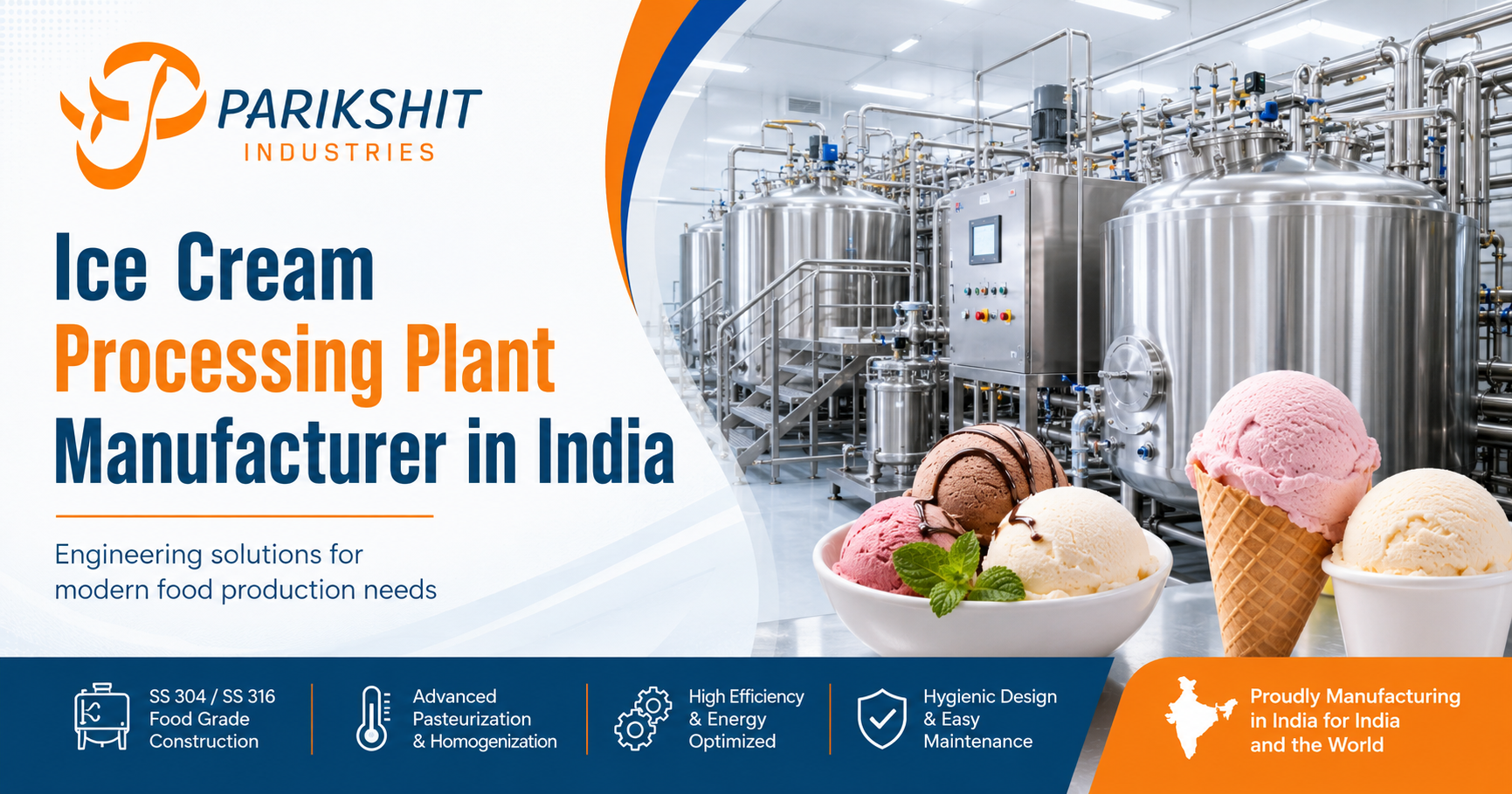
Ice Cream Processing Plant Manufacturer in India
Parikshit Industries designs and manufactures ice cream processing plants in India, offering quality engineering solutions for modern food production needs.
Why This Matters in India
India's food processing sector, particularly dairy and frozen desserts, is experiencing significant expansion. Urbanization, rising disposable incomes, and evolving consumer preferences for diverse ice cream flavors and formats fuel this growth. For manufacturers, this means a constant need for efficient production lines that can handle varying capacities while maintaining product consistency and hygiene. Local manufacturing expertise, especially from hubs like Ahmedabad in Gujarat, provides advantages in terms of understanding regional market needs, offering timely support, and adhering to national regulatory frameworks.
What Is an Ice Cream Processing Plant — Overview
An ice cream processing plant is a comprehensive system designed to transform raw ingredients like milk, cream, sugar, and stabilizers into finished ice cream products. The process typically involves several stages: mix preparation, pasteurization, homogenization, cooling, aging, freezing, and packaging. Each stage utilizes specialized machinery to ensure the mix is safe, stable, and develops the desired texture and overrun. These integrated plants are engineered for continuous or batch production, catering to various scales of operation from small-to-medium enterprises to large industrial facilities.
Key Features and Technical Specifications
- Food-Grade Stainless Steel Construction: All contact parts are typically made from SS304 or SS316 for hygiene and corrosion resistance.
- Automated Control Systems (PLC): Programmable Logic Controllers manage and monitor critical parameters like temperature, pressure, and flow.
- Clean-in-Place (CIP) Systems: Integrated cleaning systems ensure thorough sanitation of all internal surfaces without disassembly.
- Energy-Efficient Designs: Optimized motors, heat exchangers, and refrigeration units reduce operational costs.
- Modular Plant Layouts: Flexible designs allow for easy expansion or customization to fit specific production needs and space constraints.
- Precise Temperature Control: Advanced sensors and controls maintain exact temperatures throughout pasteurization, aging, and freezing.
- Variable Speed Drives: Allow for fine-tuning of pump and agitator speeds for optimal processing of different mix viscosities.
- High-Efficiency Homogenizers: Ensure uniform fat globule distribution for a smooth texture and improved stability.
Industrial Applications and Use Cases
- Large-Scale Ice Cream Production: Manufacturing for national and international brands requiring high volume output.
- Dairy Cooperatives: Processing milk into value-added products like ice cream to diversify revenue streams.
- Confectionery and Dessert Manufacturers: Integrating ice cream production into broader dessert portfolios.
- Food Service and Hospitality Suppliers: Producing bulk ice cream for restaurants, hotels, and catering services.
- Specialty Ice Cream Brands: Crafting artisanal or niche ice cream products with unique formulations.
- Export-Oriented Units: Meeting international quality and hygiene standards for global markets.
- New Product Development Facilities: Pilot plants for testing new recipes and production methods.
How to Choose the Right Ice Cream Processing Plant
Selecting an appropriate ice cream processing plant involves careful consideration of several factors to ensure it aligns with your business goals. Begin by assessing your required production capacity, both current and projected, to determine the scale of machinery needed. Evaluate the level of automation desired, from semi-automatic batch systems to fully automated continuous lines, considering labor availability and operational efficiency.
- Capacity and Scalability: Match the plant's output to your current and future production demands.
- Material Quality and Construction: Verify the use of food-grade stainless steel (SS304/SS316) for all product contact surfaces.
- Certifications and Compliance: Ensure the manufacturer and equipment adhere to relevant national and international food safety standards.
- Supplier Experience and Reputation: Choose a manufacturer with a proven track record in designing and installing similar plants.
- After-Sales Support: Confirm the availability of installation assistance, training, spare parts, and maintenance services.
- Customization Options: Discuss the ability to tailor the plant layout and specific components to your unique space and product requirements.
- Energy Efficiency: Inquire about features that minimize power consumption and operational costs.
Quality Standards and Compliance
Adherence to stringent quality standards is non-negotiable in food processing. For ice cream processing plants in India, compliance with FSSAI (Food Safety and Standards Authority of India) regulations is paramount, covering everything from raw material sourcing to final product packaging. Additionally, international standards like ISO 22000 (Food Safety Management System) and HACCP (Hazard Analysis and Critical Control Points) principles are crucial for ensuring a safe and hygienic production environment. Buyers should verify that the manufacturer's processes and equipment designs meet these benchmarks, often evidenced by certifications and a transparent quality assurance system.
Why Company Experience and Capability Matters
The complexity of ice cream processing demands a manufacturer with deep technical expertise and a proven track record. Parikshit Industries specializes in the design, manufacture, and supply of ice cream plants and processing machinery, focusing on quality engineering. Our team possesses the capability to deliver solutions that meet modern food processing standards, from initial concept to final installation. We emphasize robust manufacturing processes, stringent quality control at every stage, and the ability to offer tailored solutions for diverse operational needs. This commitment ensures reliable equipment performance and consistent product quality for our clients across India.
Installation, Maintenance and Care Tips
Proper installation and ongoing maintenance are vital for the longevity and efficient operation of an ice cream processing plant. Installation requires careful site preparation, including ensuring adequate space, utility connections (water, electricity, steam, refrigeration), and proper drainage. Following the manufacturer's guidelines for assembly and commissioning is essential to prevent operational issues.
- Regular Cleaning: Implement a strict Clean-in-Place (CIP) schedule to prevent microbial growth and maintain hygiene.
- Preventive Maintenance: Conduct routine checks on motors, pumps, seals, and valves to identify and address wear before it leads to breakdowns.
- Calibration: Periodically calibrate temperature sensors, flow meters, and pressure gauges to ensure accurate process control.
- Lubrication: Follow manufacturer recommendations for lubricating moving parts to reduce friction and extend equipment life.
- Operator Training: Ensure all personnel are thoroughly trained on equipment operation, safety protocols, and basic troubleshooting.
- Spare Parts Inventory: Keep a stock of critical spare parts to minimize downtime during unexpected repairs.
Frequently Asked Questions
Ice cream processing plants can vary significantly in capacity, ranging from small batch freezers producing a few hundred liters per day to large continuous freezers capable of thousands of liters per hour. The choice depends entirely on the scale of production required by the business, whether it's for a local market or national distribution.
The primary material used in the construction of ice cream processing plants is food-grade stainless steel, typically SS304 or SS316. These materials are chosen for their excellent corrosion resistance, durability, and ease of cleaning, which are critical for maintaining hygiene and preventing contamination in food production environments.
Automation plays a crucial role in modern ice cream plants by ensuring consistent product quality, reducing manual labor, and improving operational efficiency. Automated systems, often controlled by PLCs, precisely manage parameters like temperature, mixing times, and ingredient dosing, leading to higher throughput and reduced human error.
When selecting an ice cream processing plant manufacturer, look for certifications such as ISO 9001 for quality management and ISO 22000 for food safety management. Compliance with national standards like FSSAI in India is also essential. These certifications indicate a commitment to quality, safety, and reliable manufacturing practices.
Yes, modern ice cream processing plants are often designed with flexibility to produce a wide variety of frozen desserts. This includes hard-pack ice cream, soft-serve, kulfi, sorbets, and even frozen yogurts. The versatility usually comes from adjustable processing parameters and modular components that can be adapted for different product formulations.
Reputable manufacturers typically offer comprehensive after-sales support, which includes installation supervision, operator training, and technical assistance. This support often extends to providing spare parts, offering preventive maintenance services, and troubleshooting any operational issues that may arise, ensuring continuous and efficient plant operation.
Conclusion
Investing in an ice cream processing plant is a strategic decision for any business aiming to succeed in India's dynamic frozen dessert market. The right plant, designed and manufactured by an experienced partner, ensures not only efficient production but also adherence to critical hygiene and quality standards. By carefully considering capacity, automation, material quality, and the manufacturer's expertise, businesses can establish a robust foundation for producing high-quality ice cream that delights consumers and drives growth.