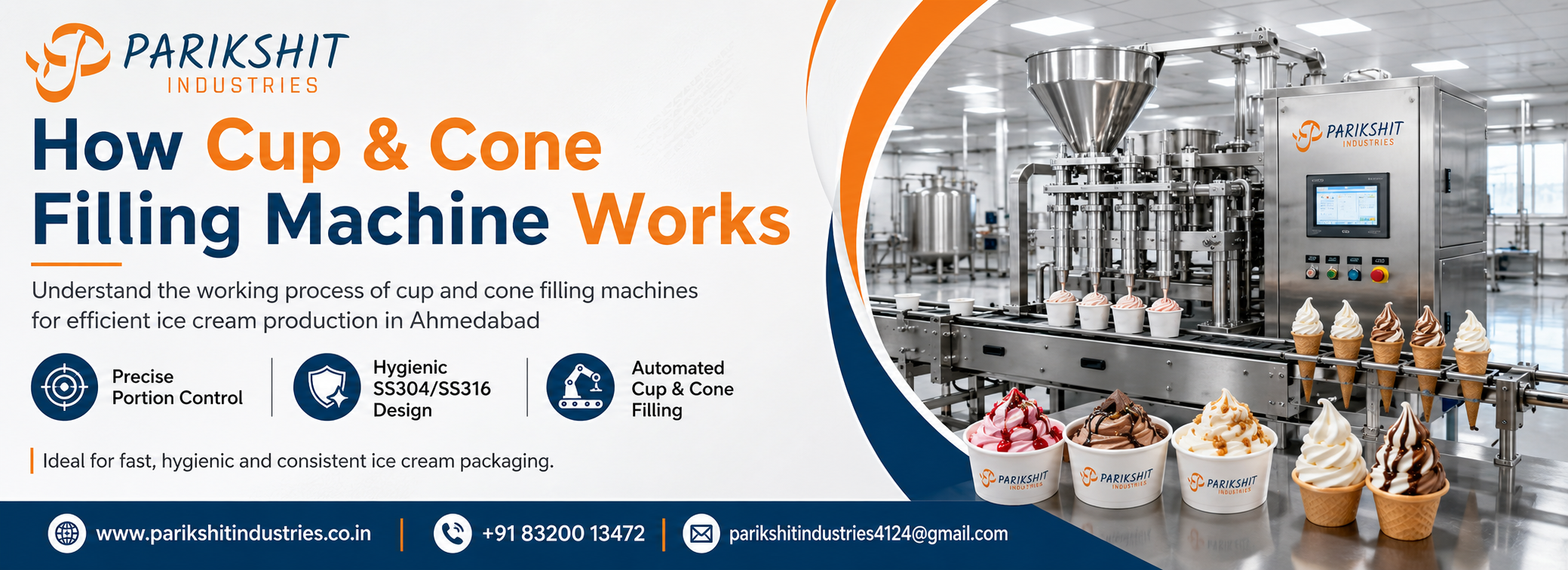
How Cup and Cone Filling Machine Works
Understand how cup and cone filling machines work for efficient ice cream production. Learn about features, applications, and choosing the right equipment in Ah
Why This Matters in Ahmedabad
Ahmedabad, a vibrant industrial hub in Gujarat, boasts a significant presence in the food processing sector, including a thriving ice cream industry. Local manufacturers face increasing demand for diverse ice cream products, from single-serve cups to elaborate cones. Efficient packaging is not just about aesthetics; it's about maintaining product integrity, extending shelf life, and meeting consumer expectations for convenience and hygiene. Investing in understanding and optimizing the operation of cup and cone filling machines directly impacts profitability and market competitiveness for businesses in and around Ahmedabad.
What is a Cup and Cone Filling Machine — Overview
A cup and cone filling machine is an automated piece of equipment designed to precisely dispense ice cream into pre-formed cups or cones. These machines integrate several functions, including product feeding, volumetric or gravimetric filling, capping, and sometimes sealing or lidding. They are engineered to handle the unique challenges of filling a semi-solid, temperature-sensitive product like ice cream, ensuring consistent portion control and minimizing product loss. The process typically involves a conveyor system to move containers, filling nozzles that dispense the ice cream, and mechanisms for applying lids or seals.
Key Features and Technical Specifications
- Volumetric or Gravimetric Filling Systems: Ensures precise portion control for consistent product weight or volume.
- Adjustable Filling Speeds: Allows for optimization based on product viscosity and container type.
- Sanitary Design: Constructed with food-grade stainless steel (e.g., SS304/SS316) for easy cleaning and hygiene compliance.
- Automated Capping/Lidding Mechanism: Integrates with various lid types, including foil, plastic, or paperboard.
- Programmable Logic Controller (PLC) with HMI: Enables easy operation, recipe management, and fault diagnostics.
- Product Hopper with Agitator: Maintains product consistency and prevents ice crystal formation.
- Nozzle Cleaning System: Often includes CIP (Clean-In-Place) capabilities for efficient sanitation.
- Container Handling and Indexing: Precise movement and positioning of cups or cones for accurate filling.
Industrial Applications and Use Cases
- Single-Serve Ice Cream Cups: Filling standard ice cream cups for retail and foodservice.
- Novelty Ice Cream Cones: Dispensing ice cream into wafer or sugar cones, often with toppings.
- Multi-Flavored Products: Machines can be configured for multiple filling heads to dispense different flavors simultaneously or sequentially.
- Topping Application: Integration with systems for adding sauces, nuts, or chocolate chips.
- High-Speed Production Lines: Essential for large-scale ice cream manufacturers requiring rapid packaging.
- Custom Shape Containers: Adaptable to various container shapes and sizes beyond standard cups and cones.
- Frozen Yogurt and Gelato: Suitable for filling other frozen desserts with similar textural properties.
How to Choose the Right Cup and Cone Filling Machine
- Production Capacity Needs: Determine the number of units per hour or shift required.
- Product Type and Viscosity: Consider if the machine can handle your specific ice cream formulation.
- Container Types and Sizes: Ensure compatibility with your chosen cups and cones.
- Level of Automation: Decide between semi-automatic and fully automatic systems.
- Hygiene and Sanitation Standards: Verify materials and CIP capabilities for food safety.
- Integration Capabilities: Check if it can connect with upstream and downstream equipment.
- Supplier Support and Service: Evaluate availability of installation, training, and maintenance.
- Customization Options: Assess if the machine can be adapted for unique product features or packaging.
Quality Standards and Compliance
For any food processing machinery, adherence to stringent quality standards and regulatory compliance is non-negotiable. Manufacturers like Parikshit Industries prioritize using food-grade materials, typically SS304 or SS316 stainless steel, which are resistant to corrosion and easy to sanitize. Compliance with international standards such as ISO 9001 for quality management systems is a strong indicator of a manufacturer's commitment to producing reliable equipment. Buyers should always inquire about the materials used, the machine's design for cleanability (e.g., crevice-free surfaces, easy disassembly), and any relevant certifications that demonstrate adherence to food safety and manufacturing best practices.
Why Parikshit Industries' Experience and Capability Matters
Parikshit Industries brings a wealth of experience in designing and manufacturing ice cream processing and packaging machinery. Our engineering team possesses deep expertise in handling the specific challenges of dairy and frozen dessert production. We focus on building robust, user-friendly machines that integrate seamlessly into existing production lines. Our manufacturing process emphasizes precision engineering and rigorous quality control at every stage, ensuring that each cup and cone filling machine is reliable and performs to specification.
We understand that customization is often key in the food industry. Parikshit Industries excels at tailoring solutions to meet unique client requirements, whether it's a specific filling volume, a special container type, or integration with unique topping systems. Our commitment extends beyond delivery, with comprehensive after-sales support, installation, and training services designed to ensure your operation runs smoothly and efficiently. This holistic approach, grounded in practical experience and technical capability, makes us a trusted partner for ice cream manufacturers.
Installation, Maintenance, and Care Tips
Proper installation is the first step towards optimal performance. Ensure the machine is placed on a level surface with adequate space for operation and maintenance. Connect utilities (power, compressed air, water) according to the manufacturer's specifications.
Regular maintenance is crucial for longevity and consistent output. This includes daily cleaning of all product contact parts using approved food-grade sanitizers. Pay close attention to filling nozzles, seals, and conveyor belts.
- Daily Cleaning: Thoroughly wash and sanitize all parts that come into contact with ice cream.
- Lubrication: Periodically lubricate moving parts as per the manual to ensure smooth operation and prevent wear.
- Seal Checks: Inspect seals and gaskets regularly for wear and tear, replacing them as needed to prevent leaks and maintain hygiene.
- Calibration: Periodically check and calibrate the filling system to ensure accurate portioning.
- Preventive Maintenance: Schedule regular inspections and servicing by qualified technicians to identify and address potential issues before they cause downtime.
- Operator Training: Ensure all operators are well-trained on the machine's functions, cleaning procedures, and safety protocols.
Frequently Asked Questions
These machines are designed to handle various ice cream formulations, including standard ice cream, gelato, frozen yogurt, and sorbet. The key is the product's viscosity and its ability to be dispensed at freezing temperatures without excessive ice crystal formation.
Portion control is typically achieved through either volumetric filling, where a specific volume is dispensed using a calibrated cylinder or pump, or gravimetric filling, which uses load cells to weigh the exact amount of ice cream.
The speed varies significantly based on the machine's design, level of automation, and the type of container being filled. Simpler machines might fill 30-60 cups per minute, while high-speed, fully automated lines can exceed 100-200 containers per minute.
Cleaning is critically important. Ice cream is a perishable food product, and hygiene is paramount to prevent bacterial contamination and ensure product safety. Machines are designed with features like CIP (Clean-In-Place) systems to facilitate thorough and efficient sanitation.
Yes, most modern cup and cone filling machines are designed to be versatile and can be configured to handle various lid types, including pre-cut foil lids, plastic lids, heat-sealed films, and even integrated cone wrappers.
Routine maintenance includes daily cleaning and sanitization, periodic lubrication of moving parts, inspection and replacement of seals, and calibration of the filling system. Preventive maintenance schedules, often recommended by the manufacturer, are also essential.
Conclusion
For any ice cream manufacturer in Ahmedabad or beyond, the efficiency and reliability of their cup and cone filling machines are directly linked to product quality and operational success. Understanding how these machines work, their key features, and the importance of choosing the right equipment for your specific needs is vital. From precise portion control and hygienic design to robust construction and dependable after-sales support, partnering with an experienced manufacturer like Parikshit Industries ensures you receive solutions engineered for performance and longevity. Investing in the right technology and maintaining it diligently will pave the way for consistent production and customer satisfaction.