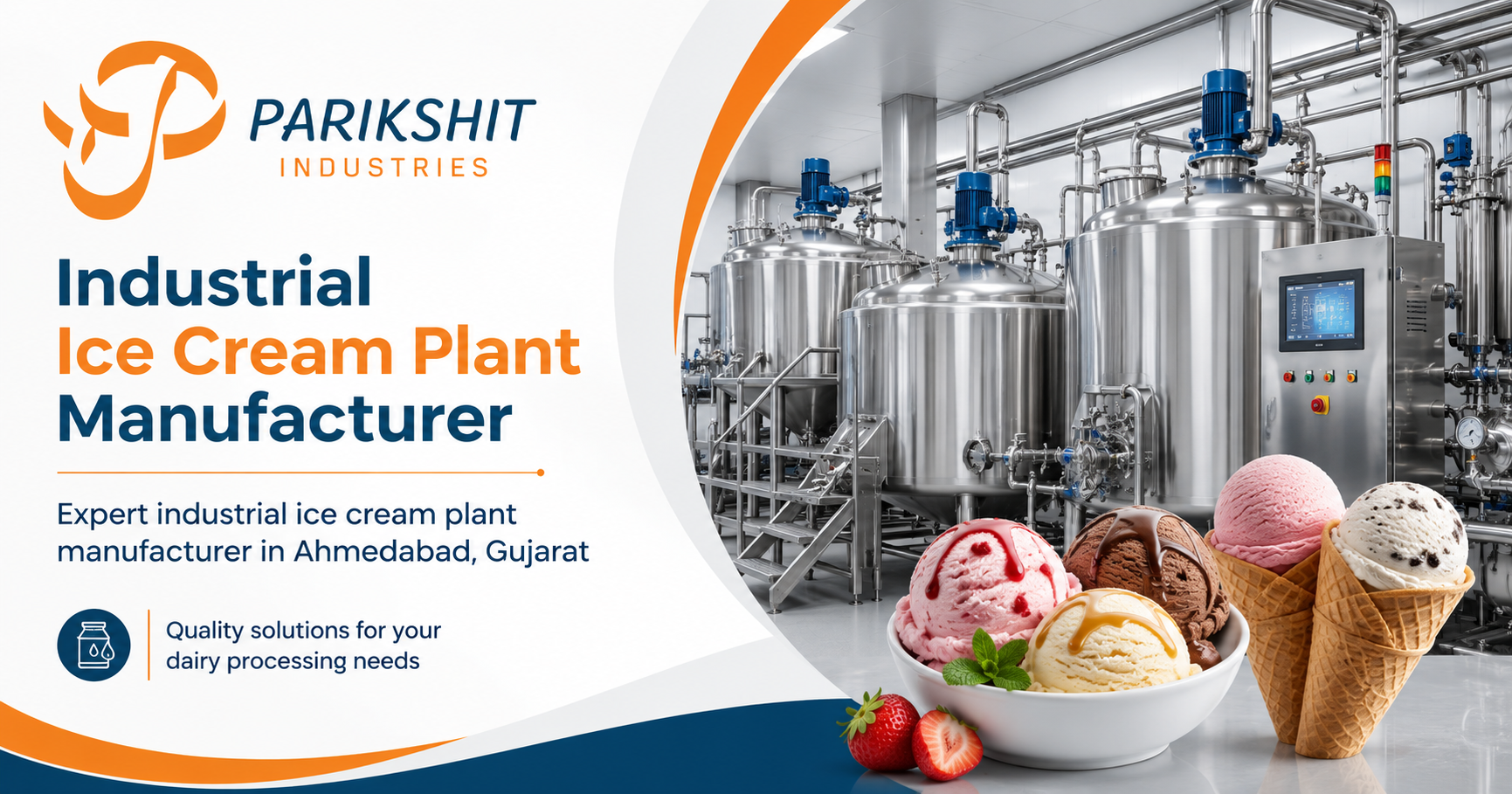
Industrial Ice Cream Plant Manufacturer
Expert industrial ice cream plant manufacturer in Ahmedabad, Gujarat. Parikshit Industries offers quality solutions for your dairy processing needs.
Why This Matters in Ahmedabad
Ahmedabad, a vibrant industrial hub in Gujarat, presents a fertile ground for the food and dairy processing sector. With a growing population and a strong consumer preference for quality dairy products, local entrepreneurs and established businesses alike are keen to expand their ice cream production capabilities. The region's robust infrastructure and supportive business environment further encourage investment in advanced manufacturing solutions. An industrial ice cream plant manufacturer in Ahmedabad plays a crucial role in meeting this local demand, offering localized expertise and support.
What is an Industrial Ice Cream Plant — Overview
An industrial ice cream plant is a comprehensive system designed for the large-scale production of ice cream. It encompasses a series of interconnected machinery that handles every stage of the process, from raw ingredient mixing and pasteurization to homogenization, cooling, flavoring, freezing, hardening, and packaging. These plants are engineered for high throughput, consistent product quality, and adherence to stringent food safety standards, making them essential for commercial ice cream manufacturers.
Key Features and Technical Specifications
Industrial ice cream plants are characterized by several critical features that ensure efficient and high-quality production. When evaluating a system, consider the following:
- Automated Control Systems: PLC-based controls for precise management of temperature, flow rates, and processing times.
- Hygienic Design: Stainless steel construction (e.g., SS304, SS316) with crevice-free surfaces to prevent bacterial growth and facilitate cleaning.
- Variable Speed Drives: Allowing for adjustable processing parameters to accommodate different product formulations and production volumes.
- Integrated Pasteurization: Systems capable of heating and holding mixes to meet safety regulations, often with regenerative cooling for energy efficiency.
- High-Efficiency Freezers: Continuous or batch freezers designed for optimal overrun (air incorporation) and texture development.
- Robust Homogenization: High-pressure homogenizers to ensure a smooth, stable emulsion and prevent ice crystal formation.
- Modular Design: Allowing for scalability and future expansion of production capacity.
- Energy Efficiency: Features like heat recovery systems and optimized motor performance to reduce operational costs.
Industrial Applications and Use Cases
Industrial ice cream plants are versatile and cater to a wide range of applications within the dairy and food processing industries. Their primary use is in the mass production of various ice cream types, but they also support related products:
- Standard Ice Cream Production: Manufacturing of vanilla, chocolate, strawberry, and other popular flavors in bulk.
- Premium and Super-Premium Ice Cream: Producing richer, denser ice creams with lower overrun.
- Frozen Yogurt and Sorbet: Adapting processing parameters for different dairy and non-dairy bases.
- Novelty Ice Cream Manufacturing: Producing items like ice cream bars, sandwiches, and cones.
- Dairy Product Diversification: Utilizing parts of the plant for other dairy products like kulfi or frozen desserts.
- Contract Manufacturing: Providing production capacity for brands that outsource their manufacturing.
- Research and Development: Testing new formulations and processing techniques on a pilot scale.
- Export-Oriented Production: Meeting international quality and safety standards for global markets.
How to Choose the Right Industrial Ice Cream Plant
Selecting the appropriate industrial ice cream plant requires careful consideration of your specific business needs and future growth plans. Use this checklist to guide your decision:
- Production Capacity: Determine your daily or hourly output requirements, considering current demand and projected growth.
- Product Variety: Assess the range of ice cream types and formulations you intend to produce, as different products may require specific machinery configurations.
- Space and Layout: Evaluate the available floor space and consider the plant's footprint, including access for maintenance and cleaning.
- Automation Level: Decide on the desired level of automation, balancing efficiency gains with initial investment and operational complexity.
- Hygiene and Cleaning Standards: Ensure the plant meets stringent food safety regulations (e.g., HACCP, GMP) and is designed for easy and effective cleaning (CIP/SIP capabilities).
- Energy Efficiency: Look for features that minimize power consumption and operational costs over the plant's lifespan.
- Supplier Reputation and Support: Research the manufacturer's track record, customer testimonials, and the availability of after-sales service, spare parts, and technical assistance.
- Customization Options: Verify if the manufacturer can tailor the plant design and specifications to your unique requirements.
Quality Standards and Compliance
Adherence to recognized quality standards and regulatory compliance is non-negotiable for any industrial ice cream plant. Manufacturers must demonstrate their commitment to producing safe, high-quality equipment. Key standards and certifications to look for include compliance with food-grade material specifications (e.g., SS304, SS316 for contact parts), adherence to Good Manufacturing Practices (GMP), and potentially certifications like ISO 9001 for quality management systems.
The plant's design should also facilitate easy cleaning and sanitation to prevent microbial contamination, often incorporating features for Clean-in-Place (CIP) and Sterilize-in-Place (SIP) systems. Understanding these standards ensures that the equipment not only performs efficiently but also meets the stringent safety requirements of the food industry, protecting both consumers and your brand reputation.
Why Parikshit Industries' Experience and Capability Matters
Parikshit Industries brings a wealth of experience and proven capability to the design and manufacture of industrial ice cream plants. Our approach is rooted in a deep understanding of dairy processing technology and the specific needs of our clients in Ahmedabad and beyond. We focus on robust engineering, utilizing high-quality materials and precise fabrication techniques to ensure the longevity and reliability of our equipment.
Our manufacturing process is underpinned by stringent quality control measures at every stage, from material sourcing to final assembly and testing. The expertise of our engineering and production teams allows us to offer customized solutions, adapting plant designs to meet unique operational requirements and space constraints. This commitment to quality, combined with our dedication to providing comprehensive after-sales support, makes Parikshit Industries a trusted partner for businesses seeking efficient and dependable ice cream processing solutions.
Installation, Maintenance, and Care Tips
Proper installation, regular maintenance, and diligent care are crucial for the optimal performance and extended lifespan of your industrial ice cream plant.
Installation
Ensure the plant is installed by qualified technicians according to the manufacturer's specifications. Proper alignment of machinery, correct electrical and plumbing connections, and adequate ventilation are essential.
Routine Maintenance:
- Daily Cleaning: Thoroughly clean all product contact surfaces after each production run using approved cleaning agents and sanitizers.
- Weekly Checks: Inspect seals, gaskets, and moving parts for wear and tear. Lubricate bearings and motors as recommended.
- Monthly Inspections: Check refrigeration systems, control panels, and safety features. Calibrate temperature and pressure sensors.
- Annual Servicing: Schedule a comprehensive service with the manufacturer or a qualified technician to ensure all components are functioning optimally and to address any potential issues proactively.
Care Tips
- Water Quality: Use treated or filtered water for cleaning and processing to prevent mineral buildup.
- Chemical Usage: Employ food-grade cleaning and sanitizing chemicals recommended by the manufacturer.
- Operator Training: Ensure all personnel operating the plant are adequately trained on its functions, safety procedures, and cleaning protocols.
- Record Keeping: Maintain detailed logs of cleaning, maintenance, and any operational issues.
Frequently Asked Questions
Industrial ice cream plants can vary significantly in capacity, ranging from small-scale units producing a few hundred liters per hour to large-scale facilities capable of processing thousands of liters per hour. The specific capacity is determined by the number and type of freezers, pumps, and other processing equipment integrated into the system.
The primary material used for product contact surfaces in industrial ice cream plants is high-grade stainless steel, typically SS304 or SS316, due to its corrosion resistance, durability, and hygienic properties. Non-contact parts may use other robust materials like carbon steel with appropriate coatings.
Pasteurization is a critical step in industrial ice cream production. It involves heating the ice cream mix to a specific temperature for a set duration to eliminate harmful bacteria, ensuring product safety and extending shelf life. It also plays a role in improving the mix's emulsification and whipping properties.
Yes, industrial ice cream plants can often be customized. While the core components remain similar, adjustments to freezing temperatures, overrun levels, and ingredient incorporation can allow for the production of various frozen desserts, including gelato, sorbet, and frozen yogurt, by modifying processing parameters or adding specialized equipment.
With proper installation, regular maintenance, and diligent operation, an industrial ice cream plant can have a lifespan of 15 to 25 years or even longer. The quality of the initial manufacturing, the materials used, and the adherence to maintenance schedules significantly influence its longevity.
Reputable manufacturers typically offer comprehensive after-sales support, which may include installation assistance, operator training, troubleshooting, spare parts supply, and periodic maintenance services. It's advisable to clarify the scope and duration of this support before making a purchase.
Conclusion
Establishing or expanding an ice cream production facility requires a significant investment in reliable, efficient, and hygienically designed machinery. For businesses in Ahmedabad and the wider Gujarat region, partnering with an experienced industrial ice cream plant manufacturer like Parikshit Industries ensures access to quality solutions tailored to your specific needs. Key considerations include production capacity, product versatility, adherence to quality standards, and the manufacturer's proven track record. By focusing on these elements, you can secure a plant that not only meets your current demands but also supports your long-term growth and success in the competitive dairy market.