Ice Cream Making Machine Manufacturer in Ahmedabad
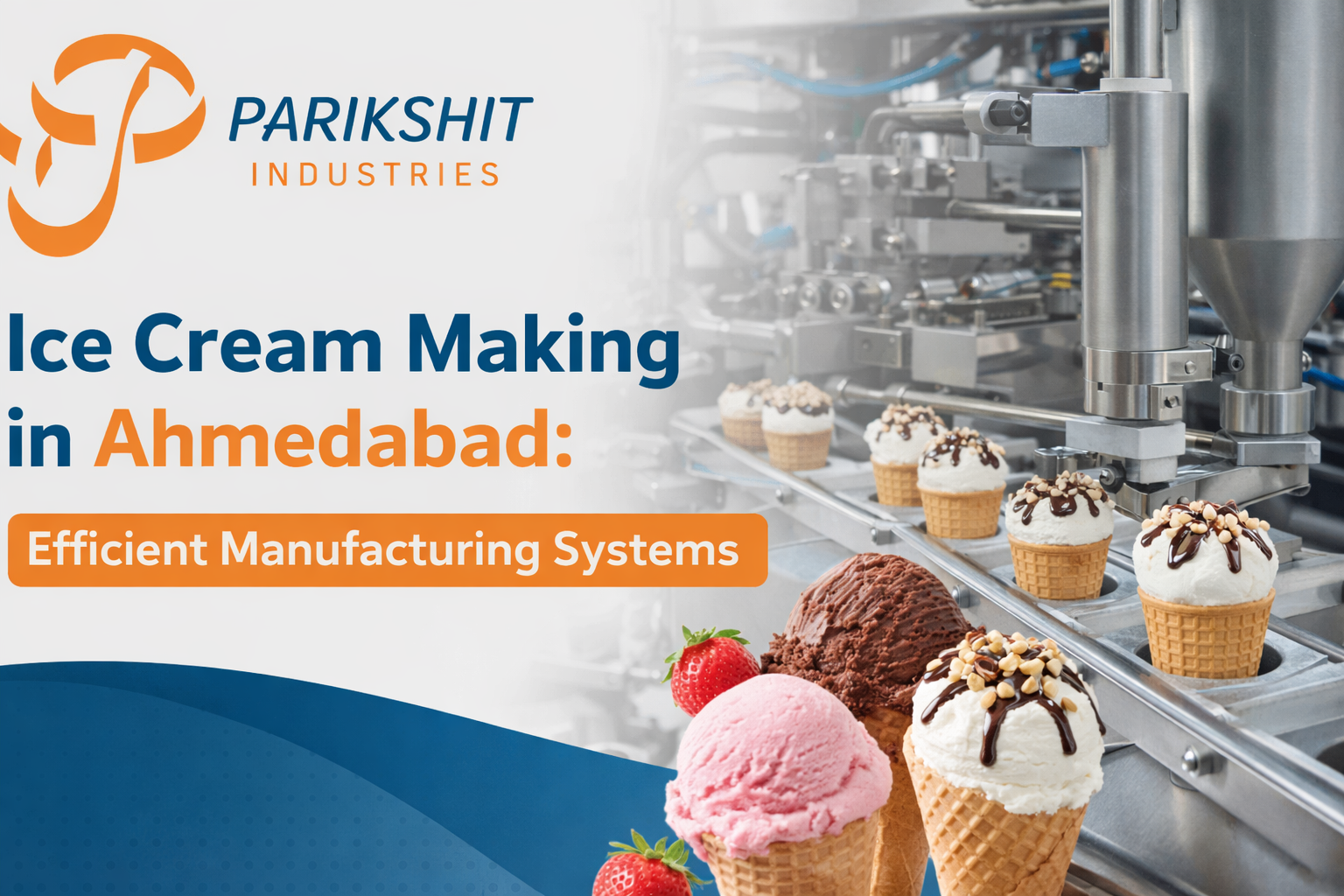
Ice Cream Making Machine
Manufacturer in Ahmedabad
The demand for high-quality ice cream products continues to grow with expanding urban consumption and evolving customer preferences. An ice cream making machine manufacturer in Ahmedabad plays a crucial role in meeting this demand by providing advanced machinery designed for efficient, hygienic, and large-scale production. These machines are widely used in dairy processing units, dessert manufacturing facilities, and commercial food production environments where consistency and operational efficiency are essential.
Understanding Ice Cream Manufacturing Systems
Ice cream manufacturing systems are designed to convert raw ingredients into finished products through controlled mechanical and thermal processes. These systems focus on maintaining precise temperature conditions, consistent mixing, and uniform freezing to achieve the desired texture and taste.
The equipment typically includes mixing tanks, pasteurizers, homogenizers, aging tanks, continuous freezers, and packaging units. Each component is interconnected to form a complete production line, enabling smooth and continuous processing.
Modern ice cream plants are engineered to integrate multiple stages of production into a streamlined workflow. This approach allows manufacturers to maintain product quality while achieving high output with minimal manual intervention.
Key Stages in Ice Cream Production Process
The production of ice cream involves several carefully managed steps that ensure quality and consistency throughout the manufacturing cycle. Each stage is optimized to deliver a uniform product with stable structure and improved shelf life.
Mix Preparation and Pasteurization
The process begins with the preparation of the ice cream mix using ingredients such as milk, cream, sugar, stabilizers, emulsifiers, and flavoring agents. The mixture is then pasteurized by heating it to eliminate harmful microorganisms. Homogenization follows, breaking down fat particles to create a smooth and consistent texture.
Cooling and Aging of the Mix
After pasteurization, the mixture is rapidly cooled and transferred to aging tanks. During this stage, the mix is held under controlled refrigeration conditions for a specific period. This allows the ingredients to stabilize and enhances the final texture, body, and consistency of the ice cream.
Freezing and Ingredient Incorporation
The aged mix is processed in continuous or batch freezers, where it undergoes controlled freezing. Air is incorporated into the mixture to achieve the desired overrun, contributing to a light and creamy texture. Additional ingredients such as fruits, nuts, or chocolate chips are introduced at this stage to enhance flavor and product variety.
Packaging and Hardening Process
Once freezing is complete, the semi-solid ice cream is filled into containers and transferred to hardening tunnels. These tunnels maintain low temperatures, typically between −23°C and −29°C, allowing the product to solidify completely. Proper hardening ensures structural stability and improves storage life.
Features of Modern Ice Cream Making Machines
Ice cream manufacturing equipment is designed with advanced features that support efficient and hygienic production. These features help manufacturers maintain consistent product quality while optimizing operational performance.
- Automated control systems for accurate process management
- Food-grade stainless steel construction for hygiene and durability
- Energy-efficient refrigeration systems
- Integrated safety mechanisms for reliable operation
- Continuous production capability for higher output
- Easy cleaning and maintenance-friendly design
Applications of Ice Cream Production Plants
Ice cream plants are widely used across different segments of the food and dairy industry. Their flexibility enables manufacturers to produce various types of frozen desserts while maintaining efficiency.
- Dairy processing industries
- Commercial ice cream manufacturing units
- Frozen dessert production facilities
- Hospitality and food service sectors
- Kulfi and traditional dessert manufacturers
- Premium gelato and specialty product units
Factors Influencing Ice Cream Plant Selection
Selecting the right ice cream manufacturing system depends on several operational and technical considerations. These factors determine the efficiency, scalability, and suitability of the plant for specific production needs.
- Required production capacity per hour or per day
- Type of products to be manufactured
- Level of automation and control required
- Available space and plant layout
- Utility requirements such as power and refrigeration
- Long-term operational and maintenance considerations
Importance of Hygienic and Food Safety Standards
Maintaining hygiene and food safety is a critical aspect of ice cream manufacturing. Equipment used in the process must comply with industry standards to ensure product safety and regulatory compliance.
The use of food-grade materials, especially stainless steel, helps prevent contamination and supports easy cleaning. Consistent temperature control throughout the process minimizes microbial growth, while proper system design ensures safe handling of ingredients. Regular monitoring and quality checks further enhance product reliability and consistency.
Role of Automation in Ice Cream Manufacturing
Automation has significantly improved the efficiency and reliability of ice cream production systems. Automated controls allow manufacturers to manage process parameters such as temperature, pressure, and mixing speed with high precision.
This level of control reduces manual intervention, minimizes errors, and ensures consistent product output. Automation also contributes to better resource utilization, reduced wastage, and improved overall operational efficiency.
Capacity Planning and Production Optimization
Capacity planning is an essential part of setting up an ice cream manufacturing facility. It involves determining the required output based on market demand and operational objectives.
Proper planning ensures that the plant can handle production requirements without overloading or underutilizing resources. It also supports efficient workflow design, optimal equipment utilization, and consistent production quality over time.
Layout and Workflow Design Considerations
An efficient plant layout is critical for smooth production operations. The arrangement of equipment should support a logical flow of materials from raw input to finished product.
A well-planned workflow reduces handling time, minimizes contamination risks, and improves overall productivity. It also ensures that each stage of production is properly coordinated, resulting in reliable and efficient operations.
Compliance and Regulatory Requirements
Ice cream manufacturing units must adhere to various regulatory standards related to food safety, hygiene, and quality control. Compliance ensures that products meet industry requirements and are safe for consumption.
Regulations may include guidelines for equipment design, processing conditions, storage temperatures, and quality testing. Maintaining proper documentation and traceability is also essential for regulatory approval and operational transparency.
Maintenance and Operational Reliability
Regular maintenance of ice cream machinery is essential for ensuring consistent performance and extended equipment life. Proper maintenance practices help prevent unexpected breakdowns, reduce downtime, and maintain production efficiency.
Routine inspection, cleaning, and servicing of equipment components contribute to reliable operations. These practices also ensure that the machinery continues to meet hygiene and safety standards over time.
Future Trends in Ice Cream Manufacturing Technology
The ice cream manufacturing industry continues to evolve with advancements in technology and production methods. Modern systems are increasingly focused on energy efficiency, automation, and improved product customization.
Innovations in refrigeration technology, process automation, and ingredient handling enable manufacturers to produce a wide range of products with greater efficiency. These developments are shaping the future of ice cream production by enhancing both quality and operational performance.
Conclusion
An ice cream making machine manufacturer in Ahmedabad plays a significant role in developing efficient and reliable production systems for the dairy and dessert industry. By integrating advanced technology, hygienic design, and automation, these machines support consistent output and high-quality production. With proper planning, regulatory compliance, and effective operational management, ice cream plants can deliver long-term performance while meeting the evolving demands of the food processing sector.
Frequently Asked Questions
Get In Touch
Parikshit Industries · Ahmedabad
Our Blogs
- Vertical Batch Freezer Uses in Dairy Processing
- Gelato Production Machine
- Homogenizer Exporter
- Pasteuriser Uses in Milk Processing
- Pasteuriser Uses in Milk Processing
- Ageing Vat Uses in Dairy Processing
- Pasto Matic Exporter
- Candy Plant Uses in Ice Candy Production
- Fruit Feeder Uses in Ice Cream Production
- Hardening Tunnel Uses in Ice Cream Production
- Hardening Tunnel Uses in Ice Cream Production
- How Fruit Feeder Works
- Ice Cream Machine Manufacturer in Ahmedabad
- Candy Plant Exporter
- Ageing Vat Exporter
- How Cup and Cone Filling Machine Works
- Benefits of Batch Freezer in Ice Cream Making
- Batch Freezer Supplier
- Automatic Cup and Cone Filling Machine Uses
- How Ageing Vat Works
- Ageing Vat Supplier
- Turnkey Ice Cream Plant Manufacturer
- Ice Cream Making Plant Supplier in India
- Ice Cream Machinery Manufacturer in India
- Ice Cream Machinery Manufacturer in Ahmedabad
- Ice Cream Manufacturing Plant Supplier
- Commercial Ice Cream Plant Manufacturer
- Commercial Ice Cream Plant Manufacturer
- Ice Cream Production Plant Manufacturer in Ahmedabad
- Ice Cream Production Plant Manufacturer in Ahmedabad
- Ice Cream Processing Plant Manufacturer in India
- Ice Cream Processing Plant Manufacturer in India
- Industrial Ice Cream Plant Manufacturer
- Ice Cream Machinery Manufacturer in Gujarat
- Ice Cream Factory Equipment Supplier in Gujarat
- Complete Ice Cream Plant Setup in India
- Automatic Cup and Cone Filling Machine for Ice Cream Industry
- Pasteuriser for Dairy Industry
- Ice Cream Processing Plant Manufacture
- Candy Plant Supplier
- Ice Cream Plant Supplier in Gujarat
- Ice Cream Plant Manufacturer in Ahmedabad
- Ice Cream Plant
- Automatic Cup and Cone Filling Machine Exporter
- Candy Plant Manufacturer
- Batch Freezer Manufacturer
- Automatic Cup and Cone Filling Machine Supplier
- Ageing Vat for Ice Cream Industry
- Benefits of Automatic Cup and Cone Filling Machine
- Automatic Cup and Cone Filling Machine
- Ageing Vat Manufacturer
- Ice Cream Plant
- Ice Cream Processing Equipment Manufacturing in India
- Ice Cream Homogenizer Supplier in Gujarat
- Ice Cream Homogenizer Machine Manufacturer in Ahmedabad
- Ice Cream Freezer Machine Near Me
- Ice Cream Freezing System Manufacturing in India
- Ice Cream Freezing Equipment Supplier in Gujarat
- Ice Cream Batch Freezer Manufacturer in Ahmedabad
- Ice Cream Mixer Machine Near Me
- Ice Cream Mixing System Manufacturing in India
- Ice Cream Blending Machine Supplier in Gujarat
- Ice Cream Mixing Machine Manufacturer in Ahmedabad
- Ice Cream Filling Equipment Near Me
- Ice Cream Filling System Manufacturing in India
- Ice Cream Filling Machine Manufacturer in Ahmedabad
- Ice Cream Production Unit Near Me
- Ice Cream Processing Plant Manufacturing in India
- Ice Cream Factory Equipment Supplier in Gujarat
- Ice Cream Production Plant Manufacturer in Ahmedabad
- Ice Cream Equipment Near Me
- Ice Cream Packaging Machine Supplier in India
- Ice Cream Packaging Machine Supplier in Gujarat
- Ice Cream Unit Manufacturing in India
- Ice Cream Production Plant Manufacturer in Ahmedabad
- Ice Cream Plant Manufacturers in India
- Ice Cream Making Machine Manufacturer in Ahmedabad
- Ice Cream Making Plant Supplier in India
- Candy Plant Machine Manufacturing in Gujarat
- Candy Plant Machine Supplier in Ahmedabad
- Candy Plant Manufacturer in India
- Ice Cream Cone Filling Machine Supplier in Gujarat
- Ice Cream Machine Supplier in India
- Continuous Ice Cream Freezer Manufacturing in Ahmedabad
- Candy Plant Machine Supplier in Ahmedabad
- Continuous Ice Cream Freezer Supplier in Ahmedabad
- Ice Cream Plant Manufacturers in Gujarat
- Ice Cream Plant Manufacturing in Gujarat
- Cup Cone Filling Machine Manufacturer in Ahmedabad
- Ice Cream Plant Manufacturer in India
- Ice Cream Plant Manufacturer in India
- Continuous Ice Cream Freezer Manufacturer in India
- Continuous Ice Cream Freezer in Gujarat
- Cup Cone Filling Machine Manufacturer in Ahmedabad
- Ice Cream Machine Manufacturer in Gujarat
- Ice Cream Plant in Ahmedabad, Gujarat
- Ice Cream Plant Supplier in Ahmedabad
- Ice Cream Machine Manufacturer Supplier in Ahmedabad
- Continuous Ice Cream Freezer Manufacturer in Gujarat
- Continuous Ice Cream Freezer in Ahmedabad
- Continuous Ice Cream Freezer in India
- Ice Cream Machinery Manufacturers in India
- Ice Cream Plant Manufacturer Gujarat
- Ice Cream Machine Manufacturer Ahmedabad
- Ice Cream Machine Manufacturers in India
- Ice Cream Machinery Manufacturers in Gujarat
- Ice Cream Machine Manufacturers in Ahmedabad
- Ice Cream Machine Manufacturers in Gujarat
- Ice Cream Machine Manufacturers