Ice Cream Plant Manufacturing in Gujarat
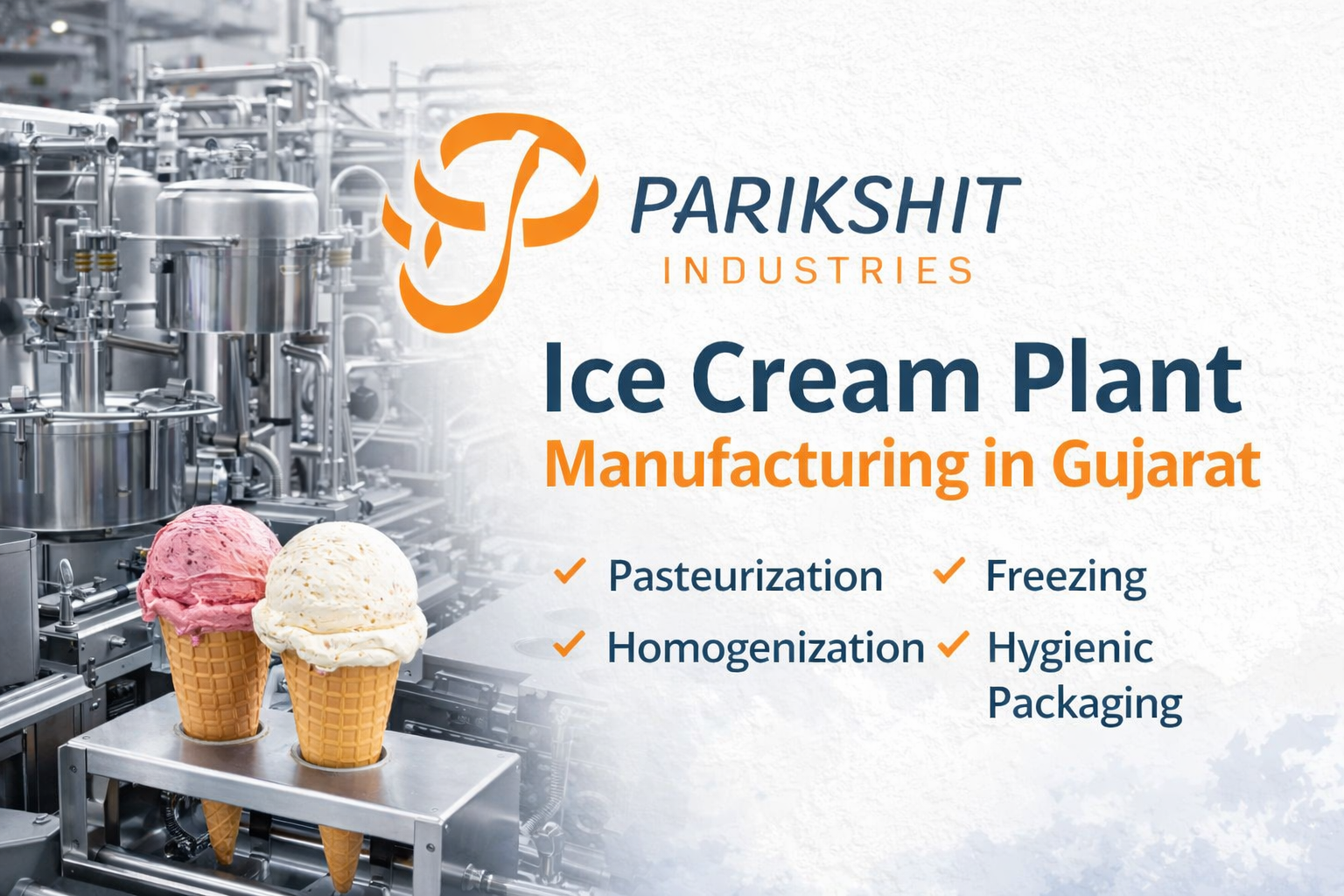
Ice Cream Plant Manufacturing · Gujarat
Ice Cream Plant Manufacturing in Gujarat
Industrial ice cream production has evolved into a highly structured, technology-driven process. Ice cream plant manufacturing in Gujarat supports dairy entrepreneurs, food processors, and commercial dessert brands with integrated production systems designed for consistent output, food safety, and operational efficiency.
A modern ice cream plant is not merely a collection of machines; it is a synchronized system in which every stage—from mix preparation to final hardening—operates under precise temperature control and hygienic conditions.
Gujarat has emerged as a strong manufacturing hub for food processing machinery due to its robust industrial infrastructure, skilled workforce, and proximity to major dairy clusters. Ice cream plant manufacturers in the state develop automated systems aligned with large-scale production requirements while maintaining compliance with food safety standards. These plants are engineered to deliver consistent quality, uniform texture, and scalable capacity for expanding brands.
Understanding Industrial Ice Cream Plant Systems
An industrial ice cream plant integrates multiple processing stages within a controlled environment. The objective is to maintain uniformity in texture, taste, microbial safety, and product stability. Unlike small-scale setups, industrial plants are designed for continuous, high-volume production with minimal manual intervention.
A typical system includes mixing tanks, pasteurizers, homogenizers, aging tanks, continuous freezers, flavor dosing units, filling machines, and hardening tunnels. Each component operates within defined temperature and pressure parameters to ensure consistent product quality. The design prioritizes food-grade materials, insulated pipelines, CIP systems, and hygienic layouts to minimize contamination risks.
Core Stages in Ice Cream Production
Mix Preparation and Pasteurization
The process begins with precise formulation. Raw ingredients such as milk, cream, sugar, stabilizers, emulsifiers, flavors, and inclusions are measured and blended in mixing tanks. The mixture is then heated to eliminate harmful microorganisms. Pasteurization enhances product safety while preserving flavor characteristics.
Following pasteurization, homogenization is performed under high pressure. This stage reduces fat globule size, improves emulsion stability, and creates a smoother mouthfeel. Proper homogenization directly influences texture, structure, and shelf stability.
Cooling and Aging
After pasteurization, the mix is rapidly cooled to inhibit microbial growth. It is then transferred to refrigerated aging tanks, where it remains for several hours. Aging increases viscosity, promotes fat crystallization, and stabilizes the formulation. This controlled resting period plays a vital role in developing the final body and texture of the ice cream.
Freezing and Flavor Incorporation
During freezing, the aged mix passes through continuous freezers where controlled air incorporation achieves the desired overrun. Accurate air management affects density, texture, and melt resistance. Inline systems enable the addition of fruits, nuts, chocolate chips, or syrups without disrupting the production flow.
Packaging and Hardening
Once freezing and flavor addition are complete, the semi-solid product is filled into cups, cones, tubs, or bulk containers. The packaged ice cream is then transferred to hardening tunnels operating at sub-zero temperatures. Rapid hardening ensures complete solidification, structural stability, and extended shelf life.
Key Machinery Used in Ice Cream Plant Manufacturing in Gujarat
Ice cream plant manufacturing in Gujarat emphasizes the integration of high-performance equipment designed for durability and hygienic operation. Core machinery typically includes:
- Mix preparation tanks with agitators
- High-pressure homogenizers
- Plate or tubular pasteurizers
- Aging tanks with refrigeration control
- Continuous ice cream freezers
- Flavor dosing systems
- Filling and sealing machines
- Hardening tunnels with temperature monitoring
These systems are manufactured using food-grade stainless steel and corrosion-resistant components suitable for dairy processing environments.
Automation and Hygienic Engineering
Modern ice cream plants rely significantly on automation to maintain process stability. Programmable logic controllers regulate temperature, flow rates, pressure levels, and production cycles with high accuracy. Automated cleaning systems reduce downtime and support consistent sanitation between production batches.
Hygienic engineering is central to plant design. Smooth internal surfaces, minimal joints, sanitary piping, and proper drainage systems help reduce contamination risks. Integrated temperature sensors and monitoring systems maintain controlled conditions throughout the production cycle.
Capacity Planning and Output Considerations
Ice cream plant manufacturing in Gujarat serves a wide range of production capacities, from mid-scale dairy units to large commercial facilities. Capacity planning depends on daily production targets, product diversity, and long-term expansion objectives.
Key considerations include:
- Required production volume per hour
- Number of product variants
- Cold storage and distribution infrastructure
- Availability of utilities such as electricity and water
- Scope for future scalability
A well-planned plant layout ensures efficient workflow, optimized space utilization, and improved energy management.
Compliance and Food Safety Standards
Ice cream production is subject to strict food safety regulations. Industrial plants are designed to align with dairy processing norms and hygienic standards. Essential compliance elements include food-grade stainless steel construction, temperature-controlled storage systems, microbial testing protocols, and traceability mechanisms.
Larger facilities often incorporate quality control laboratories to monitor fat content, bacterial levels, and consistency parameters. Accurate documentation and batch records strengthen traceability and regulatory compliance.
Why Gujarat is a Preferred Location for Ice Cream Plant Manufacturing
Gujarat has established itself as a prominent dairy and food processing region. The state offers well-developed industrial zones that support heavy machinery fabrication and engineering. Proximity to dairy farms, availability of technical manpower, and strong logistical connectivity contribute to manufacturing efficiency.
Manufacturers based in Ahmedabad and surrounding industrial areas supply machinery across India. The integrated ecosystem supports fabrication, machining, refrigeration engineering, and automation under one network, helping reduce lead times and ensure reliable technical support.
Planning Support and Technical Guidance
Selecting an industrial ice cream plant requires careful technical evaluation. Manufacturers typically assist with layout planning, workflow optimization, and equipment configuration to ensure operational efficiency.
Common areas requiring technical guidance include:
- Selection of suitable freezing technology
- Determining appropriate mix preparation capacity
- Designing a layout for streamlined material flow
- Integrating refrigeration systems
- Planning utility connections
Energy Efficiency and Refrigeration Systems
Freezing and hardening are energy-intensive stages in ice cream production. Ice cream plant manufacturing in Gujarat increasingly prioritizes energy-efficient refrigeration systems. Advanced compressors, insulated pipelines, and optimized airflow design help reduce operational load.
Effective energy management supports long-term sustainability and ensures consistent sub-zero temperatures without excessive consumption.
Future Trends in Ice Cream Plant Technology
Automation, digital monitoring, and data-driven quality control are shaping modern ice cream manufacturing systems. Integrated sensors and monitoring dashboards provide real-time production insights. Data logging supports process optimization and predictive maintenance.
As demand for diversified frozen desserts continues to grow, plant systems are being designed with flexible configurations to accommodate premium ice cream, gelato, and specialty variants within a single production line.
Conclusion
Ice cream plant manufacturing in Gujarat plays a vital role in supporting commercial dairy and frozen dessert production. By integrating pasteurization, homogenization, controlled freezing, and hygienic packaging within a structured system, industrial plants ensure consistent quality and food safety. Gujarat's manufacturing ecosystem offers the technical infrastructure, engineering capability, and industrial support required to build efficient and scalable ice cream production facilities. Careful planning, regulatory compliance, and automation integration remain essential for establishing a reliable and sustainable ice cream manufacturing operation.
Frequently Asked Questions
Our Blogs
- Vertical Batch Freezer Uses in Dairy Processing
- Gelato Production Machine
- Homogenizer Exporter
- Pasteuriser Uses in Milk Processing
- Pasteuriser Uses in Milk Processing
- Ageing Vat Uses in Dairy Processing
- Pasto Matic Exporter
- Candy Plant Uses in Ice Candy Production
- Fruit Feeder Uses in Ice Cream Production
- Hardening Tunnel Uses in Ice Cream Production
- Hardening Tunnel Uses in Ice Cream Production
- How Fruit Feeder Works
- Ice Cream Machine Manufacturer in Ahmedabad
- Candy Plant Exporter
- Ageing Vat Exporter
- How Cup and Cone Filling Machine Works
- Benefits of Batch Freezer in Ice Cream Making
- Batch Freezer Supplier
- Automatic Cup and Cone Filling Machine Uses
- How Ageing Vat Works
- Ageing Vat Supplier
- Turnkey Ice Cream Plant Manufacturer
- Ice Cream Making Plant Supplier in India
- Ice Cream Machinery Manufacturer in India
- Ice Cream Machinery Manufacturer in Ahmedabad
- Ice Cream Manufacturing Plant Supplier
- Commercial Ice Cream Plant Manufacturer
- Commercial Ice Cream Plant Manufacturer
- Ice Cream Production Plant Manufacturer in Ahmedabad
- Ice Cream Production Plant Manufacturer in Ahmedabad
- Ice Cream Processing Plant Manufacturer in India
- Ice Cream Processing Plant Manufacturer in India
- Industrial Ice Cream Plant Manufacturer
- Ice Cream Machinery Manufacturer in Gujarat
- Ice Cream Factory Equipment Supplier in Gujarat
- Complete Ice Cream Plant Setup in India
- Automatic Cup and Cone Filling Machine for Ice Cream Industry
- Pasteuriser for Dairy Industry
- Ice Cream Processing Plant Manufacture
- Candy Plant Supplier
- Ice Cream Plant Supplier in Gujarat
- Ice Cream Plant Manufacturer in Ahmedabad
- Ice Cream Plant
- Automatic Cup and Cone Filling Machine Exporter
- Candy Plant Manufacturer
- Batch Freezer Manufacturer
- Automatic Cup and Cone Filling Machine Supplier
- Ageing Vat for Ice Cream Industry
- Benefits of Automatic Cup and Cone Filling Machine
- Automatic Cup and Cone Filling Machine
- Ageing Vat Manufacturer
- Ice Cream Plant
- Ice Cream Processing Equipment Manufacturing in India
- Ice Cream Homogenizer Supplier in Gujarat
- Ice Cream Homogenizer Machine Manufacturer in Ahmedabad
- Ice Cream Freezer Machine Near Me
- Ice Cream Freezing System Manufacturing in India
- Ice Cream Freezing Equipment Supplier in Gujarat
- Ice Cream Batch Freezer Manufacturer in Ahmedabad
- Ice Cream Mixer Machine Near Me
- Ice Cream Mixing System Manufacturing in India
- Ice Cream Blending Machine Supplier in Gujarat
- Ice Cream Mixing Machine Manufacturer in Ahmedabad
- Ice Cream Filling Equipment Near Me
- Ice Cream Filling System Manufacturing in India
- Ice Cream Filling Machine Manufacturer in Ahmedabad
- Ice Cream Production Unit Near Me
- Ice Cream Processing Plant Manufacturing in India
- Ice Cream Factory Equipment Supplier in Gujarat
- Ice Cream Production Plant Manufacturer in Ahmedabad
- Ice Cream Equipment Near Me
- Ice Cream Packaging Machine Supplier in India
- Ice Cream Packaging Machine Supplier in Gujarat
- Ice Cream Unit Manufacturing in India
- Ice Cream Production Plant Manufacturer in Ahmedabad
- Ice Cream Plant Manufacturers in India
- Ice Cream Making Machine Manufacturer in Ahmedabad
- Ice Cream Making Plant Supplier in India
- Candy Plant Machine Manufacturing in Gujarat
- Candy Plant Machine Supplier in Ahmedabad
- Candy Plant Manufacturer in India
- Ice Cream Cone Filling Machine Supplier in Gujarat
- Ice Cream Machine Supplier in India
- Continuous Ice Cream Freezer Manufacturing in Ahmedabad
- Candy Plant Machine Supplier in Ahmedabad
- Continuous Ice Cream Freezer Supplier in Ahmedabad
- Ice Cream Plant Manufacturers in Gujarat
- Ice Cream Plant Manufacturing in Gujarat
- Cup Cone Filling Machine Manufacturer in Ahmedabad
- Ice Cream Plant Manufacturer in India
- Ice Cream Plant Manufacturer in India
- Continuous Ice Cream Freezer Manufacturer in India
- Continuous Ice Cream Freezer in Gujarat
- Cup Cone Filling Machine Manufacturer in Ahmedabad
- Ice Cream Machine Manufacturer in Gujarat
- Ice Cream Plant in Ahmedabad, Gujarat
- Ice Cream Plant Supplier in Ahmedabad
- Ice Cream Machine Manufacturer Supplier in Ahmedabad
- Continuous Ice Cream Freezer Manufacturer in Gujarat
- Continuous Ice Cream Freezer in Ahmedabad
- Continuous Ice Cream Freezer in India
- Ice Cream Machinery Manufacturers in India
- Ice Cream Plant Manufacturer Gujarat
- Ice Cream Machine Manufacturer Ahmedabad
- Ice Cream Machine Manufacturers in India
- Ice Cream Machinery Manufacturers in Gujarat
- Ice Cream Machine Manufacturers in Ahmedabad
- Ice Cream Machine Manufacturers in Gujarat
- Ice Cream Machine Manufacturers