Ice Cream Making Plant Supplier in India
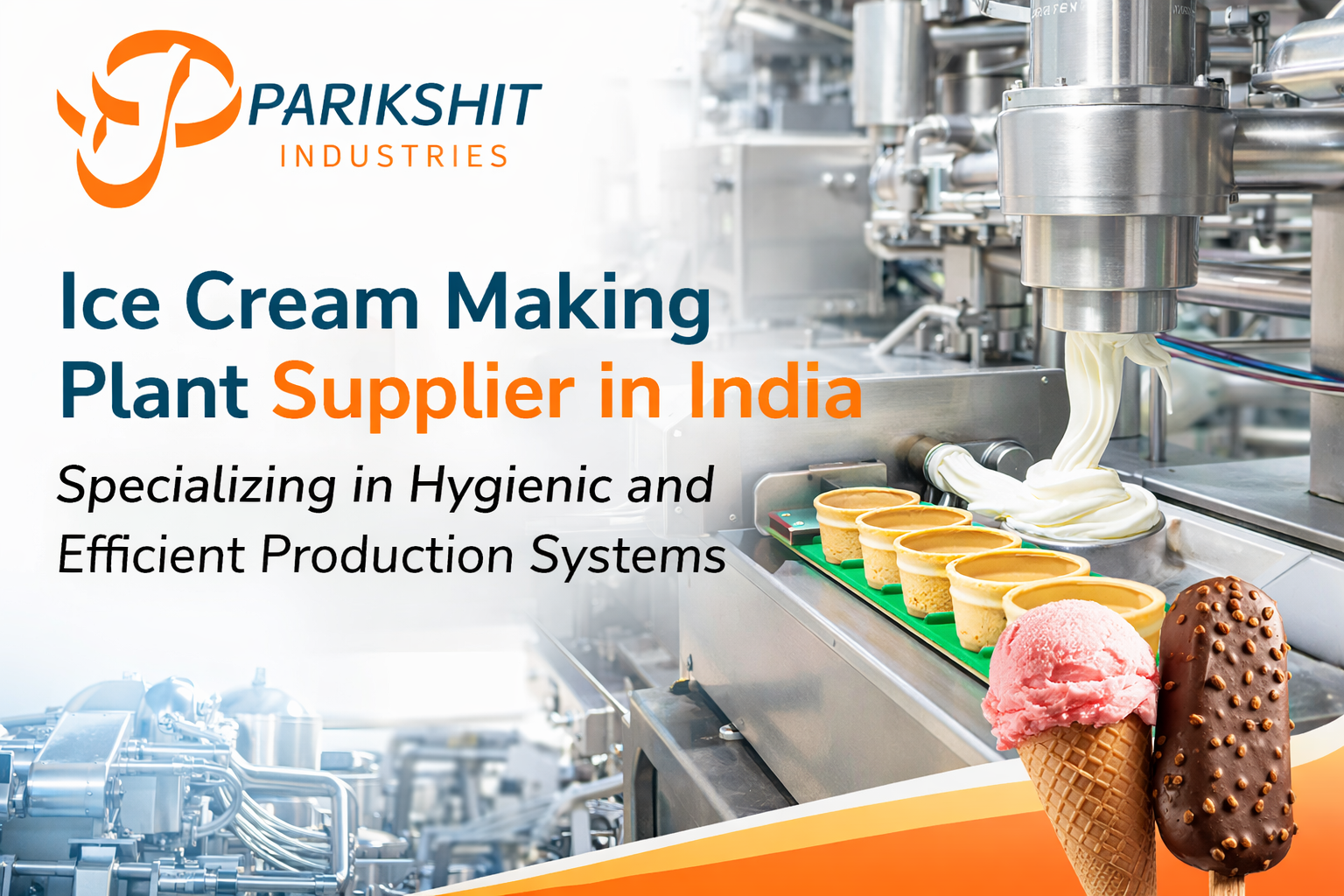
Ice Cream Making Plant Supplier in India
The demand for structured and hygienic food processing systems has increased significantly in the dairy and frozen dessert sector. An ice cream making plant supplier in India plays a crucial role in providing integrated systems that ensure consistent production quality, operational efficiency, and compliance with food safety standards. These plants are designed to handle large-scale production requirements while maintaining strict control over texture, taste, and hygiene.
Modern ice cream plants are engineered to combine multiple processes into a seamless workflow. From raw ingredient handling to final packaging, each stage is optimized to reduce manual intervention and maintain uniform output. The focus remains on efficiency, reliability, and adherence to industry standards, making these plants suitable for both expanding dairy businesses and established manufacturers.
Understanding Industrial Ice Cream Manufacturing Systems
An industrial ice cream plant is a fully integrated production setup that processes raw ingredients into finished products through controlled and automated operations. The system is designed to maintain product consistency while efficiently managing high production volumes.
The plant includes multiple interconnected units such as mixing tanks, pasteurizers, homogenizers, aging tanks, continuous freezers, and packaging systems. Each component performs a specific function within the production cycle. The integration of these systems ensures minimal product loss, improved hygiene, and enhanced process control.
Manufacturers rely on these plants to produce a wide range of products, including standard ice creams, premium desserts, kulfi, and flavored variants. The system's flexibility allows easy adjustments in formulation and processing parameters, enabling businesses to respond effectively to changing market demands.
Key Stages in the Ice Cream Production Process
Ice cream production involves a series of carefully controlled stages that ensure product quality and safety. Each stage contributes to the final texture, taste, and consistency of the product.
Mix Preparation and Pasteurization
The process begins with preparing the mix using ingredients such as milk, cream, sugar, stabilizers, emulsifiers, and flavoring agents. This mixture is heated during pasteurization to eliminate harmful microorganisms and ensure food safety. Homogenization follows, where the mix is subjected to high pressure to break down fat particles, resulting in a smooth and stable texture.
Cooling and Aging
After pasteurization, the mix is rapidly cooled and transferred to aging tanks. During this stage, the mixture is stored under controlled refrigeration for several hours. Aging allows the ingredients to stabilize and improves the body and texture of the final product.
Freezing and Flavor Incorporation
The aged mix is fed into continuous freezers, where it is frozen under controlled conditions. Air is incorporated during this stage to achieve the desired overrun, which directly influences the product's softness and volume. Additional ingredients such as fruits, nuts, and chocolate chips are introduced during this phase to enhance flavor and variety.
Packaging and Hardening
Once freezing is complete, the ice cream is transferred to packaging systems. The packaged product is then moved to hardening tunnels, where it is exposed to extremely low temperatures. This step ensures complete solidification and helps maintain product stability during storage and distribution.
Core Machinery Used in Ice Cream Plants
A well-designed ice cream plant consists of multiple machines working together to achieve efficient production. Each piece of equipment plays a vital role in maintaining product quality and process consistency.
- Mix preparation tanks for uniform blending of ingredients
- Pasteurization units for thermal treatment and safety
- Homogenizers for achieving a smooth texture
- Aging tanks for controlled resting of the mixture
- Continuous freezers for rapid freezing and aeration
- Flavor dosing systems for precise ingredient addition
- Packaging machines for filling and sealing
- Hardening tunnels for final product stabilization
The integration of these machines ensures a streamlined production flow with minimal manual handling and reduced risk of contamination.
Importance of Hygienic Design and Food Safety
Food safety is a critical aspect of ice cream production. Industrial plants are constructed using food-grade stainless steel materials to prevent contamination and ensure long-term durability. The surfaces are smooth and easy to clean, enabling effective sanitation processes.
Temperature control systems are integrated throughout the plant to maintain optimal processing conditions. This helps preserve product quality while preventing microbial growth. Additionally, modern plants often include monitoring systems for traceability and record-keeping, ensuring compliance with food safety regulations.
Manufacturers also implement quality control measures such as microbial testing and batch tracking. These practices support consistent output and strengthen trust in the final product.
Factors to Consider When Selecting an Ice Cream Plant
Choosing the right ice cream making plant requires careful evaluation of technical and operational factors. Businesses must align their selection with production goals and long-term requirements.
- Production capacity based on daily output requirements
- Type of products to be manufactured, such as standard or specialty desserts
- Level of automation required for operations
- Availability of utilities such as power, water, and refrigeration
- Layout design for efficient workflow and space utilization
- Energy consumption and overall operational efficiency
- Compliance with food safety and industry standards
A well-planned plant setup supports smooth operations, reduces downtime, and allows for future scalability.
Role of Automation in Modern Ice Cream Plants
Automation has become a key feature in modern ice cream manufacturing systems. Automated controls help maintain precise processing parameters, reducing the chances of human error and ensuring consistent product quality.
Advanced control systems enable real-time monitoring of temperature, pressure, and flow rates. This improves process efficiency while minimizing wastage. Automation also enhances safety by reducing direct human contact with the product during processing.
With the integration of digital systems, manufacturers can track production data, analyze performance, and optimize operations. This leads to improved productivity and better resource management.
Growing Demand for Ice Cream Plants in India
India has witnessed significant growth in the dairy and frozen dessert industry. Changing consumer preferences, urbanization, and increasing demand for packaged foods have contributed to the expansion of ice cream manufacturing.
An ice cream making plant supplier in India supports this growth by providing advanced machinery and complete plant solutions tailored to industry requirements. Businesses are increasingly investing in modern plants to meet rising demand while maintaining quality and hygiene standards.
The availability of customized solutions allows manufacturers to cater to diverse market segments, including premium products, regional flavors, and innovative dessert formats. This adaptability is essential in a competitive market environment.
Applications Across Different Business Segments
Ice cream plants are widely used across various segments within the food processing industry. Their versatility makes them suitable for different types of production setups.
- Large-scale dairy processing units
- Commercial ice cream manufacturing companies
- Frozen dessert and confectionery units
- Food processing industries producing flavored products
- Businesses focused on product innovation and seasonal offerings
These plants enable manufacturers to maintain consistent output while ensuring flexibility in product design and formulation.
Ensuring Efficient Plant Layout and Workflow
An efficient plant layout plays a vital role in optimizing production processes. Proper arrangement of machinery ensures smooth material flow and minimizes unnecessary handling.
The layout should be designed to maintain hygiene by separating raw material handling areas from finished product zones. Adequate space must be allocated for cleaning, maintenance, and future expansion.
Workflow optimization helps reduce production delays and improve overall efficiency. A well-planned layout also enhances worker safety and supports compliance with regulatory standards.
Conclusion
An ice cream making plant supplier in India provides essential infrastructure for modern dairy and frozen dessert manufacturing. These plants are designed to deliver consistent quality, maintain hygiene, and support large-scale production requirements.
With integrated systems, advanced machinery, and automation capabilities, ice cream plants enable manufacturers to meet growing market demand efficiently. Careful planning, appropriate equipment selection, and adherence to food safety standards are key factors in establishing a successful production setup.
As the industry continues to evolve, investing in a well-designed ice cream plant remains a strategic step for businesses aiming to achieve long-term growth and operational efficiency.
Frequently Asked Questions
Get In Touch
Relevant Tags
Our Blogs
- Vertical Batch Freezer Uses in Dairy Processing
- Gelato Production Machine
- Homogenizer Exporter
- Pasteuriser Uses in Milk Processing
- Pasteuriser Uses in Milk Processing
- Ageing Vat Uses in Dairy Processing
- Pasto Matic Exporter
- Candy Plant Uses in Ice Candy Production
- Fruit Feeder Uses in Ice Cream Production
- Hardening Tunnel Uses in Ice Cream Production
- Hardening Tunnel Uses in Ice Cream Production
- How Fruit Feeder Works
- Ice Cream Machine Manufacturer in Ahmedabad
- Candy Plant Exporter
- Ageing Vat Exporter
- How Cup and Cone Filling Machine Works
- Benefits of Batch Freezer in Ice Cream Making
- Batch Freezer Supplier
- Automatic Cup and Cone Filling Machine Uses
- How Ageing Vat Works
- Ageing Vat Supplier
- Turnkey Ice Cream Plant Manufacturer
- Ice Cream Making Plant Supplier in India
- Ice Cream Machinery Manufacturer in India
- Ice Cream Machinery Manufacturer in Ahmedabad
- Ice Cream Manufacturing Plant Supplier
- Commercial Ice Cream Plant Manufacturer
- Commercial Ice Cream Plant Manufacturer
- Ice Cream Production Plant Manufacturer in Ahmedabad
- Ice Cream Production Plant Manufacturer in Ahmedabad
- Ice Cream Processing Plant Manufacturer in India
- Ice Cream Processing Plant Manufacturer in India
- Industrial Ice Cream Plant Manufacturer
- Ice Cream Machinery Manufacturer in Gujarat
- Ice Cream Factory Equipment Supplier in Gujarat
- Complete Ice Cream Plant Setup in India
- Automatic Cup and Cone Filling Machine for Ice Cream Industry
- Pasteuriser for Dairy Industry
- Ice Cream Processing Plant Manufacture
- Candy Plant Supplier
- Ice Cream Plant Supplier in Gujarat
- Ice Cream Plant Manufacturer in Ahmedabad
- Ice Cream Plant
- Automatic Cup and Cone Filling Machine Exporter
- Candy Plant Manufacturer
- Batch Freezer Manufacturer
- Automatic Cup and Cone Filling Machine Supplier
- Ageing Vat for Ice Cream Industry
- Benefits of Automatic Cup and Cone Filling Machine
- Automatic Cup and Cone Filling Machine
- Ageing Vat Manufacturer
- Ice Cream Plant
- Ice Cream Processing Equipment Manufacturing in India
- Ice Cream Homogenizer Supplier in Gujarat
- Ice Cream Homogenizer Machine Manufacturer in Ahmedabad
- Ice Cream Freezer Machine Near Me
- Ice Cream Freezing System Manufacturing in India
- Ice Cream Freezing Equipment Supplier in Gujarat
- Ice Cream Batch Freezer Manufacturer in Ahmedabad
- Ice Cream Mixer Machine Near Me
- Ice Cream Mixing System Manufacturing in India
- Ice Cream Blending Machine Supplier in Gujarat
- Ice Cream Mixing Machine Manufacturer in Ahmedabad
- Ice Cream Filling Equipment Near Me
- Ice Cream Filling System Manufacturing in India
- Ice Cream Filling Machine Manufacturer in Ahmedabad
- Ice Cream Production Unit Near Me
- Ice Cream Processing Plant Manufacturing in India
- Ice Cream Factory Equipment Supplier in Gujarat
- Ice Cream Production Plant Manufacturer in Ahmedabad
- Ice Cream Equipment Near Me
- Ice Cream Packaging Machine Supplier in India
- Ice Cream Packaging Machine Supplier in Gujarat
- Ice Cream Unit Manufacturing in India
- Ice Cream Production Plant Manufacturer in Ahmedabad
- Ice Cream Plant Manufacturers in India
- Ice Cream Making Machine Manufacturer in Ahmedabad
- Ice Cream Making Plant Supplier in India
- Candy Plant Machine Manufacturing in Gujarat
- Candy Plant Machine Supplier in Ahmedabad
- Candy Plant Manufacturer in India
- Ice Cream Cone Filling Machine Supplier in Gujarat
- Ice Cream Machine Supplier in India
- Continuous Ice Cream Freezer Manufacturing in Ahmedabad
- Candy Plant Machine Supplier in Ahmedabad
- Continuous Ice Cream Freezer Supplier in Ahmedabad
- Ice Cream Plant Manufacturers in Gujarat
- Ice Cream Plant Manufacturing in Gujarat
- Cup Cone Filling Machine Manufacturer in Ahmedabad
- Ice Cream Plant Manufacturer in India
- Ice Cream Plant Manufacturer in India
- Continuous Ice Cream Freezer Manufacturer in India
- Continuous Ice Cream Freezer in Gujarat
- Cup Cone Filling Machine Manufacturer in Ahmedabad
- Ice Cream Machine Manufacturer in Gujarat
- Ice Cream Plant in Ahmedabad, Gujarat
- Ice Cream Plant Supplier in Ahmedabad
- Ice Cream Machine Manufacturer Supplier in Ahmedabad
- Continuous Ice Cream Freezer Manufacturer in Gujarat
- Continuous Ice Cream Freezer in Ahmedabad
- Continuous Ice Cream Freezer in India
- Ice Cream Machinery Manufacturers in India
- Ice Cream Plant Manufacturer Gujarat
- Ice Cream Machine Manufacturer Ahmedabad
- Ice Cream Machine Manufacturers in India
- Ice Cream Machinery Manufacturers in Gujarat
- Ice Cream Machine Manufacturers in Ahmedabad
- Ice Cream Machine Manufacturers in Gujarat
- Ice Cream Machine Manufacturers