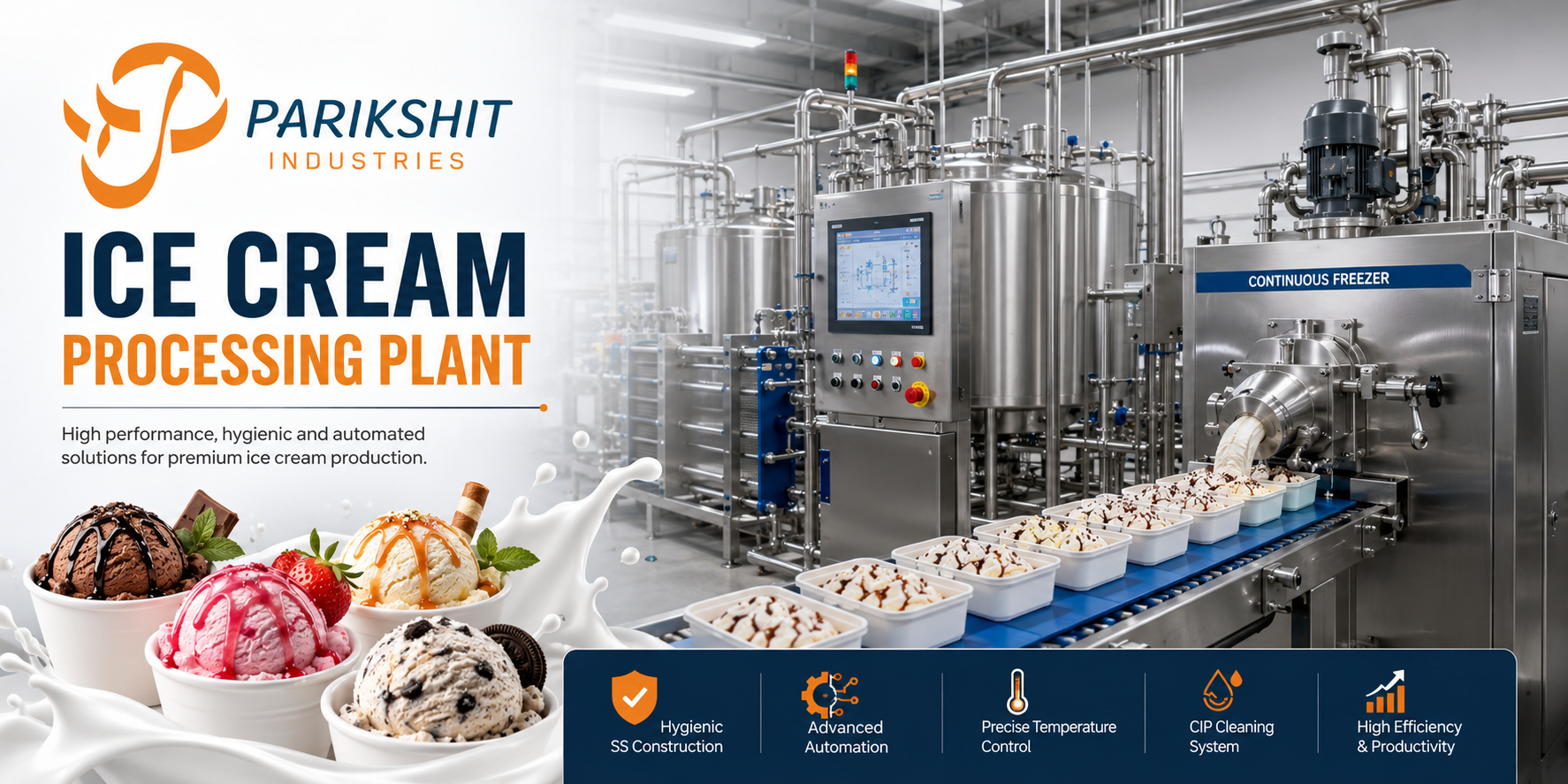
Ice Cream Processing Plant Manufacture
Explore the essentials of ice cream processing plant manufacture in Ahmedabad, Gujarat. Understand key features, applications, and how to choose a reliable supp
Why This Matters in Ahmedabad, Gujarat
Ahmedabad, as a significant industrial and commercial hub in Gujarat, hosts a thriving food processing sector, including a robust dairy industry. The demand for ice cream and frozen desserts continues to grow, fueled by a large consumer base and increasing disposable incomes. Local manufacturers require advanced, reliable ice cream processing plants to scale operations, innovate product lines, and adhere to stringent food safety regulations, making the choice of a local, experienced manufacturer particularly relevant.
What Is An Ice Cream Processing Plant — Overview
An ice cream processing plant is a comprehensive system of integrated machinery designed to transform raw ingredients into finished ice cream products. This typically involves several stages: raw material reception, mixing, pasteurization, homogenization, cooling, aging, freezing, and packaging. Each stage is critical for achieving the desired texture, flavor, and shelf life of the final product, ensuring consistency and hygiene throughout the entire production cycle.
Key Features and Technical Specifications
- Stainless Steel Construction: All product contact surfaces and structural components are typically made from food-grade stainless steel (SS 304 or SS 316) for hygiene and corrosion resistance.
- Automated Control Systems: PLC-based control panels offer precise management of temperature, pressure, flow rates, and processing times, enhancing operational efficiency and product consistency.
- Integrated Pasteurization Unit: High-Temperature Short-Time (HTST) or Batch Pasteurizers ensure microbial safety while preserving the sensory qualities of the mix.
- Homogenization System: High-pressure homogenizers reduce fat globule size, preventing creaming and improving the texture and mouthfeel of the ice cream.
- Continuous Freezers: Designed for efficient freezing and aeration, these units produce a smooth, consistent ice cream texture with controlled overrun.
- Clean-in-Place (CIP) System: Automated cleaning cycles for internal surfaces minimize manual labor and ensure thorough sanitation, meeting stringent hygiene standards.
- Modular Design: Plants are often designed in modular sections, allowing for easier installation, expansion, and maintenance, adapting to varying production capacities.
- Energy Efficiency: Optimized motor drives, heat recovery systems, and insulation contribute to reduced energy consumption during operation.
Industrial Applications and Use Cases
- Large-Scale Dairy Operations: Producing a wide range of ice cream flavors and formats for national distribution.
- Specialized Frozen Dessert Manufacturers: Creating unique frozen treats, sorbets, and non-dairy alternatives.
- Confectionery and Bakery Industries: Integrating ice cream production for dessert lines, cakes, and specialty items.
- Food Service and Hospitality Suppliers: Supplying bulk ice cream to restaurants, hotels, and catering services.
- Small to Medium-Scale Artisan Producers: Offering tailored solutions for craft ice cream businesses focusing on unique recipes and local markets.
- Research and Development Facilities: Utilizing smaller, versatile plants for product innovation and process optimization.
How to Choose the Right Ice Cream Processing Plant
Selecting an ice cream processing plant requires careful consideration of several factors to ensure it aligns with your production goals and operational needs. A thorough evaluation helps secure a long-term, efficient solution.
- Production Capacity: Determine your required output in liters per hour or per day, considering current demand and future growth projections.
- Level of Automation: Assess whether a semi-automatic or fully automatic system best suits your operational budget, labor availability, and desired control over the process.
- Material Quality and Construction: Verify the use of food-grade stainless steel (SS 304 or SS 316) for all contact parts and robust construction for durability.
- Compliance and Certifications: Ensure the plant meets relevant food safety standards such as FSSAI, ISO, and HACCP guidelines, which are crucial for market access.
- Energy and Water Efficiency: Evaluate the plant's consumption rates for power and water to understand long-term operating costs and environmental impact.
- Customization Options: Consider if the manufacturer can tailor the plant layout, components, and features to fit your specific space, product range, and process requirements.
- Supplier Experience and Reputation: Research the manufacturer's track record, technical expertise, and ability to provide reliable after-sales service and support.
- After-Sales Support: Inquire about installation assistance, operator training, warranty, and the availability of spare parts and technical service.
Quality Standards and Compliance
Adherence to stringent quality standards is non-negotiable in food processing. An ice cream processing plant must comply with national and international food safety regulations to ensure consumer health and product marketability. Key standards include FSSAI (Food Safety and Standards Authority of India) for local operations, ISO 22000 for food safety management systems, and HACCP (Hazard Analysis and Critical Control Points) principles for identifying and controlling food safety hazards. Buyers should verify that the manufacturer provides documentation of material certifications, process validation, and testing protocols, ensuring that the plant facilitates hygienic production and meets all regulatory requirements.
Why Company Experience and Capability Matters
Choosing an experienced manufacturer for an ice cream processing plant is vital for long-term operational success. Parikshit Industries specializes in the design, manufacture, and supply of ice cream plants and processing machinery, focusing on quality engineering. Our team possesses the technical capability to develop solutions that meet modern food processing standards, from initial concept to final installation. We emphasize robust manufacturing processes, stringent quality control at every stage, and the ability to customize plants to specific client needs. This approach ensures reliable delivery, consistent performance, and comprehensive after-sales support, providing clients with durable and efficient processing solutions.
Installation, Maintenance and Care Tips
Proper installation and ongoing maintenance are crucial for the longevity and efficient operation of an ice cream processing plant. Initial setup should always be performed by qualified technicians to ensure all components are correctly aligned and calibrated.
- Professional Installation: Engage experienced engineers for the initial setup to ensure correct alignment, electrical connections, and system integration.
- Operator Training: Ensure your team receives comprehensive training on plant operation, safety protocols, and basic troubleshooting procedures.
- Regular Cleaning: Implement a strict Clean-in-Place (CIP) schedule, using appropriate cleaning agents and sanitizers to prevent microbial growth and maintain hygiene.
- Preventive Maintenance: Follow the manufacturer's recommended maintenance schedule for checking wear parts, lubricating moving components, and inspecting electrical systems.
- Component Inspection: Regularly inspect seals, gaskets, valves, and pumps for wear or damage, replacing them promptly to prevent leaks and operational inefficiencies.
- Water Quality Management: Monitor the quality of water used in processing and cleaning, as it directly impacts product quality and equipment lifespan.
- Documentation: Maintain detailed records of maintenance activities, repairs, and part replacements for effective tracking and future planning.
Frequently Asked Questions
The lifespan of an ice cream processing plant can vary significantly, typically ranging from 15 to 25 years or more, depending on the quality of manufacturing, frequency of use, and adherence to a strict maintenance schedule. Regular servicing, timely replacement of wear parts, and proper operational practices are key factors in maximizing the plant's operational life and ensuring consistent performance over decades.
Automation is highly important in modern ice cream processing plants as it enhances precision, consistency, and efficiency. Automated systems reduce manual intervention, minimize human error, and ensure exact control over critical parameters like temperature, pressure, and ingredient ratios. This leads to higher product quality, reduced labor costs, and improved adherence to food safety standards, making it a valuable investment for scaling production.
Ice cream processing plants are designed to handle a variety of raw materials, including dairy components like milk, cream, and milk solids, as well as sweeteners, stabilizers, emulsifiers, and flavorings. They can also process fruit purees, chocolate, nuts, and other inclusions. The plant's design and specific units, such as mixing tanks and ingredient feeders, are configured to efficiently integrate these diverse components into the final ice cream mix.
Yes, ice cream processing plants are often highly customizable to accommodate different product lines and specific production requirements. Manufacturers can tailor aspects such as capacity, types of freezers (batch or continuous), inclusion feeders, and packaging solutions. This flexibility allows businesses to produce a wide array of ice cream products, from traditional scoops to specialty frozen desserts, all within a single, adaptable plant setup.
Key considerations for plant hygiene include the use of food-grade stainless steel for all contact surfaces, a well-designed Clean-in-Place (CIP) system for automated cleaning, and smooth, crevice-free surfaces to prevent bacterial accumulation. Proper drainage, ventilation, and pest control measures are also essential. Regular sanitation protocols and employee training on hygienic practices further contribute to maintaining a sterile processing environment.
When investing in an ice cream processing plant, you should expect comprehensive after-sales support from the manufacturer. This typically includes assistance with installation and commissioning, operator training, a warranty on parts and labor, and readily available technical support for troubleshooting. Access to spare parts and periodic maintenance services are also crucial for ensuring the plant's continuous and efficient operation throughout its lifespan.
Conclusion
The manufacture of an ice cream processing plant requires a deep understanding of food science, engineering principles, and stringent hygiene standards. For businesses in Ahmedabad, Gujarat, selecting a manufacturer with proven experience and technical capability is paramount. Focusing on key features, quality standards, and robust after-sales support ensures that your investment yields a reliable, efficient, and compliant production system. A well-chosen plant not only meets current market demands but also provides the flexibility to innovate and grow within the dynamic frozen dessert industry.