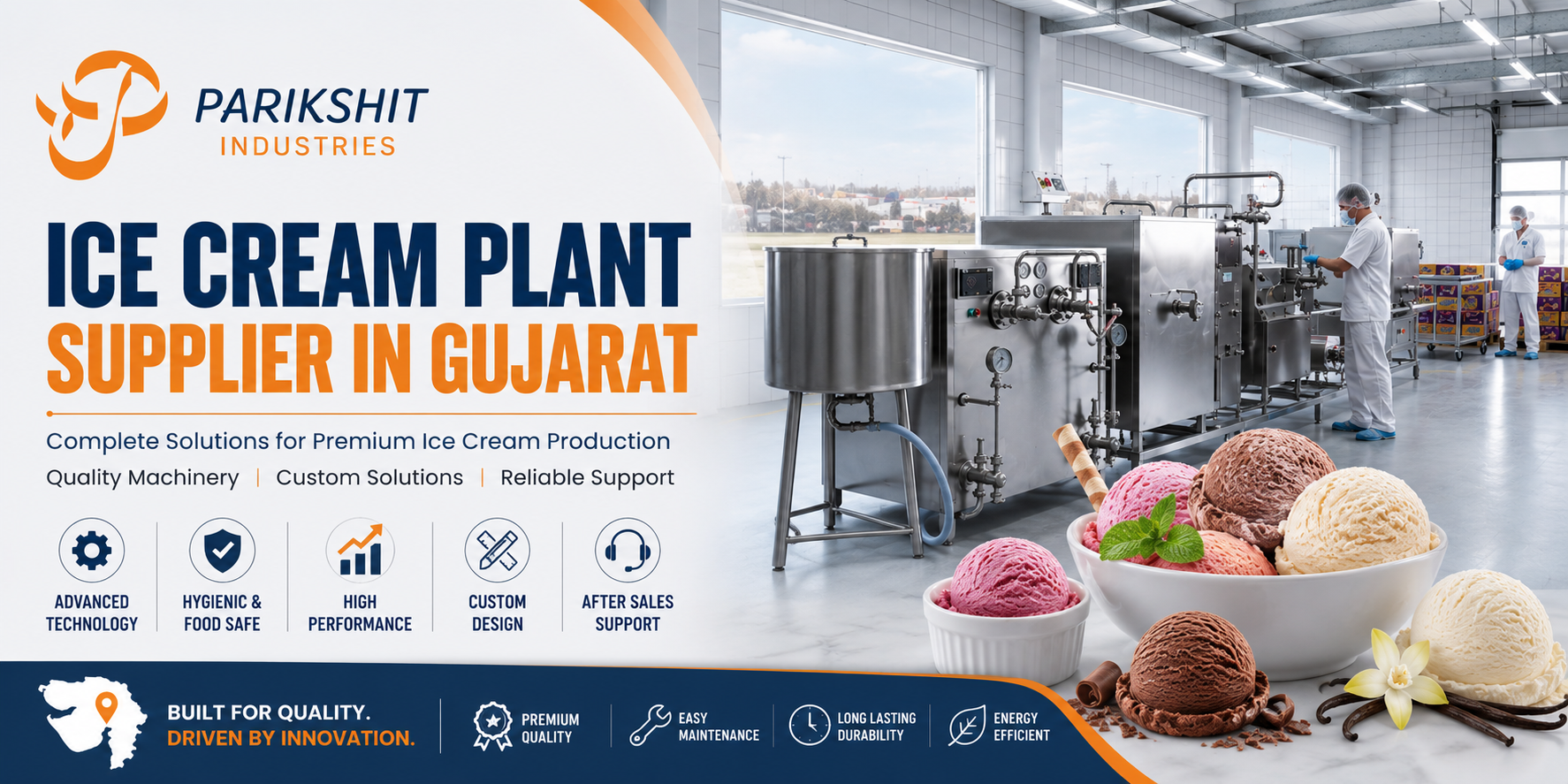
Ice Cream Plant Supplier in Gujarat
Expert ice cream plant supplier in Gujarat. Parikshit Industries offers quality machinery, custom solutions, and reliable support for your dairy business.
Why This Matters in Gujarat
Gujarat's robust dairy industry forms a strong foundation for ice cream production. The state's agricultural policies and infrastructure support a consistent supply of raw materials, making it an ideal location for dairy processing ventures. As consumer spending power increases and a preference for diverse, high-quality frozen desserts grows, the market for ice cream plants in Gujarat is expanding.
Businesses here require suppliers who not only provide machinery but also offer expertise in plant design, capacity planning, and adherence to stringent food safety regulations. A local presence, coupled with a deep understanding of regional market dynamics and logistical considerations, is invaluable for any new or expanding ice cream manufacturing operation in Gujarat.
What is an Ice Cream Plant — Overview
An ice cream plant is a comprehensive system of machinery designed for the industrial-scale production of ice cream. It encompasses various stages, starting from the reception and processing of raw ingredients like milk, cream, sugar, and flavorings, through to the final packaging of the finished product. Key components typically include pasteurizers, homogenizers, aging vats, continuous or batch freezers, filling and packaging machines, and hardening tunnels.
The plant's design focuses on maintaining precise temperature control, ensuring hygienic processing environments, and achieving consistent product quality and texture. Modern ice cream plants are often automated to enhance efficiency, reduce labor costs, and minimize human error, thereby meeting the high demands of the food processing industry.
Key Features and Technical Specifications
- Material of Construction: Food-grade stainless steel (e.g., SS304, SS316L) for all contact parts to ensure hygiene and durability.
- Capacity Range: Available in various capacities, from small-scale batch production to large industrial volumes, tailored to client needs.
- Freezing Technology: Options for both continuous freezers for high-volume output and batch freezers for artisanal or specialized products.
- Pasteurization & Homogenization: Integrated or separate units for effective heat treatment and emulsification of the ice cream mix.
- Automation Level: Options ranging from semi-automatic to fully automated systems with PLC controls for precise operation.
- Energy Efficiency: Designed for optimal energy consumption to reduce operational costs.
- Hygiene Standards: Compliance with international food safety and hygiene standards (e.g., GMP, HACCP principles).
- Customization Options: Ability to adapt plant layout and specifications based on available space and specific product requirements.
Industrial Applications and Use Cases
- Large-Scale Dairy Cooperatives: Establishing high-capacity production lines to process surplus milk into popular ice cream varieties.
- Independent Ice Cream Manufacturers: Setting up dedicated facilities for producing premium, artisanal, or niche ice cream flavors.
- Food Processing Conglomerates: Integrating ice cream production into a broader portfolio of food and beverage products.
- QSR Chains and Retailers: Developing captive production units to ensure consistent supply and quality control for their own brands.
- Contract Manufacturing: Offering specialized ice cream production services for other brands looking to outsource manufacturing.
- Frozen Dessert Diversification: Expanding existing frozen food operations to include a range of ice cream products.
- Export-Oriented Production: Manufacturing ice cream that meets international quality and safety standards for global markets.
How to Choose the Right Ice Cream Plant
Selecting an appropriate ice cream plant is a critical investment that impacts your business's profitability and product quality. Consider these factors:
- Production Capacity Needs: Accurately assess your current and projected daily/monthly output requirements.
- Product Variety: Determine if you need a plant for standard ice cream, frozen yogurt, sorbets, or other frozen desserts, as this influences machinery selection.
- Space and Infrastructure: Evaluate the available floor space, power supply, water, and drainage facilities at your intended location.
- Automation and Control Systems: Decide on the level of automation required, balancing operational efficiency with budget constraints.
- Hygiene and Safety Certifications: Ensure the plant components and manufacturer comply with relevant food safety standards (e.g., ISO, HACCP).
- Supplier Reputation and Experience: Research the manufacturer's track record, customer testimonials, and technical expertise.
- After-Sales Support and Service: Verify the availability of installation, training, maintenance, and spare parts.
- Customization Capabilities: Confirm if the supplier can modify designs to fit specific operational needs or product formulations.
Quality Standards and Compliance
For any ice cream plant, adherence to stringent quality standards and regulatory compliance is non-negotiable. This ensures product safety, operational efficiency, and market acceptance. Key standards include those set by the Bureau of Indian Standards (BIS) for food machinery and products, as well as international benchmarks like ISO certifications for quality management systems.
Manufacturers must demonstrate that their equipment is constructed from food-grade materials, such as SS304 or SS316L stainless steel, to prevent contamination and corrosion. Compliance with Good Manufacturing Practices (GMP) and principles of Hazard Analysis and Critical Control Points (HACCP) is also vital, ensuring that the entire production process is designed to identify and mitigate potential hazards. Buyers should always verify the certifications and compliance documentation provided by the supplier.
Why Parikshit Industries' Experience and Capability Matters
Parikshit Industries brings a wealth of experience and proven capability to the design and manufacture of ice cream plants. Our deep understanding of dairy processing, honed over years of serving the industry, allows us to engineer solutions that are both technically sound and operationally efficient. We focus on robust manufacturing processes, utilizing high-quality materials and precision engineering to build machinery that stands the test of time.
Our technical team comprises experienced professionals dedicated to innovation and quality control at every stage, from initial design to final assembly. We pride ourselves on our ability to offer customized plant configurations, ensuring that each system is perfectly suited to our clients' specific production needs and facility constraints. This commitment to engineering excellence, combined with reliable after-sales support, makes Parikshit Industries a trusted partner for businesses seeking to establish or upgrade their ice cream manufacturing operations in Gujarat and beyond.
Installation, Maintenance, and Care Tips
Proper installation and regular maintenance are crucial for the longevity and optimal performance of your ice cream plant. Upon installation, ensure that all connections, including electrical, water, and steam lines, are made by qualified technicians according to the manufacturer's specifications. Thorough cleaning and sanitization protocols must be established and followed diligently before the first production run and after each subsequent batch.
Regular maintenance should include daily cleaning of all contact surfaces, weekly checks of seals and bearings, and periodic calibration of temperature and pressure sensors. Lubrication of moving parts should be done using food-grade lubricants. It's advisable to schedule annual servicing with the manufacturer or a certified technician to inspect critical components, perform necessary adjustments, and ensure the plant continues to operate efficiently and safely. Promptly addressing any unusual noises or performance deviations can prevent minor issues from escalating into costly breakdowns.
Frequently Asked Questions
The lifespan of an industrial ice cream plant can vary significantly, typically ranging from 10 to 20 years or more. This longevity is heavily dependent on the quality of manufacturing, the materials used, the intensity of operation, and the diligence of the maintenance and cleaning schedules. Regular servicing and prompt attention to wear and tear are key to maximizing the operational life of the equipment.
The space requirement for an ice cream plant depends on its capacity and the specific configuration of machinery. A small-scale plant might require as little as 500-1000 sq ft, accommodating essential units like a batch freezer, pasteurizer, and packaging machine. Larger, fully automated plants with extensive ingredient handling and storage can necessitate 2000 sq ft or more, including space for utilities and operational access.
Yes, ice cream plants can absolutely be customized for specific product types, including vegan ice cream. This often involves dedicated processing lines to avoid cross-contamination with dairy products, specialized ingredient feeders for stabilizers or plant-based milks, and potentially different freezing parameters to achieve the desired texture. Manufacturers like Parikshit Industries can design plants to accommodate these unique requirements.
Operating an ice cream plant requires several essential utilities. These include a reliable source of electricity with sufficient voltage and amperage, a clean water supply for processing and cleaning, and often a steam supply for pasteurization and sterilization. Additionally, adequate drainage systems are necessary for wastewater management, and compressed air may be needed for certain pneumatic functions within automated systems.
The freezing process is critical to ice cream texture. A continuous freezer, for example, rapidly freezes the mix while incorporating air (overrun) and stabilizers, resulting in a smooth, consistent texture with small ice crystals. Batch freezers, while slower, can offer more control for artisanal products. The rate of freezing and the degree of agitation directly influence the size of ice crystals; smaller crystals lead to a smoother mouthfeel.
Reputable suppliers typically provide comprehensive training for operating and maintaining the ice cream plant. This usually includes hands-on instruction on daily operations, start-up and shutdown procedures, cleaning and sanitization protocols, basic troubleshooting, and routine maintenance tasks. Training sessions are often conducted on-site by experienced engineers to ensure your team is fully competent.
Conclusion
For businesses in Gujarat aiming to produce high-quality ice cream, selecting the right ice cream plant and a reliable supplier is a foundational step. It requires careful consideration of production capacity, product specifications, available space, and crucial quality and hygiene standards. Parikshit Industries, with its dedicated engineering expertise and commitment to customer satisfaction, offers tailored solutions designed to meet the specific demands of the regional market.
By focusing on robust construction, efficient operation, and comprehensive support, we empower our clients to achieve their production goals and thrive in the competitive frozen dessert industry. Partnering with an experienced manufacturer ensures not just machinery, but a reliable foundation for your ice cream business's success.