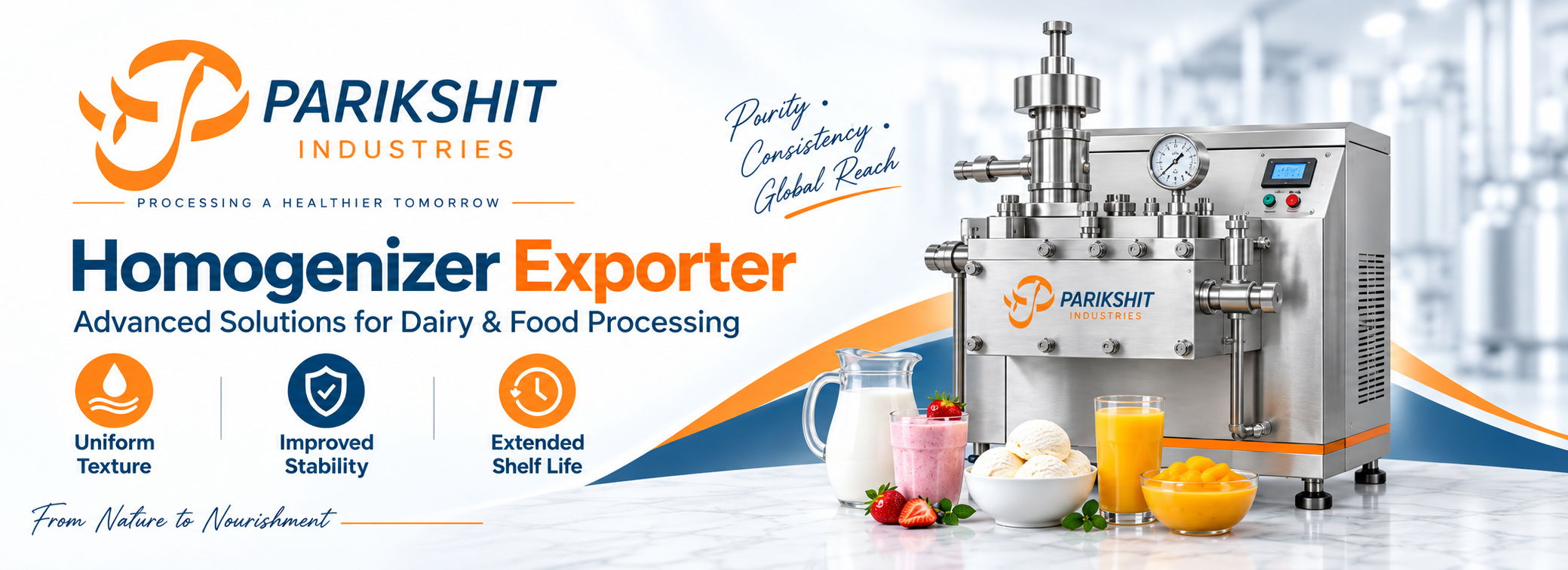
Homogenizer Exporter
In the dynamic world of food and dairy processing, achieving consistent texture, optimal stability, and extended shelf life for products like milk, ice cream, and beverages is paramount. Central to this achievement is the homogenizer, a critical piece of equipment designed to break down fat globules and ensure a uniform mixture. For businesses seeking to enhance their production capabilities, identifying a reliable Homogenizer Exporter is a key step towards acquiring high-performance machinery. Parikshit Industries, a notable manufacturer and supplier based in Ahmedabad, Gujarat, India, offers specialized solutions in this domain, catering to the diverse needs of the global food processing sector.
This article delves into the intricacies of homogenizers, their essential applications, the benefits they bring to processing operations, and crucial factors to consider when selecting an exporter. We will explore how quality engineering and a customer-centric approach, as exemplified by Parikshit Industries, contribute to successful dairy and food production outcomes worldwide.
Understanding Homogenizers in Food Processing
A homogenizer is a mechanical device used to reduce the size of fat globules within a liquid, such as milk or cream, and distribute them evenly throughout the mixture. This process, known as homogenization, prevents the separation of fat from the liquid over time, leading to a more stable and visually appealing product. Beyond dairy, homogenizers find applications in various food industries, including the production of sauces, beverages, and even pharmaceuticals, where a uniform consistency is desired.
The primary mechanism involves forcing the liquid through a narrow gap under high pressure. This high shear action breaks down larger fat globules into much smaller ones, which then remain suspended indefinitely. This not only improves the texture and mouthfeel of products like ice cream and milk but also enhances their digestibility and prevents the formation of cream layers.
Environmental factors and material choices are also significant. For instance, the use of stainless steel in dairy equipment ensures hygiene, durability, and resistance to corrosion, which are critical in food-grade applications. When sourcing from an exporter, understanding the technology and materials used is vital for ensuring product safety and operational efficiency.
Key Applications and Use Cases
The versatility of homogenizers makes them indispensable across numerous food processing sectors. As a leading Homogenizer Exporter, understanding these diverse applications helps in providing tailored solutions.
Dairy Processing
Crucial for milk, cream, and butter production to ensure uniform fat distribution, enhance texture, and prevent separation.
Ice Cream & Frozen Desserts
Essential for creating smooth, creamy textures in ice cream, gelato, and sorbets by breaking down ice crystals and fat globules.
Beverage Industry
Used in the production of juices, flavored milk drinks, and other beverages to improve mouthfeel and product stability.
Sauces & Dressings
Helps in emulsifying ingredients for sauces, mayonnaise, and salad dressings, ensuring a consistent, non-separating product.
Fruit Pulp & Purees
The SS Pulp Homogenizer, for example, is designed to process fruit pulps and purees, ensuring uniform consistency and preventing degradation.
Practical Benefits of Using Quality Homogenizers
Investing in a high-quality homogenizer offers significant advantages for any food processing business. These benefits extend from product quality to operational efficiency.
- Improved Product Texture & Mouthfeel: Homogenization breaks down fat globules, resulting in smoother, creamier, and more palatable products, especially noticeable in dairy and frozen desserts.
- Enhanced Product Stability: By preventing fat separation, homogenizers ensure that products maintain their consistency and appearance over time, reducing spoilage and customer complaints.
- Increased Yield & Efficiency: In some applications, homogenization can lead to improved whipping properties or increased yield, optimizing resource utilization.
- Better Digestibility: For milk and other products, smaller fat globules are often easier to digest.
- Extended Shelf Life: Improved stability and uniformity can contribute to a longer shelf life for processed goods.
- Versatility: Modern homogenizers can handle a wide range of viscosities and product types, making them adaptable to evolving production needs.
Selecting Your Ideal Homogenizer: A Buyer's Checklist
Choosing the right homogenizer requires careful consideration of your specific processing needs. As a discerning buyer looking for a reliable Homogenizer Exporter, consider these factors:
Buyer Insight: Material Matters
Ensure the homogenizer is constructed from food-grade stainless steel. This material is chosen for its durability, resistance to corrosion, ease of cleaning, and adherence to strict hygiene standards essential in the food and dairy industry.
Key Features and Selection Criteria:
- Application Suitability: Does the homogenizer meet the specific requirements for your product (e.g., milk, ice cream mix, fruit pulp)? Consider viscosity, temperature, and desired output.
- Capacity and Throughput: Evaluate the production volume you need to achieve. The homogenizer's capacity should align with your overall plant output to avoid bottlenecks.
- Pressure Ratings: Higher pressure generally leads to more effective homogenization. Understand the pressure capabilities relative to your product's needs.
- Sanitary Design: Look for designs that are easy to clean and maintain, minimizing the risk of contamination. This includes smooth surfaces and accessible components.
- Durability and Construction: Assess the build quality. Robust construction using high-grade materials like stainless steel ensures longevity and reliable operation.
- Ease of Operation and Maintenance: The equipment should be user-friendly, with straightforward controls and accessible parts for routine maintenance.
- Supplier Reputation and Support: Partner with an exporter known for quality engineering and reliable customer support. A responsive supplier can be invaluable for technical assistance and after-sales service.
Questions to Ask Before Buying:
- What specific product types and viscosities can this homogenizer effectively handle?
- What are the recommended operating pressures for optimal results with my product?
- How easy is it to clean and maintain the homogenizer between batches?
- What kind of technical support or after-sales service does the exporter provide?
- Are there options for customization to better suit my unique processing line?
Parikshit Industries: Your Trusted Homogenizer Partner
Parikshit Industries, based in Ahmedabad, Gujarat, India, stands as a dedicated manufacturer and supplier committed to delivering high-quality food processing machinery, including robust homogenizers. With a focus on quality engineering and customer satisfaction, the company designs solutions that meet modern industry standards.
Their product range includes sophisticated milk homogenizers, such as the "Environmental Friendly Stainless Steel Milk Homogenizer," and specialized units like the "SS Pulp Homogenizer." This demonstrates a commitment to providing diverse and effective solutions for various processing challenges. As an established exporter, Parikshit Industries aims to provide reliable, efficient, and durable machinery, ensuring that clients globally receive equipment that enhances their production capabilities and product quality. Their dedication to meeting modern food processing standards makes them a valuable partner for businesses seeking advanced dairy and food processing equipment.
Frequently Asked Questions
What is the primary function of a homogenizer in the food industry?
The primary function of a homogenizer is to reduce the size of fat globules in liquids like milk and to distribute them evenly throughout the mixture. This prevents fat separation, improves texture, and enhances product stability.
How does a homogenizer improve ice cream quality?
In ice cream production, homogenizers break down fat globules and air cells, leading to a smoother, creamier texture, better body, improved whipping properties, and increased resistance to heat shock.
Can homogenizers be used for products other than milk and ice cream?
Yes, homogenizers are versatile and can be used for various food products, including juices, sauces, dressings, mayonnaise, fruit pulps, and even certain beverages, wherever uniform consistency and emulsion stability are required.
What makes an 'Environmental Friendly' homogenizer?
An 'Environmental Friendly' homogenizer typically refers to designs that optimize energy efficiency, use eco-friendly materials, or minimize waste during operation, aligning with sustainable manufacturing practices.
Enhance Your Processing with a Quality Homogenizer
Are you looking to elevate the quality and consistency of your dairy or food products? Partner with a reliable Homogenizer Exporter like Parikshit Industries. Discover solutions designed for performance, durability, and efficiency.
Explore Solutions from Parikshit Industries