Ice Cream Plant in Ahmedabad, Gujarat
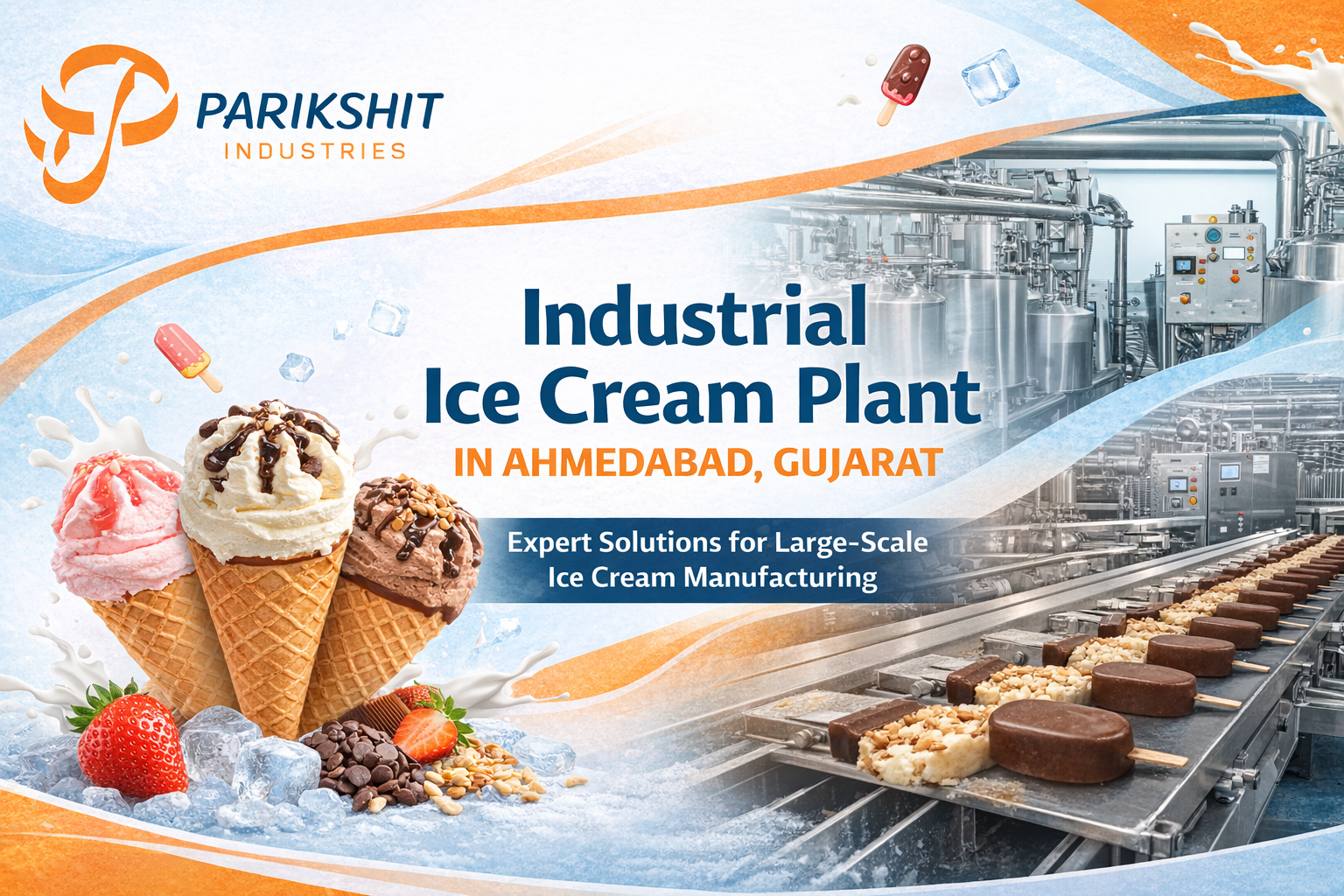
Ice Cream Plant in Ahmedabad, Gujarat
An industrial ice cream plant in Ahmedabad, Gujarat is a complete production system designed for large-scale ice cream manufacturing. It integrates all essential processes, including mixing, pasteurization, homogenization, freezing, flavor incorporation, and packaging. Equipped with advanced machinery and hygienic design, these plants deliver consistent product quality, maintain food safety, and enable efficient production for commercial dairy and dessert industries. Operators can achieve high output while ensuring uniform texture, creamy consistency, and reliable performance across different ice cream varieties.
Understanding the Industrial Ice Cream Production Process
The production workflow of an industrial ice cream plant is structured for maximum efficiency and quality. It begins with mix preparation, where raw ingredients—milk, cream, sugar, stabilizers, emulsifiers, and flavors—are combined. This blend undergoes pasteurization and homogenization under high pressure to create a smooth, creamy base. Pasteurization eliminates harmful microorganisms while stabilizing the mix for subsequent processing.
Aging Process for Superior Quality
After pasteurization, the mix is rapidly cooled and aged in refrigerated tanks for 4–8 hours. This resting period allows full integration of ingredients, improving texture, body, and consistency. Proper aging ensures superior mouthfeel and preserves the structure during freezing and packaging.
Freezing and Flavor Integration
Freezing and flavoring are performed using continuous freezers and inline flavor systems. The aged mix is frozen with controlled air incorporation to achieve the desired overrun and creamy texture. Fruits, nuts, chocolate chips, or other inclusions are added at precise stages for uniform distribution. Automated inline systems minimize manual handling, enhancing hygiene and consistency.
Packaging and Hardening
Finally, the ice cream is packaged in tubs, cones, or cups and transferred to hardening tunnels maintained at −23°C to −29°C. This ensures complete solidification while retaining texture and flavor. Industrial hardening tunnels feature precise temperature control, enabling rapid freezing without ice crystal formation, critical for premium-quality products.
Key Components and Equipment
Industrial ice cream plants include specialized machines such as:
- Mixers and pasteurizers for initial blend processing
- Homogenizers for uniform fat globule distribution
- Refrigerated aging tanks for controlled resting
- Continuous freezers with overrun control
- Flavor injection systems and inclusion feeders
- Packaging machines for tubs, cones, or cups
- Hardening tunnels for rapid product solidification
Hygiene and Compliance
Each component is built for food-grade compliance and hygiene. Stainless steel construction, smooth surface finishes, and CIP (clean-in-place) systems reduce contamination risk and simplify cleaning.
Planning, Compliance, and Operational Considerations
When establishing an ice cream plant in Ahmedabad, several factors affect planning and efficiency:
- Plant capacity: Defined in kilograms or liters per hour, matching production goals
- Product types: Kulfi, gelato, soft serve, or premium ice cream influence equipment selection
- Automation level: Semi-automatic or fully automatic systems determine labor needs and consistency
- Utilities and space: Electrical, water, and refrigeration requirements must align with plant layout
- Regulatory compliance: Adherence to food safety protocols, temperature monitoring, and microbial testing
- Traceability: Accurate batch records support quality control and audits
Applications and Use Cases
Industrial ice cream plants in Gujarat serve diverse sectors:
- Commercial ice cream manufacturers supplying retail and distribution networks
- Dessert and frozen food companies producing artisanal or premium products
- Hotels, resorts, and catering businesses requiring high-volume output
- Dairy cooperatives adding value to existing operations
Benefits of an Industrial Ice Cream Plant
- Consistent high-volume production
- Reduced manual intervention and labor needs
- Enhanced food safety through automated, hygienic processing
- Ability to produce multiple flavors and formats
- Scalable solutions to meet growing demand
Choosing the Right Ice Cream Plant Manufacturer in Gujarat
Selecting a reliable manufacturer is key for efficient operations. Consider:
- Technical expertise and industry experience
- Range of machines and customization options
- After-sales support and maintenance services
- Compliance with local and international food safety standards
- References from established ice cream businesses
Frequently Asked Questions
Our Blogs
- Benefits of Candy Plant in Dairy Industry
- Automatic Cup and Cone Filling Machine Supplier
- Ice Cream Plant for Dairy Industry
- Continuous Ice Cream Freezer for Dairy Industry
- Batch Freezer Uses in Dairy Industry
- Vertical Batch Freezer Exporter
- Gelato Machine Manufacturer
- Homogenizer for Dairy Industry
- Pasteuriser Manufacturer
- How Pasto Matic Works
- How Candy Plant Works
- Fruit Feeder for Ice Cream Industry
- How Batch Freezer Works
- Pasto Matic Supplier
- Vertical Batch Freezer Supplier
- Homogenizer Supplier
- Gelato Machine Exporter
- Pasteuriser Exporter
- How Homogenizer Works
- Benefits of Pasto Matic Machine
- Candy Plant for Ice Cream Industry
- How Hardening Tunnel Works
- Fruit Feeder Manufacturer
- Vertical Batch Freezer Uses in Dairy Processing
- Gelato Production Machine
- Homogenizer Exporter
- Pasteuriser Uses in Milk Processing
- Pasteuriser Uses in Milk Processing
- Ageing Vat Uses in Dairy Processing
- Pasto Matic Exporter
- Candy Plant Uses in Ice Candy Production
- Fruit Feeder Uses in Ice Cream Production
- Hardening Tunnel Uses in Ice Cream Production
- Hardening Tunnel Uses in Ice Cream Production
- How Fruit Feeder Works
- Ice Cream Machine Manufacturer in Ahmedabad
- Candy Plant Exporter
- Ageing Vat Exporter
- How Cup and Cone Filling Machine Works
- Benefits of Batch Freezer in Ice Cream Making
- Batch Freezer Supplier
- Automatic Cup and Cone Filling Machine Uses
- How Ageing Vat Works
- Ageing Vat Supplier
- Turnkey Ice Cream Plant Manufacturer
- Ice Cream Making Plant Supplier in India
- Ice Cream Machinery Manufacturer in India
- Ice Cream Machinery Manufacturer in Ahmedabad
- Ice Cream Manufacturing Plant Supplier
- Commercial Ice Cream Plant Manufacturer
- Commercial Ice Cream Plant Manufacturer
- Ice Cream Production Plant Manufacturer in Ahmedabad
- Ice Cream Production Plant Manufacturer in Ahmedabad
- Ice Cream Processing Plant Manufacturer in India
- Ice Cream Processing Plant Manufacturer in India
- Industrial Ice Cream Plant Manufacturer
- Ice Cream Machinery Manufacturer in Gujarat
- Ice Cream Factory Equipment Supplier in Gujarat
- Complete Ice Cream Plant Setup in India
- Automatic Cup and Cone Filling Machine for Ice Cream Industry
- Pasteuriser for Dairy Industry
- Ice Cream Processing Plant Manufacture
- Candy Plant Supplier
- Ice Cream Plant Supplier in Gujarat
- Ice Cream Plant Manufacturer in Ahmedabad
- Ice Cream Plant
- Automatic Cup and Cone Filling Machine Exporter
- Candy Plant Manufacturer
- Batch Freezer Manufacturer
- Automatic Cup and Cone Filling Machine Supplier
- Ageing Vat for Ice Cream Industry
- Benefits of Automatic Cup and Cone Filling Machine
- Automatic Cup and Cone Filling Machine
- Ageing Vat Manufacturer
- Ice Cream Plant
- Ice Cream Processing Equipment Manufacturing in India
- Ice Cream Homogenizer Supplier in Gujarat
- Ice Cream Homogenizer Machine Manufacturer in Ahmedabad
- Ice Cream Freezer Machine Near Me
- Ice Cream Freezing System Manufacturing in India
- Ice Cream Freezing Equipment Supplier in Gujarat
- Ice Cream Batch Freezer Manufacturer in Ahmedabad
- Ice Cream Mixer Machine Near Me
- Ice Cream Mixing System Manufacturing in India
- Ice Cream Blending Machine Supplier in Gujarat
- Ice Cream Mixing Machine Manufacturer in Ahmedabad
- Ice Cream Filling Equipment Near Me
- Ice Cream Filling System Manufacturing in India
- Ice Cream Filling Machine Manufacturer in Ahmedabad
- Ice Cream Production Unit Near Me
- Ice Cream Processing Plant Manufacturing in India
- Ice Cream Factory Equipment Supplier in Gujarat
- Ice Cream Production Plant Manufacturer in Ahmedabad
- Ice Cream Equipment Near Me
- Ice Cream Packaging Machine Supplier in India
- Ice Cream Packaging Machine Supplier in Gujarat
- Ice Cream Unit Manufacturing in India
- Ice Cream Production Plant Manufacturer in Ahmedabad
- Ice Cream Plant Manufacturers in India
- Ice Cream Making Machine Manufacturer in Ahmedabad
- Ice Cream Making Plant Supplier in India
- Candy Plant Machine Manufacturing in Gujarat
- Candy Plant Machine Supplier in Ahmedabad
- Candy Plant Manufacturer in India
- Ice Cream Cone Filling Machine Supplier in Gujarat
- Ice Cream Machine Supplier in India
- Continuous Ice Cream Freezer Manufacturing in Ahmedabad
- Candy Plant Machine Supplier in Ahmedabad
- Continuous Ice Cream Freezer Supplier in Ahmedabad
- Ice Cream Plant Manufacturers in Gujarat
- Ice Cream Plant Manufacturing in Gujarat
- Cup Cone Filling Machine Manufacturer in Ahmedabad
- Ice Cream Plant Manufacturer in India
- Ice Cream Plant Manufacturer in India
- Continuous Ice Cream Freezer Manufacturer in India
- Continuous Ice Cream Freezer in Gujarat
- Cup Cone Filling Machine Manufacturer in Ahmedabad
- Ice Cream Machine Manufacturer in Gujarat
- Ice Cream Plant in Ahmedabad, Gujarat
- Ice Cream Plant Supplier in Ahmedabad
- Ice Cream Machine Manufacturer Supplier in Ahmedabad
- Continuous Ice Cream Freezer Manufacturer in Gujarat
- Continuous Ice Cream Freezer in Ahmedabad
- Continuous Ice Cream Freezer in India
- Ice Cream Machinery Manufacturers in India
- Ice Cream Plant Manufacturer Gujarat
- Ice Cream Machine Manufacturer Ahmedabad
- Ice Cream Machine Manufacturers in India
- Ice Cream Machinery Manufacturers in Gujarat
- Ice Cream Machine Manufacturers in Ahmedabad
- Ice Cream Machine Manufacturers in Gujarat
- Ice Cream Machine Manufacturers