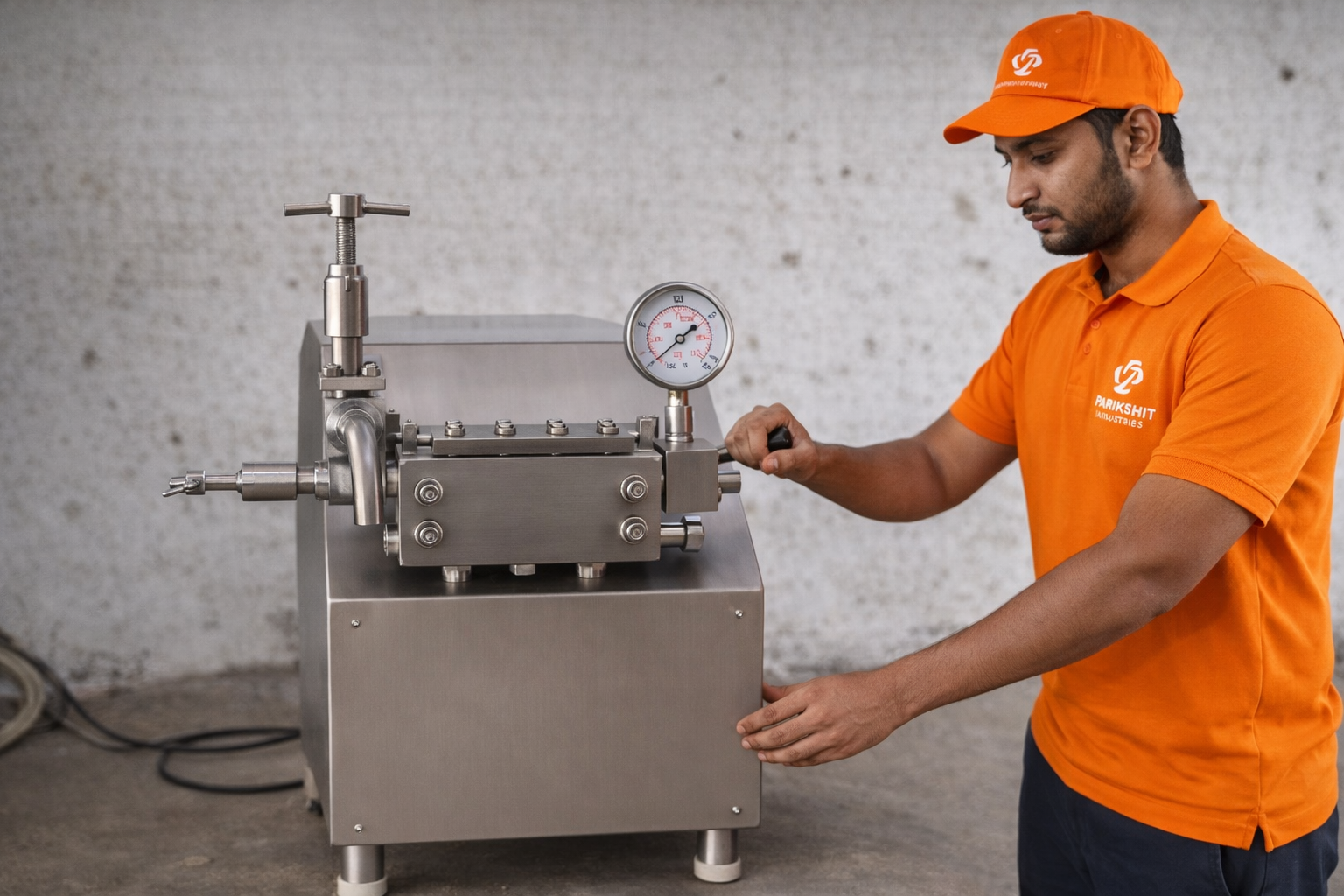
Homogenizer for Dairy Industry
The dairy industry relies on sophisticated processes to transform raw milk into the high-quality products consumers love. Among the most critical of these is homogenization, a technique that significantly enhances the texture, stability, and overall appeal of dairy goods. A robust homogenizer is an indispensable piece of equipment for any dairy processing operation aiming for consistency and excellence. This guide delves into the importance of homogenizers in the dairy sector, their applications, benefits, and how to select the right unit for your needs.
Understanding Homogenization in Dairy
Homogenization is a mechanical process designed to reduce the size of fat globules within milk and cream. Raw milk naturally contains fat globules of varying sizes, with larger ones tending to rise to the surface over time, forming a distinct cream layer. This separation is undesirable for many dairy products, impacting their appearance, consistency, and mouthfeel. The homogenization process addresses this by forcing the milk or cream through a very narrow gap at high pressure.
This high-pressure treatment subjects the fat globules to intense shear forces, cavitation, and turbulence. These forces effectively break down the larger fat globules into much smaller ones, typically under 1 micron in diameter. These minute fat particles become uniformly dispersed throughout the liquid, preventing them from coalescing and rising to the surface. The result is a stable emulsion where fat remains evenly distributed, ensuring a consistent product from the first pour to the last.
The physical changes brought about by homogenization are significant:
- Prevents Cream Separation: Ensures a uniform fat distribution, eliminating the cream layer.
- Improves Texture and Mouthfeel: Creates a smoother, richer, and more appealing texture.
- Enhances Visual Appeal: Results in a more opaque and visually consistent product.
- Extends Shelf Life: By stabilizing the emulsion, it contributes to a longer product lifespan.
- Boosts Digestibility: Smaller fat globules can be easier for the body to digest.
Diverse Applications in the Dairy Sector 🥛
The versatility of homogenizers makes them crucial for a wide array of dairy products. Their ability to control fat dispersion and particle size is key to achieving specific product characteristics. Here are some primary applications:
Drinking Milk
Ensures that homogenized milk remains consistent, preventing cream separation and offering a smooth, full-bodied taste consumers expect.
Ice Cream & Frozen Desserts
Homogenizing the ice cream mix before freezing is vital. It creates smaller ice crystals and a smoother texture, preventing a coarse or icy mouthfeel and improving overrun.
Yogurt and Fermented Products
Homogenization of the milk base for yogurt improves body and texture, yielding a thicker, creamier product with enhanced stability against whey separation.
Cheese Production
For certain cheese types, homogenization of the milk can lead to improved curd consistency, better fat distribution within the cheese matrix, and altered texture.
Butter and Cream Products
While cream is inherently separated, homogenizing cream itself or the milk used in butter production can influence texture, spreadability, and stability.
Key Benefits of Dairy Homogenization
Implementing a reliable homogenizer in your dairy processing line offers substantial advantages:
- Enhanced Product Quality: Consistent texture, improved flavor, and desirable mouthfeel across batches.
- Increased Stability: Prevents separation of fat and other components, ensuring product integrity.
- Extended Shelf Life: A stable emulsion is less prone to spoilage, contributing to longer product viability.
- Manufacturing Efficiency: Predictable product behavior aids in streamlined production processes.
- Consumer Satisfaction: Delivering consistently superior products builds brand loyalty and trust.
Selecting the Right Homogenizer for Your Dairy Business
Choosing a homogenizer is a significant investment that requires careful consideration of several factors to ensure it meets your operational needs and product goals. A well-chosen unit will enhance your production capabilities and product quality.
Key Selection Criteria:
- Capacity Requirements: Assess your current and future production volumes. Homogenizers are available in a wide range of capacities to suit small artisanal dairies to large-scale industrial operations.
- Pressure Settings: Different products and desired outcomes require varying pressures. Drinking milk typically needs higher pressures (150-250 bar) than cream (50-100 bar). Ensure the unit offers the flexibility needed for your product range.
- Product Type: Consider the specific dairy products you intend to process. Some homogenizers are better suited for high-viscosity products like ice cream mix, while others excel with fluid milk.
- Sanitary Design: Dairy processing demands strict hygiene. Look for equipment designed for easy cleaning and maintenance, often featuring stainless steel construction and smooth surfaces to prevent bacterial growth.
- Durability and Reliability: Opt for manufacturers known for robust construction and reliable performance. A breakdown can be costly in terms of lost production and potential spoilage.
- Ease of Operation and Maintenance: The control system should be intuitive, and routine maintenance should be straightforward to minimize downtime.
Buyer Insight: When evaluating homogenizers, don't just focus on the initial purchase price. Consider the total cost of ownership, including energy consumption, maintenance, spare parts availability, and the impact on product quality and yield. A slightly more expensive, high-quality machine can often provide better long-term value.
Questions to Ask Before Buying:
- What is the maximum and minimum operating pressure, and can it be easily adjusted?
- What is the standard maintenance schedule and what parts typically require replacement over time?
- Does the design facilitate thorough and efficient cleaning to meet dairy hygiene standards?
- What kind of support and after-sales service does the manufacturer provide?
- Can the homogenizer handle the viscosity of all the products I plan to process?
Parikshit Industries: Your Partner in Dairy Processing
For dairies seeking reliable and efficient processing solutions, Parikshit Industries stands as a dedicated manufacturer and supplier. Based in Ahmedabad, Gujarat, India, the company specializes in designing and manufacturing a range of dairy processing machinery, including essential equipment like homogenizers. Parikshit Industries is committed to providing machinery that helps dairy businesses enhance their product quality and operational efficiency.
Understanding the critical role of equipment like homogenizers in achieving superior dairy products, Parikshit Industries focuses on delivering robust solutions. Whether you are producing fluid milk, rich creams, or decadent ice cream mixes, their machinery is built to meet the rigorous demands of the dairy industry. Partner with Parikshit Industries to equip your dairy operation with dependable processing technology designed for consistent performance and quality output.
Frequently Asked Questions about Dairy Homogenizers
What is the primary function of a homogenizer in the dairy industry?
The primary function is to reduce the size of fat globules in milk and cream, preventing separation and creating a stable, uniform emulsion for improved texture, taste, and shelf life.
Can a homogenizer be used for both milk and ice cream mix?
Yes, homogenizers are versatile and commonly used for both fluid milk processing and preparing ice cream mix. The required pressure and settings may vary depending on the product.
How does homogenization affect the taste and texture of dairy products?
Homogenization results in a smoother, richer, and fuller mouthfeel. It also enhances the visual appearance, making products like milk appear more opaque and creamy.
What is the typical pressure range for homogenizing milk?
For drinking milk, typical homogenization pressures range from 150 to 250 bar (approximately 2175 to 3625 psi).
How important is the sanitary design of a dairy homogenizer?
Sanitary design is extremely important in the dairy industry to prevent contamination and bacterial growth. Equipment should be easy to clean and maintain, often constructed from stainless steel with smooth surfaces.
Ready to Enhance Your Dairy Production?
Elevate the quality and consistency of your dairy products with advanced homogenization technology. Discover how Parikshit Industries can provide the reliable machinery your operation needs to succeed.
Explore Parikshit Industries' Solutions