Ice Cream Unit Manufacturing in India
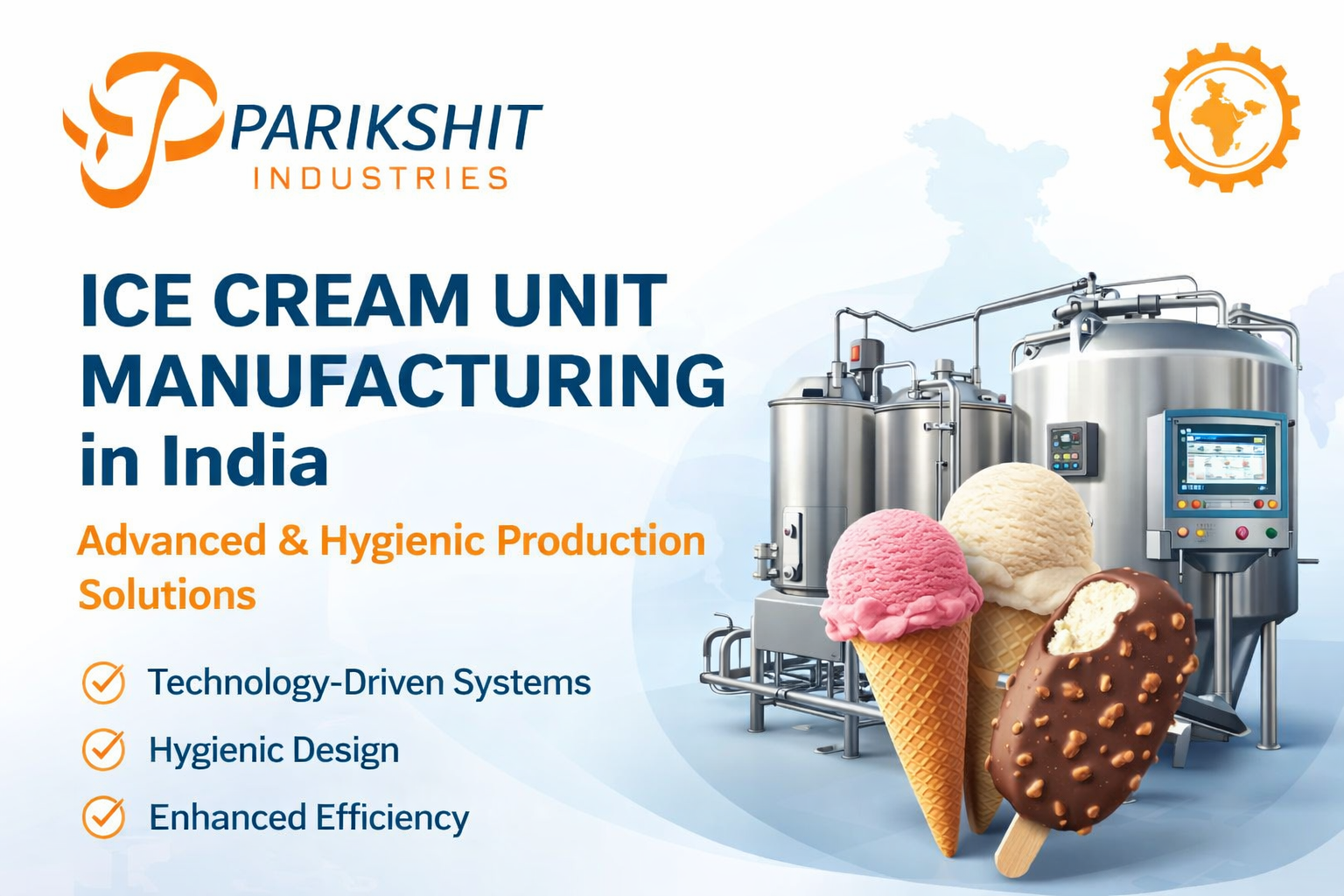
Ice Cream Unit Manufacturing in India
India's food processing sector has experienced strong growth, especially in the frozen dessert segment. Ice cream unit manufacturing in India has developed into a structured and technology-driven domain, supporting dairy businesses, startups, and large-scale food brands. With rising consumer expectations for quality and consistency, manufacturers increasingly rely on efficient systems that ensure hygiene, uniformity, and scalability.
An industrial ice cream unit is designed to manage multiple production stages within a controlled environment. These systems combine modern processing techniques with automation to deliver consistent texture, taste, and safety standards. As a result, businesses can maintain operational efficiency while meeting regulatory and quality requirements.
Understanding Ice Cream Unit Manufacturing Systems
Ice cream unit manufacturing involves the design and development of integrated processing systems for large-scale production. These units are engineered to manage every stage, from raw ingredient preparation to final packaging, ensuring a smooth workflow and optimized output.
Modern systems are constructed using food-grade materials and follow strict hygienic design principles. The objective is to maintain precise temperature control, prevent contamination, and ensure uniform product quality. These plants are widely used in dairy processing units, commercial ice cream brands, and food manufacturing industries.
Automation plays a key role in maintaining production accuracy. By controlling parameters such as temperature, pressure, and mixing speed, these systems ensure that each batch meets consistent quality standards.
Key Components of an Ice Cream Manufacturing Unit
An ice cream production unit includes several interconnected components, each performing a specific function within the process. Together, these components create a streamlined and efficient production system.
Mixing and pasteurization units prepare the base mixture by combining ingredients such as milk, cream, sugar, and stabilizers. Homogenizers ensure a smooth and uniform texture by breaking down fat particles under high pressure.
Cooling and aging tanks stabilize the mixture, allowing ingredients to integrate fully and enhance texture. Continuous freezers convert the liquid mix into semi-solid ice cream by incorporating air in a controlled manner.
Flavor dosing systems allow the addition of fruits, nuts, and chocolate during the freezing stage. Packaging machines ensure hygienic filling and sealing, while hardening tunnels solidify the product at low temperatures to maintain structure and shelf stability.
Step-by-Step Ice Cream Production Process
The ice cream manufacturing process follows a structured sequence to ensure consistent quality and product stability. Each stage is carefully monitored to achieve optimal results:
- Raw material preparation involves selecting and accurately measuring ingredients such as milk, cream, sugar, and additives
- Pasteurization heats the mixture to eliminate harmful microorganisms and ensure safety
- Homogenization creates a uniform mixture by reducing fat particle size
- Cooling and aging allow the mixture to stabilize and improve texture
- Freezing incorporates air into the mixture, forming a smooth and creamy structure
- Flavor addition introduces ingredients such as fruits, nuts, or chocolate
- Packaging ensures hygienic filling and proper sealing of the final product
- Hardening solidifies the ice cream at low temperatures for storage and distribution
Importance of Hygiene and Food Safety in Manufacturing
Maintaining hygiene is a critical aspect of ice cream unit manufacturing in India. As a dairy-based product, ice cream requires strict adherence to food safety standards throughout the production process. Manufacturing units are designed with sanitary features that minimize contamination risks and ensure product safety.
Food-grade stainless steel construction is widely used to maintain cleanliness and durability. Temperature control systems ensure the product remains within safe limits during processing. Regular cleaning and maintenance are essential for sustaining operational efficiency and consistent product quality.
In addition to equipment design, proper handling of raw materials and adherence to quality protocols are equally important. These practices help manufacturers comply with regulatory requirements and build long-term trust with consumers.
Applications of Ice Cream Manufacturing Units
Ice cream manufacturing units are widely used across different segments of the food processing industry. Their flexibility allows them to support diverse production requirements:
- Dairy processing industries producing large volumes of ice cream
- Commercial ice cream brands focused on consistent quality
- Food startups entering the frozen dessert market
- Hotels and catering services requiring bulk production
- Specialty dessert manufacturers producing gelato or customized products
Factors Influencing Ice Cream Unit Manufacturing Setup
Setting up an ice cream manufacturing unit involves several technical and operational considerations that directly impact performance and scalability.
Production capacity is a key factor, as it determines the output of the plant. The type of product being manufactured, such as standard ice cream or premium gelato, also influences equipment selection and processing requirements.
The level of automation significantly affects efficiency and consistency. Higher automation reduces manual intervention and improves control over production parameters, resulting in more reliable output.
Other considerations include energy consumption, refrigeration systems, and infrastructure requirements. Proper planning helps manufacturers optimize resources and ensure long-term operational stability.
Advantages of Modern Ice Cream Manufacturing Systems
Modern ice cream units offer several advantages that enhance production efficiency and product quality:
Role of Technology in Ice Cream Production
Technological advancements have significantly improved ice cream unit manufacturing in India. Modern systems are equipped with advanced control panels and automation features that enable precise monitoring of production parameters.
Digital controls allow operators to manage temperature, mixing speed, and freezing conditions with accuracy. This ensures consistent texture and taste across batches. Automated systems also reduce the risk of human error, improving overall production efficiency.
Data monitoring and process optimization tools help manufacturers evaluate performance and make informed decisions. This contributes to better resource management and increased productivity.
Challenges in Ice Cream Manufacturing
Despite technological progress, ice cream manufacturing presents certain operational challenges. Maintaining consistent quality across large production volumes can be complex, particularly when raw material properties vary.
Temperature control remains a critical factor, as fluctuations can affect product texture and stability. Energy consumption is another concern, especially in refrigeration systems that operate continuously.
To address these challenges, manufacturers must invest in reliable equipment and follow well-defined operational practices. Regular maintenance and monitoring are essential for ensuring smooth and consistent production.
Future of Ice Cream Unit Manufacturing in India
The future of ice cream unit manufacturing in India appears promising, driven by growing demand and continuous technological advancements. As consumer preferences evolve, manufacturers are focusing on innovation and product diversification.
There is an increasing emphasis on energy-efficient systems and sustainable production practices. Manufacturers are also exploring new product categories such as low-fat, plant-based, and functional ice creams to meet changing market needs.
Automation and digitalization are expected to play a major role in shaping the future of the industry. These developments will enable higher efficiency, improved quality control, and greater scalability.
Conclusion
Ice cream unit manufacturing in India plays a crucial role in the food processing industry, supporting the large-scale production of high-quality frozen desserts. With advanced technology, hygienic system design, and efficient processing methods, these units enable manufacturers to meet growing market demand while maintaining consistency and safety.
As the industry continues to evolve, the adoption of modern manufacturing practices and innovative technologies will shape its future. Businesses investing in well-designed ice cream production systems can achieve reliable performance, improved efficiency, and long-term operational sustainability.
Frequently Asked Questions
Our Blogs
- Vertical Batch Freezer Uses in Dairy Processing
- Gelato Production Machine
- Homogenizer Exporter
- Pasteuriser Uses in Milk Processing
- Pasteuriser Uses in Milk Processing
- Ageing Vat Uses in Dairy Processing
- Pasto Matic Exporter
- Candy Plant Uses in Ice Candy Production
- Fruit Feeder Uses in Ice Cream Production
- Hardening Tunnel Uses in Ice Cream Production
- Hardening Tunnel Uses in Ice Cream Production
- How Fruit Feeder Works
- Ice Cream Machine Manufacturer in Ahmedabad
- Candy Plant Exporter
- Ageing Vat Exporter
- How Cup and Cone Filling Machine Works
- Benefits of Batch Freezer in Ice Cream Making
- Batch Freezer Supplier
- Automatic Cup and Cone Filling Machine Uses
- How Ageing Vat Works
- Ageing Vat Supplier
- Turnkey Ice Cream Plant Manufacturer
- Ice Cream Making Plant Supplier in India
- Ice Cream Machinery Manufacturer in India
- Ice Cream Machinery Manufacturer in Ahmedabad
- Ice Cream Manufacturing Plant Supplier
- Commercial Ice Cream Plant Manufacturer
- Commercial Ice Cream Plant Manufacturer
- Ice Cream Production Plant Manufacturer in Ahmedabad
- Ice Cream Production Plant Manufacturer in Ahmedabad
- Ice Cream Processing Plant Manufacturer in India
- Ice Cream Processing Plant Manufacturer in India
- Industrial Ice Cream Plant Manufacturer
- Ice Cream Machinery Manufacturer in Gujarat
- Ice Cream Factory Equipment Supplier in Gujarat
- Complete Ice Cream Plant Setup in India
- Automatic Cup and Cone Filling Machine for Ice Cream Industry
- Pasteuriser for Dairy Industry
- Ice Cream Processing Plant Manufacture
- Candy Plant Supplier
- Ice Cream Plant Supplier in Gujarat
- Ice Cream Plant Manufacturer in Ahmedabad
- Ice Cream Plant
- Automatic Cup and Cone Filling Machine Exporter
- Candy Plant Manufacturer
- Batch Freezer Manufacturer
- Automatic Cup and Cone Filling Machine Supplier
- Ageing Vat for Ice Cream Industry
- Benefits of Automatic Cup and Cone Filling Machine
- Automatic Cup and Cone Filling Machine
- Ageing Vat Manufacturer
- Ice Cream Plant
- Ice Cream Processing Equipment Manufacturing in India
- Ice Cream Homogenizer Supplier in Gujarat
- Ice Cream Homogenizer Machine Manufacturer in Ahmedabad
- Ice Cream Freezer Machine Near Me
- Ice Cream Freezing System Manufacturing in India
- Ice Cream Freezing Equipment Supplier in Gujarat
- Ice Cream Batch Freezer Manufacturer in Ahmedabad
- Ice Cream Mixer Machine Near Me
- Ice Cream Mixing System Manufacturing in India
- Ice Cream Blending Machine Supplier in Gujarat
- Ice Cream Mixing Machine Manufacturer in Ahmedabad
- Ice Cream Filling Equipment Near Me
- Ice Cream Filling System Manufacturing in India
- Ice Cream Filling Machine Manufacturer in Ahmedabad
- Ice Cream Production Unit Near Me
- Ice Cream Processing Plant Manufacturing in India
- Ice Cream Factory Equipment Supplier in Gujarat
- Ice Cream Production Plant Manufacturer in Ahmedabad
- Ice Cream Equipment Near Me
- Ice Cream Packaging Machine Supplier in India
- Ice Cream Packaging Machine Supplier in Gujarat
- Ice Cream Unit Manufacturing in India
- Ice Cream Production Plant Manufacturer in Ahmedabad
- Ice Cream Plant Manufacturers in India
- Ice Cream Making Machine Manufacturer in Ahmedabad
- Ice Cream Making Plant Supplier in India
- Candy Plant Machine Manufacturing in Gujarat
- Candy Plant Machine Supplier in Ahmedabad
- Candy Plant Manufacturer in India
- Ice Cream Cone Filling Machine Supplier in Gujarat
- Ice Cream Machine Supplier in India
- Continuous Ice Cream Freezer Manufacturing in Ahmedabad
- Candy Plant Machine Supplier in Ahmedabad
- Continuous Ice Cream Freezer Supplier in Ahmedabad
- Ice Cream Plant Manufacturers in Gujarat
- Ice Cream Plant Manufacturing in Gujarat
- Cup Cone Filling Machine Manufacturer in Ahmedabad
- Ice Cream Plant Manufacturer in India
- Ice Cream Plant Manufacturer in India
- Continuous Ice Cream Freezer Manufacturer in India
- Continuous Ice Cream Freezer in Gujarat
- Cup Cone Filling Machine Manufacturer in Ahmedabad
- Ice Cream Machine Manufacturer in Gujarat
- Ice Cream Plant in Ahmedabad, Gujarat
- Ice Cream Plant Supplier in Ahmedabad
- Ice Cream Machine Manufacturer Supplier in Ahmedabad
- Continuous Ice Cream Freezer Manufacturer in Gujarat
- Continuous Ice Cream Freezer in Ahmedabad
- Continuous Ice Cream Freezer in India
- Ice Cream Machinery Manufacturers in India
- Ice Cream Plant Manufacturer Gujarat
- Ice Cream Machine Manufacturer Ahmedabad
- Ice Cream Machine Manufacturers in India
- Ice Cream Machinery Manufacturers in Gujarat
- Ice Cream Machine Manufacturers in Ahmedabad
- Ice Cream Machine Manufacturers in Gujarat
- Ice Cream Machine Manufacturers