Ice Cream Plant Manufacturer in India
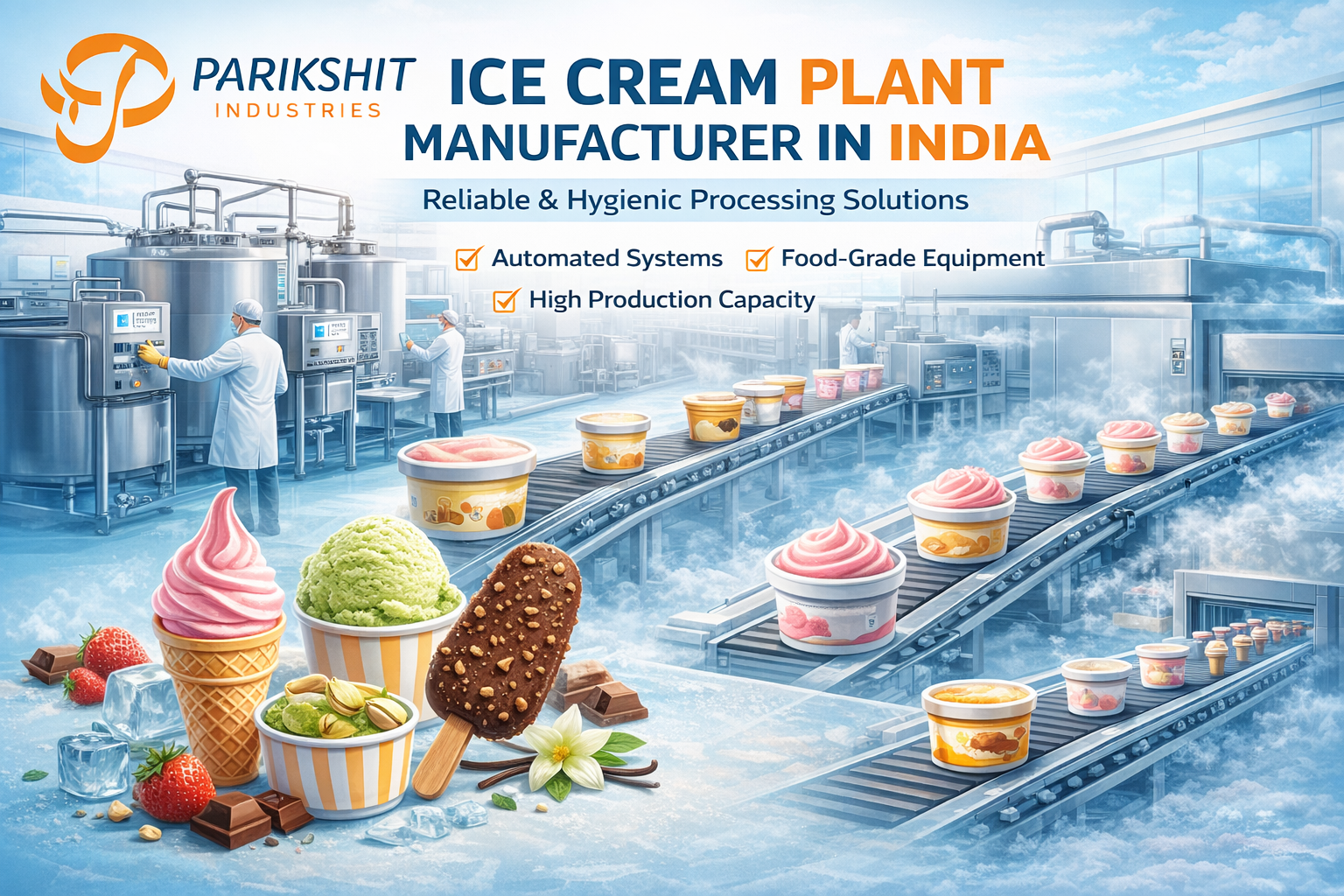
Ice Cream Plant Manufacturer
in India
India's dairy and frozen dessert industry has grown steadily over the past decade, driven by urbanization, evolving consumer preferences, and expanding cold chain infrastructure. Large-scale production requires reliable, hygienic, and efficient processing systems. An ice cream plant manufacturer in India plays a vital role in enabling consistent output, quality control, and regulatory compliance for commercial dairy operations.
Overview
What Is an Industrial Ice Cream Plant?
Integrated Production System
An industrial ice cream plant is an integrated production system that manages every stage of manufacturing. From mix preparation and pasteurization to freezing, flavor addition, packaging, and hardening, each stage is designed to protect product integrity, maintain hygiene, and ensure repeatable results.
Wide Product Range Support
The objective is not only high capacity but also uniform texture, stable flavor, and full food safety compliance. Modern ice cream production plants in India support a wide range of product categories, including traditional dairy ice cream, premium variants, kulfi, soft serve mixes, and specialty frozen desserts.
Engineering
Understanding Industrial Ice Cream Plant Systems
An ice cream plant consists of interconnected processing units operating in a controlled sequence. These systems are engineered using food-grade stainless steel, precise temperature control mechanisms, and automated monitoring to ensure hygienic and reliable performance. Machinery configuration depends on production scale, desired automation level, and product portfolio.
Process Flow
Core Components of an Ice Cream Production Plant
The ice cream manufacturing process follows a structured operational flow. Each stage is supported by specialized equipment designed to maintain safety and product consistency.
Mix Preparation and Pasteurization
The process begins by blending milk, cream, sugar, stabilizers, emulsifiers, and flavor bases in precise proportions. The prepared mix is pasteurized to eliminate harmful microorganisms. Homogenization then takes place under high pressure to break down fat globules and create a smooth, creamy texture. This stage ensures microbial safety while improving the structural stability of the final product.
Cooling and Aging
After pasteurization, the mix is rapidly cooled to inhibit bacterial growth. It is then transferred to insulated aging tanks, where it rests for approximately four to eight hours. During this time, proteins fully hydrate, stabilizers activate, and the mix develops improved body and consistency. Proper aging plays a significant role in enhancing the final mouthfeel of the ice cream.
Freezing and Flavor Incorporation
Continuous freezers partially freeze the aged mix while incorporating controlled air, known as overrun. The level of air incorporation directly affects texture and density. Inline flavoring systems allow precise addition of fruits, nuts, chocolate chips, and other inclusions. Careful temperature control during freezing prevents large ice crystal formation and supports structural stability.
Packaging and Hardening
Once semi-frozen, the product is filled into cups, cones, tubs, or bulk containers using automated packaging systems. It is then transferred to hardening tunnels operating between −23°C and −29°C. Rapid hardening minimizes ice crystal growth and extends shelf life. This stage preserves shape, texture, and overall product stability during storage and transportation.
Food Safety
Hygienic Design and Food Safety Compliance
Food safety is central to industrial ice cream production. An ice cream plant manufacturer in India must design systems that comply with national and international standards. Hygienic engineering reduces contamination risks and simplifies cleaning procedures.
In India, regulatory compliance typically aligns with FSSAI guidelines. Plants engaged in export may also adhere to global standards such as HACCP and ISO certifications. Traceability systems and digital record-keeping enhance accountability across production batches.
Key Hygiene-Focused Design Elements
- Food-grade stainless steel construction
- CIP (Clean-in-Place) systems for automated cleaning
- Controlled temperature and pressure monitoring
- Smooth, crevice-free internal surfaces
- Integrated microbial testing protocols
Smart Manufacturing
Automation and Production Efficiency
Automation has significantly improved ice cream manufacturing efficiency across India. Modern plants integrate PLC-based control panels, sensors, and digital dashboards to monitor temperature, flow rate, pressure, and production volume in real time. These systems reduce human error, improve repeatability, and enhance operational control.
Semi-Automatic Systems
For medium-scale dairy units requiring flexible, operator-assisted control with reliable automation support.
Fully Automated Plants
For high-volume industrial production with integrated real-time monitoring, repeatability, and labor optimization.
Customized Configurations
Tailored automation solutions for specialty or niche products, ensuring consistent output and long-term operational stability.
Planning
Capacity Planning and Plant Layout Design
Selecting the appropriate capacity is a critical decision when setting up an ice cream plant in India. Capacity is generally measured in liters or kilograms per hour and depends on market reach, distribution strategy, and product range.
A well-designed layout ensures smooth raw material flow, reduces cross-contamination risk, and improves overall plant efficiency.
Manufacturer Assistance Includes
- Daily and monthly production planning
- Utility assessment, including water, electricity, and refrigeration load
- Workflow optimization for efficient material movement
- Equipment placement to maintain hygienic zoning
- Expansion planning for future scalability
Industry Use Cases
Applications Across the Indian Dairy Industry
Industrial ice cream plants in India serve regional dairy cooperatives, private dairy brands, frozen dessert manufacturers, and contract production units. As consumer preferences diversify, plants are increasingly designed to support multiple product formats and packaging styles. Flexible configurations enable manufacturers to meet domestic demand and export requirements efficiently.
Large-Scale Dairy Ice Cream Production
Premium Gelato Manufacturing
Kulfi & Traditional Indian Frozen Desserts
Soft Serve Mix Production
Private Label Contract Manufacturing
Selection Guide
Choosing the Right Ice Cream Plant Manufacturer in India
Selecting a reliable manufacturer requires evaluating technical expertise, fabrication quality, and compliance knowledge. An experienced ice cream plant manufacturer in India provides engineering consultation, installation assistance, and technical training to ensure smooth commissioning and stable operations.
Long-term reliability and service support are essential for uninterrupted production cycles.
Buyer Assessment Checklist
Reliability
Maintenance and Operational Reliability
Regular Maintenance Is Crucial
Regular maintenance is crucial for consistent performance and equipment longevity. Preventive maintenance schedules typically include inspections of homogenizers, freezers, pumps, valves, and refrigeration systems. Automated cleaning systems simplify sanitation processes and reduce downtime. Properly maintained systems help minimize disruptions and ensure consistent product quality across production batches.
Industry Evolution
Future Trends in Ice Cream Manufacturing in India
The Indian ice cream industry continues to evolve, driven by demand for innovative flavors, health-focused formulations, and sustainable packaging solutions.
Digital Monitoring Technologies
Manufacturers are adopting digital monitoring technologies and advanced refrigeration systems to meet changing market expectations and improve operational precision.
Modular Plant Designs
Modular plant designs enable flexible scale-up and reconfiguration, supporting rapid adaptation to new product lines and market demands.
Sustainability Considerations
Sustainability considerations, including energy efficiency and reduced water usage, are influencing plant design decisions across the Indian dairy equipment sector.
Plant-Based Frozen Desserts
Increasingly, manufacturers are developing flexible systems capable of handling both traditional dairy products and plant-based frozen desserts.
Conclusion
Enabling Reliable Large-Scale Manufacturing
An ice cream plant manufacturer in India supports the expanding dairy and frozen dessert sector by delivering integrated, hygienic, and automated production systems. From mix preparation to hardening, each stage is engineered to maintain product consistency, food safety compliance, and operational efficiency. With proper capacity planning, technical support, and regulatory alignment, industrial ice cream plants enable reliable large-scale manufacturing that meets modern commercial requirements.
Common Questions
Frequently Asked Questions
Contact Us
Get in Touch
Our Address
125, Adarsh Gold Industrial EstateNr. CISF Camp, New Odhav
Ahmedabad, Gujarat, India – 382415
Our Blogs
- Vertical Batch Freezer Uses in Dairy Processing
- Gelato Production Machine
- Homogenizer Exporter
- Pasteuriser Uses in Milk Processing
- Pasteuriser Uses in Milk Processing
- Ageing Vat Uses in Dairy Processing
- Pasto Matic Exporter
- Candy Plant Uses in Ice Candy Production
- Fruit Feeder Uses in Ice Cream Production
- Hardening Tunnel Uses in Ice Cream Production
- Hardening Tunnel Uses in Ice Cream Production
- How Fruit Feeder Works
- Ice Cream Machine Manufacturer in Ahmedabad
- Candy Plant Exporter
- Ageing Vat Exporter
- How Cup and Cone Filling Machine Works
- Benefits of Batch Freezer in Ice Cream Making
- Batch Freezer Supplier
- Automatic Cup and Cone Filling Machine Uses
- How Ageing Vat Works
- Ageing Vat Supplier
- Turnkey Ice Cream Plant Manufacturer
- Ice Cream Making Plant Supplier in India
- Ice Cream Machinery Manufacturer in India
- Ice Cream Machinery Manufacturer in Ahmedabad
- Ice Cream Manufacturing Plant Supplier
- Commercial Ice Cream Plant Manufacturer
- Commercial Ice Cream Plant Manufacturer
- Ice Cream Production Plant Manufacturer in Ahmedabad
- Ice Cream Production Plant Manufacturer in Ahmedabad
- Ice Cream Processing Plant Manufacturer in India
- Ice Cream Processing Plant Manufacturer in India
- Industrial Ice Cream Plant Manufacturer
- Ice Cream Machinery Manufacturer in Gujarat
- Ice Cream Factory Equipment Supplier in Gujarat
- Complete Ice Cream Plant Setup in India
- Automatic Cup and Cone Filling Machine for Ice Cream Industry
- Pasteuriser for Dairy Industry
- Ice Cream Processing Plant Manufacture
- Candy Plant Supplier
- Ice Cream Plant Supplier in Gujarat
- Ice Cream Plant Manufacturer in Ahmedabad
- Ice Cream Plant
- Automatic Cup and Cone Filling Machine Exporter
- Candy Plant Manufacturer
- Batch Freezer Manufacturer
- Automatic Cup and Cone Filling Machine Supplier
- Ageing Vat for Ice Cream Industry
- Benefits of Automatic Cup and Cone Filling Machine
- Automatic Cup and Cone Filling Machine
- Ageing Vat Manufacturer
- Ice Cream Plant
- Ice Cream Processing Equipment Manufacturing in India
- Ice Cream Homogenizer Supplier in Gujarat
- Ice Cream Homogenizer Machine Manufacturer in Ahmedabad
- Ice Cream Freezer Machine Near Me
- Ice Cream Freezing System Manufacturing in India
- Ice Cream Freezing Equipment Supplier in Gujarat
- Ice Cream Batch Freezer Manufacturer in Ahmedabad
- Ice Cream Mixer Machine Near Me
- Ice Cream Mixing System Manufacturing in India
- Ice Cream Blending Machine Supplier in Gujarat
- Ice Cream Mixing Machine Manufacturer in Ahmedabad
- Ice Cream Filling Equipment Near Me
- Ice Cream Filling System Manufacturing in India
- Ice Cream Filling Machine Manufacturer in Ahmedabad
- Ice Cream Production Unit Near Me
- Ice Cream Processing Plant Manufacturing in India
- Ice Cream Factory Equipment Supplier in Gujarat
- Ice Cream Production Plant Manufacturer in Ahmedabad
- Ice Cream Equipment Near Me
- Ice Cream Packaging Machine Supplier in India
- Ice Cream Packaging Machine Supplier in Gujarat
- Ice Cream Unit Manufacturing in India
- Ice Cream Production Plant Manufacturer in Ahmedabad
- Ice Cream Plant Manufacturers in India
- Ice Cream Making Machine Manufacturer in Ahmedabad
- Ice Cream Making Plant Supplier in India
- Candy Plant Machine Manufacturing in Gujarat
- Candy Plant Machine Supplier in Ahmedabad
- Candy Plant Manufacturer in India
- Ice Cream Cone Filling Machine Supplier in Gujarat
- Ice Cream Machine Supplier in India
- Continuous Ice Cream Freezer Manufacturing in Ahmedabad
- Candy Plant Machine Supplier in Ahmedabad
- Continuous Ice Cream Freezer Supplier in Ahmedabad
- Ice Cream Plant Manufacturers in Gujarat
- Ice Cream Plant Manufacturing in Gujarat
- Cup Cone Filling Machine Manufacturer in Ahmedabad
- Ice Cream Plant Manufacturer in India
- Ice Cream Plant Manufacturer in India
- Continuous Ice Cream Freezer Manufacturer in India
- Continuous Ice Cream Freezer in Gujarat
- Cup Cone Filling Machine Manufacturer in Ahmedabad
- Ice Cream Machine Manufacturer in Gujarat
- Ice Cream Plant in Ahmedabad, Gujarat
- Ice Cream Plant Supplier in Ahmedabad
- Ice Cream Machine Manufacturer Supplier in Ahmedabad
- Continuous Ice Cream Freezer Manufacturer in Gujarat
- Continuous Ice Cream Freezer in Ahmedabad
- Continuous Ice Cream Freezer in India
- Ice Cream Machinery Manufacturers in India
- Ice Cream Plant Manufacturer Gujarat
- Ice Cream Machine Manufacturer Ahmedabad
- Ice Cream Machine Manufacturers in India
- Ice Cream Machinery Manufacturers in Gujarat
- Ice Cream Machine Manufacturers in Ahmedabad
- Ice Cream Machine Manufacturers in Gujarat
- Ice Cream Machine Manufacturers