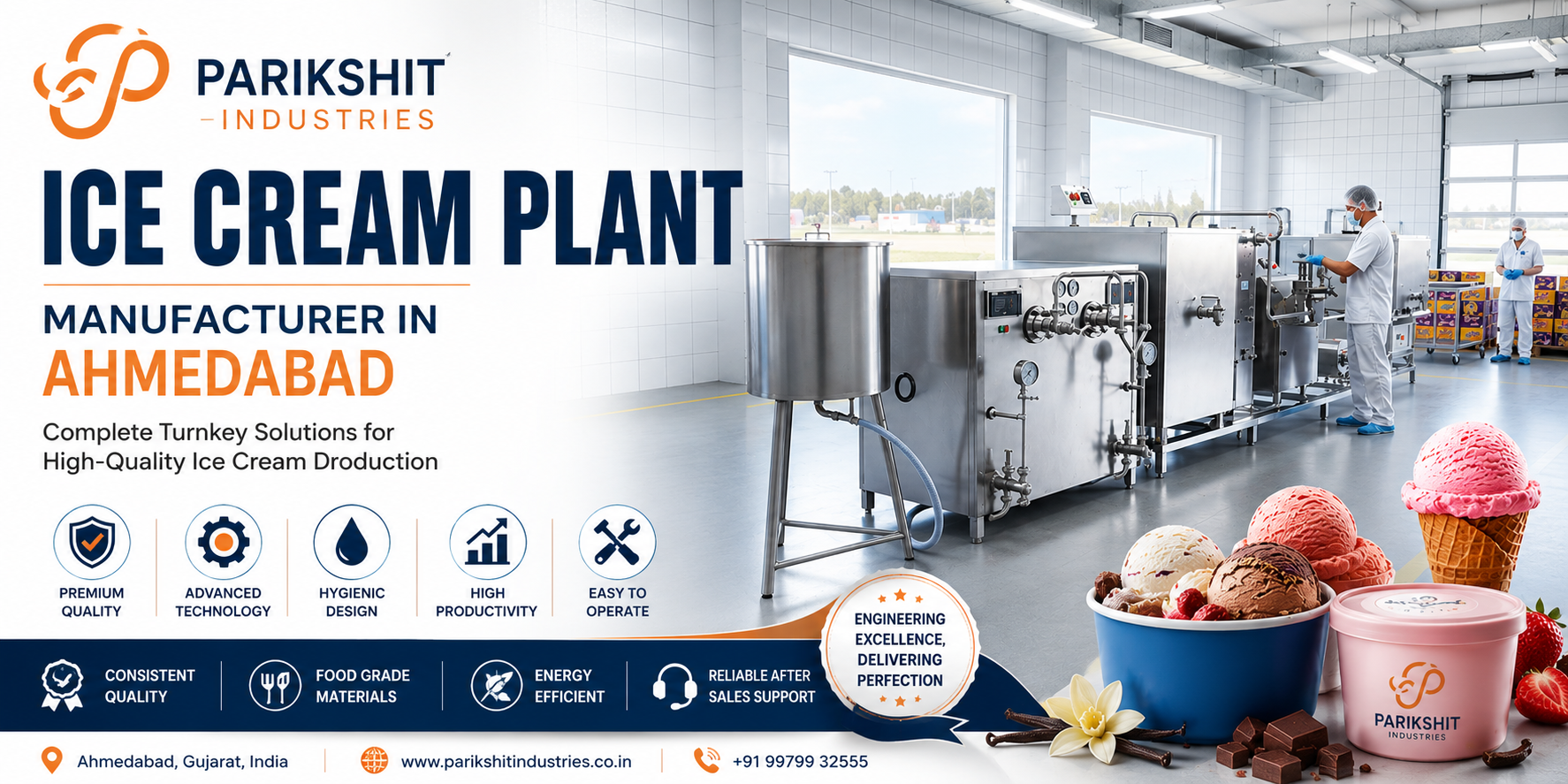
Ice Cream Plant
Expertly designed and manufactured ice cream plants in Ahmedabad. Parikshit Industries offers reliable, high-quality solutions for your dairy processing needs.
What is an Ice Cream Plant? — Overview
An ice cream plant is a comprehensive system designed for the industrial-scale production of ice cream. It encompasses a series of interconnected machinery that handles every stage of the process, from raw ingredient mixing to final packaging. This typically includes equipment for pasteurization, homogenization, aging, flavoring, freezing, hardening, and packaging. The plant's design is crucial for maintaining product integrity, ensuring food safety standards, and achieving desired texture and taste profiles.
Key Features and Technical Specifications
A well-engineered ice cream plant is characterized by several critical features:
- Integrated Pasteurization and Homogenization: Ensures product safety and optimal fat globule dispersion for a smooth texture.
- High-Efficiency Freezing Technology: Utilizes advanced refrigeration systems to achieve rapid freezing and desired overrun (air incorporation).
- Automated Flavor and Ingredient Dosing: Precise addition of flavors, colors, and inclusions for consistent product variation.
- Robust Hardening Tunnels: Rapidly lowers the ice cream temperature to prevent ice crystal formation and maintain quality.
- Flexible Packaging Solutions: Accommodates various packaging formats, from tubs and cones to multipacks.
- Advanced Control Systems: PLC-based automation for precise process control, monitoring, and data logging.
- Hygienic Design and Materials: Stainless steel construction and sanitary fittings to meet stringent food safety regulations.
- Energy-Efficient Operation: Optimized design to minimize power consumption and operational costs.
Industrial Applications and Use Cases
Ice cream plants are central to various segments of the food industry:
- Large-Scale Dairy Manufacturers: Producing a wide range of ice cream products for national distribution.
- Regional Ice Cream Brands: Catering to local and regional consumer preferences with specialized offerings.
- Private Label Producers: Manufacturing ice cream for supermarket chains and other retailers under their brand.
- Specialty Ice Cream Makers: Developing premium or niche ice cream products with unique ingredients and textures.
- Frozen Dessert Manufacturers: Adapting plants for the production of sorbets, frozen yogurts, and other frozen desserts.
- Food Service Suppliers: Providing bulk ice cream for hotels, restaurants, and catering services.
- Export-Oriented Food Companies: Meeting international quality and production standards for global markets.
How to Choose the Right Ice Cream Plant
Selecting the appropriate ice cream plant requires careful consideration of several factors:
- Production Capacity: Determine your current and projected daily or hourly output requirements.
- Product Variety: Assess the range of ice cream types (e.g., dairy-based, vegan, low-fat, inclusions) you intend to produce.
- Automation Level: Decide on the degree of automation needed, from semi-automatic to fully integrated systems.
- Space and Infrastructure: Evaluate the available floor space, power supply, and water availability at your facility.
- Certifications and Compliance: Ensure the plant meets relevant food safety standards (e.g., FSSAI, ISO, GMP).
- Supplier Reputation and Support: Research the manufacturer's track record, customer testimonials, and after-sales service capabilities.
- Customization Options: Identify if the plant can be tailored to specific operational needs or product formulations.
- Budget and ROI: Balance initial investment with long-term operational costs and potential return on investment.
Quality Standards and Compliance
Adherence to stringent quality standards and regulatory compliance is paramount in ice cream production. Manufacturers must ensure their plants are designed and built to meet national and international food safety regulations, such as those set by the Food Safety and Standards Authority of India (FSSAI). Key certifications like ISO 9001 (Quality Management) and ISO 22000 (Food Safety Management) are indicators of a manufacturer's commitment to quality. Materials used, such as food-grade stainless steel (e.g., SS304, SS316), and sanitary design principles are critical for preventing contamination and ensuring easy cleaning, which is vital for maintaining hygiene throughout the production process.
Why Parikshit Industries' Experience and Capability Matters
At Parikshit Industries, our deep-rooted experience in designing and manufacturing ice cream plants sets us apart. We understand the nuances of dairy processing and the specific demands of the Indian market. Our manufacturing process is driven by a commitment to engineering excellence, utilizing robust materials and adhering to precise fabrication techniques. Our technical team possesses extensive expertise in refrigeration, automation, and food processing technology, enabling us to deliver highly efficient and reliable machinery.
We pride ourselves on our stringent quality control measures, implemented at every stage from material sourcing to final assembly. This ensures that each ice cream plant leaving our facility meets the highest standards of performance and durability. Parikshit Industries is also adept at offering customized solutions, working closely with clients to tailor plants to their unique production needs and facility constraints. Our focus extends beyond delivery; we are dedicated to providing comprehensive after-sales support and maintenance services, ensuring our clients achieve optimal operational uptime and product quality.
Installation, Maintenance, and Care Tips
Proper installation and regular maintenance are crucial for the longevity and efficient operation of your ice cream plant.
- Installation: Ensure the plant is installed on a level surface by qualified technicians. Verify all electrical and plumbing connections are secure and meet specifications. Proper commissioning and initial testing are vital to confirm all systems are functioning correctly.
- Daily Cleaning: Implement a strict cleaning-in-place (CIP) or manual cleaning routine after each production cycle. This involves flushing the system with hot water and appropriate cleaning agents to remove all residues and prevent bacterial growth.
- Sanitization: Regularly sanitize all product contact surfaces using approved sanitizing solutions to maintain hygienic conditions.
- Lubrication: Follow the manufacturer's schedule for lubricating moving parts to ensure smooth operation and prevent wear.
- Component Checks: Periodically inspect seals, gaskets, valves, and electrical components for any signs of wear or damage. Replace them promptly to avoid breakdowns.
- Refrigeration System: Ensure the refrigeration system is regularly serviced by qualified personnel to maintain optimal cooling efficiency and prevent refrigerant leaks.
- Record Keeping: Maintain detailed logs of cleaning, maintenance, and any repairs performed. This helps in tracking equipment performance and scheduling future maintenance.
Frequently Asked Questions
With proper installation, regular maintenance, and adherence to operational guidelines, a well-built industrial ice cream plant can have a lifespan of 15 to 20 years or even longer. The quality of construction materials, the robustness of the engineering, and the diligence in upkeep significantly influence its durability.
The space requirement varies significantly based on the plant's capacity and the number of integrated modules. A small-scale or semi-automatic plant might fit within 500-1000 sq ft, while larger, fully automated lines for high-volume production can require 2000 sq ft or more, including space for raw material storage and finished product handling.
The core ingredients for most ice cream include milk, cream, sugar, and stabilizers/emulsifiers. Additional components can include flavorings (vanilla, chocolate, fruit purees), colors, and inclusions like nuts, chocolate chips, or cookie pieces, all of which are processed and incorporated within the plant.
Absolutely. Ice cream plants are often designed with customization in mind. Manufacturers can adapt the plant's configuration, freezing parameters, and ingredient dosing systems to produce various types of ice cream, such as gelato, sorbet, frozen yogurt, or products with complex inclusions.
Reputable manufacturers typically offer comprehensive training for your operational staff. This usually covers plant startup and shutdown procedures, daily operation, cleaning protocols, basic troubleshooting, and safety guidelines to ensure your team can run the plant efficiently and safely.
The hardening process is critical for achieving the desired ice cream texture and stability. Rapidly lowering the temperature to below -18°C (0°F) in a hardening tunnel minimizes the formation of large ice crystals, resulting in a smoother, creamier product and preventing quality degradation during storage.
Conclusion
For businesses in Ahmedabad and across Gujarat aiming to excel in the ice cream market, investing in a high-quality, efficiently designed ice cream plant is fundamental. It’s a decision that impacts product quality, operational efficiency, and ultimately, profitability. Prioritizing robust engineering, adherence to stringent quality standards, and selecting a manufacturer with proven experience and reliable after-sales support, like Parikshit Industries, ensures a foundation for sustained success in the competitive dairy industry.